Author: Dodo Elias Denen

  • We Will Provide Maximum Support To Ensure Security, Safety On Lagos And Ogun Roads — GOC 81 Division Assures Zonal Commanding Officer FRSC Zone 2 Lagos

    We Will Provide Maximum Support To Ensure Security, Safety On Lagos And Ogun Roads — GOC 81 Division Assures Zonal Commanding Officer FRSC Zone 2 Lagos

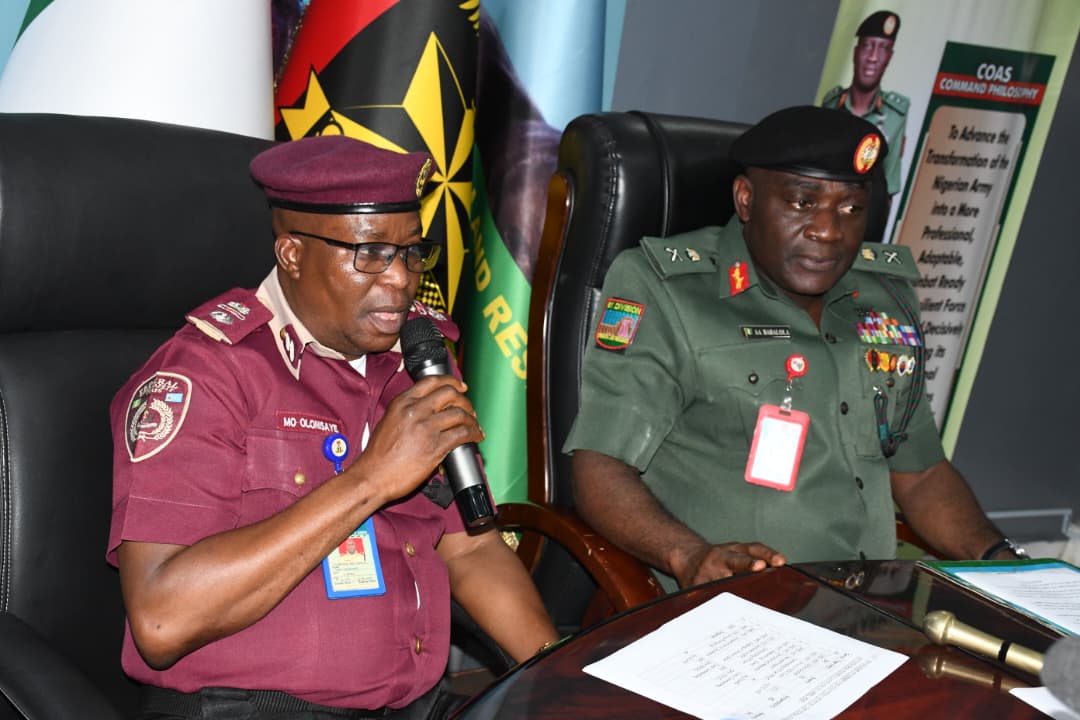
    The General Officer Commanding (GOC) 81 Division Nigerian Army, Major General Adebayo Babalola, has reaffirmed the Division’s commitment to strengthening collaboration with the Federal Road Safety Corps (FRSC) Zone 2 Lagos in order to enhance security and safety on roads across Lagos and Ogun States.

    According to the press statement by Lieutenant Colonel Musa Yahaya
    Acting Deputy Director Army Public Relations 81 Division. The GOC gave this assurance on Tuesday, 28 April 2026, when the Zonal Commanding Officer, FRSC Zone 2 Lagos, Assistant Corps Marshal Mathew Olonisaye paid a courtesy visit to him at the Headquarters 81 Division, Victoria Island, Lagos, alongside his entourage.

    Major General Babalola noted that the visit underscores one of the key pillars of the current Chief of Army Staff’s Command Philosophy which is Strategic Cooperation. He emphasized that ensuring the security and safety of lives and property cannot be effectively achieved by any single agency. Rather, it requires deliberate collaboration among all relevant stakeholders, including the Nigerian Army, Police, FRSC, Immigration, and other security and safety agencies.

    According to him, strategic cooperation highlights the complementary roles played by both armed and unarmed security agencies in safeguarding citizens and maintaining public order. He stressed that no single organization can operate in isolation when addressing security challenges.

    The GOC commended the Zonal Commanding Officer and personnel of FRSC Zone 2 Lagos for their dedication and proactive efforts in maintaining road safety.

    He assured that the Corps would continue to enjoy the full support of the 81 Division in the discharge of its statutory responsibilities. He also wished the Zonal Commanding Officer a successful and impactful tour of duty.

    Earlier in his remarks, Assistant Corps Marshal Mathew Olonisaye stated that the purpose of the visit was to familiarize himself with the GOC, officers, and soldiers of the Division, as well as to express appreciation for the longstanding cordial relationship between FRSC Zone 2 Lagos and 81 Division Nigerian Army, with a view to strengthening it further.

    He observed that the Nigerian Army has consistently demonstrated a sense of ownership and support towards the FRSC, noting that some FRSC personnel have benefited from training opportunities within the Nigerian Army. He also commended the Division’s troops for their unwavering efforts in ensuring security along major routes, which has significantly enhanced the Corps’ operational effectiveness.

    The Zonal Commanding Officer further advocated for sustained synergy through joint operations, joint training exercises, and enhanced intelligence sharing between both organizations.

  • Plateau Grocery Seller Wins ₦5 Million As Golden Morn Golden Hunt Rewards

    Plateau Grocery Seller Wins ₦5 Million As Golden Morn Golden Hunt Rewards

    A small-scale grocery seller from Plateau State, Ejiofor Akujieze, has emerged the grand prize winner of ₦5 million in the Golden Morn Golden Hunt, a nationwide consumer campaign by Nestlé Nigeria that rewarded Nigerians with a total of ₦80 million in cash and prizes.

    Akujieze, who expressed surprise at his win, described the moment as life-changing. “It came as a shock to me. I won ₦5 million, and it will go a long way. I am very grateful,” he said, noting that the prize will support the expansion of his grocery business.

    The Golden Morn Golden Hunt, which commenced in January 2026, recorded strong participation from consumers across the country, with over 200,000 entries received. Designed around Golden Morn’s smaller, affordable pack sizes to encourage wider participation, the campaign made it easier for more Nigerians to take part. At the end of seven draws, a total of 16,324 winners emerged, receiving cash prizes ranging from ₦10,000 to ₦1 million, alongside airtime rewards and exciting items such as washing machines, MacBooks, iPhones, and 55-inch televisions, in addition to the grand prize.

    Speaking on the campaign, Omofasa Orhiunu, Category Manager, Healthy Cereals at Nestlé Nigeria, said the initiative was designed to connect more closely with consumers while giving them an opportunity to experience the brand.

    “Golden Morn has been part of everyday life for Nigerian families, and with the Golden Hunt, we wanted more people to experience that,” he said. “It gave both our loyal consumers and new ones the opportunity to enjoy a nourishing product that fits into their daily routines, while also being rewarded in a simple and accessible way.”

    Also speaking, Wassim Elhusseini, Managing Director and Chief Executive Officer of Nestlé Nigeria Plc, said the campaign reflects the company’s commitment to creating value for consumers beyond its products.

    “For over 40 years, Golden Morn has been nourishing Nigerian families and earning their trust,” he said. “The Golden Hunt was our way of recognising that trust and giving back in a way that is meaningful and inclusive. What has been most inspiring are the real stories behind the wins, how this has made a difference in people’s lives. That is what truly matters to us.”

    Golden Morn, a cherished homegrown brand, continues to provide wholesome nourishment made from carefully selected grains. It is enriched through its Grain Smart blend, which combines essential vitamins and minerals to support energy and overall wellbeing for individuals and families.

    Through initiatives like the Golden Hunt, Nestlé Nigeria continues to strengthen its connection with consumers while delivering on its commitment to providing accessible, nutritious food and supporting thriving communities across the country.

    Nestlé Nigeria is one of the largest food and beverage companies in Africa. The Company’s purpose is to unlock the power of food to enhance quality of life for everyone today and for generations to come. For over 62 years of its operation in Nigeria, Nestlé has delighted consumers around Nigeria by consistently delivering high quality nutritious food and beverages under its iconic brands: MAGGI, MILO, GOLDEN MORN, NESTLÉ PURELIFE, CERELAC, NESCAFÉ and NIDO.

    With 3 manufacturing sites, 7 branch offices and a head office located in Lagos, Nestlé Nigeria is a force for good, helping to improve the wellbeing and livelihood of individuals and families to build thriving communities while taking action to protect the planet.

  • NFVCB Pushes For Kaduna As Hub For Indigenous Film Growth, Capacity Building

    NFVCB Pushes For Kaduna As Hub For Indigenous Film Growth, Capacity Building

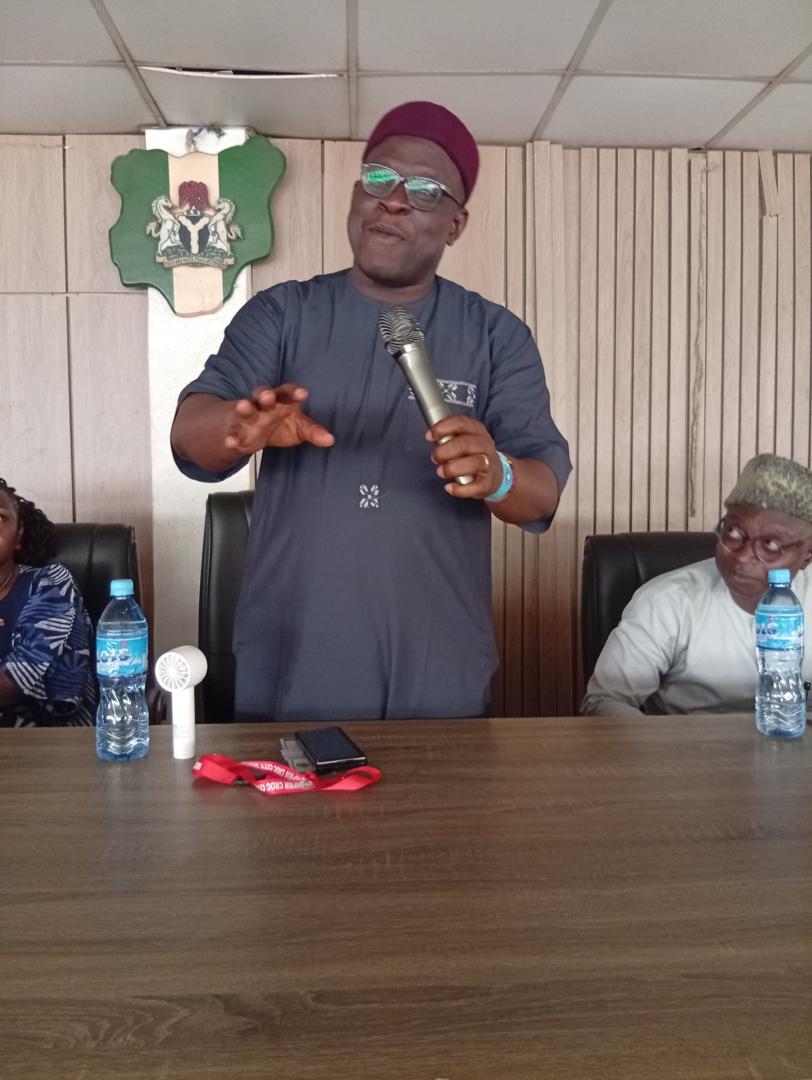
    In a significant move to strengthen Nigeria’s film industry beyond the traditional hubs, the National Film and Video Censors Board (NFVCB) has signaled strong commitment to growing the creative sector in Kaduna State, with plans to host the grand finale of the Nigerian Indigenous Film Showcase in the state.

    According to the press statement by the Director, Corporate Affairs, Ogbonna Onwumere. The announcement came during a high-level stakeholders’ engagement hosted by NFVCB Executive Director/CEO, Dr. Shaibu Husseini, at the Federal Secretariat Conference Hall in Kaduna recently.

    The interactive session brought together representatives from various film associations, guilds and representatives of the Kaduna State Ministry of Business and Innovation, providing a platform for open dialogue on industry practices, regulatory compliance, and strategies for sustainable development. Stakeholders arrived with pressing questions and concerns, many of which Dr. Husseini addressed proactively in his presentation, offering clear guidance on the road ahead.

    Dr. Husseini emphasized the Board’s vision of leveraging the creative industry to add tangible value to Kaduna State and other parts of the country. He reiterated plans to bring the grand finale of the Nigerian Indigenous Film Showcase to Kaduna, a move expected to boost local production, talent development, and economic activity in the region’s emerging film ecosystem.

    He also reaffirmed the Board’s dedication to capacity building, announcing upcoming training programmes designed to equip practitioners with modern skills needed to compete and thrive in a rapidly evolving industry.

    On regulation, Dr. Husseini issued a firm warning that unapproved releases on YouTube and other platforms will no longer be tolerated. He urged filmmakers to strictly adhere to established guidelines to uphold professionalism and maintain high industry standards.

    In her remarks, Mrs. Rhoda Dandura, Acting Director of the Licensing and Documentation Department, called on stakeholders to exercise greater responsibility in content creation. She stressed the need for conscious, value-driven storytelling, particularly to protect younger audiences who represent the nation’s future leaders.

    In his closing remarks, Dr. Husseini assured participants of the Board’s continued commitment to regular engagements and sector-wide development. He promised to return to Kaduna in the near future to build on the momentum generated by the meeting.

    The stakeholders described the session as productive and insightful, underscoring the NFVCB’s resolve to balance effective regulation with deliberate efforts to nurture growth, especially in emerging film centers like Kaduna. They left with renewed optimism about the Board’s supportive role in fostering a more professional, inclusive, and economically viable Nigerian film industry. The representative of the Ministry of Business and Innovation, Mr. Zwahu Yanwaidi pledged the support of the Ministry in facilitating the hosting of the showcase and in the planned training programme for creatives across the state.

  • NIWA Prioritizes Staff Safety At Work — Umar Yusuf Gerei

    NIWA Prioritizes Staff Safety At Work — Umar Yusuf Gerei

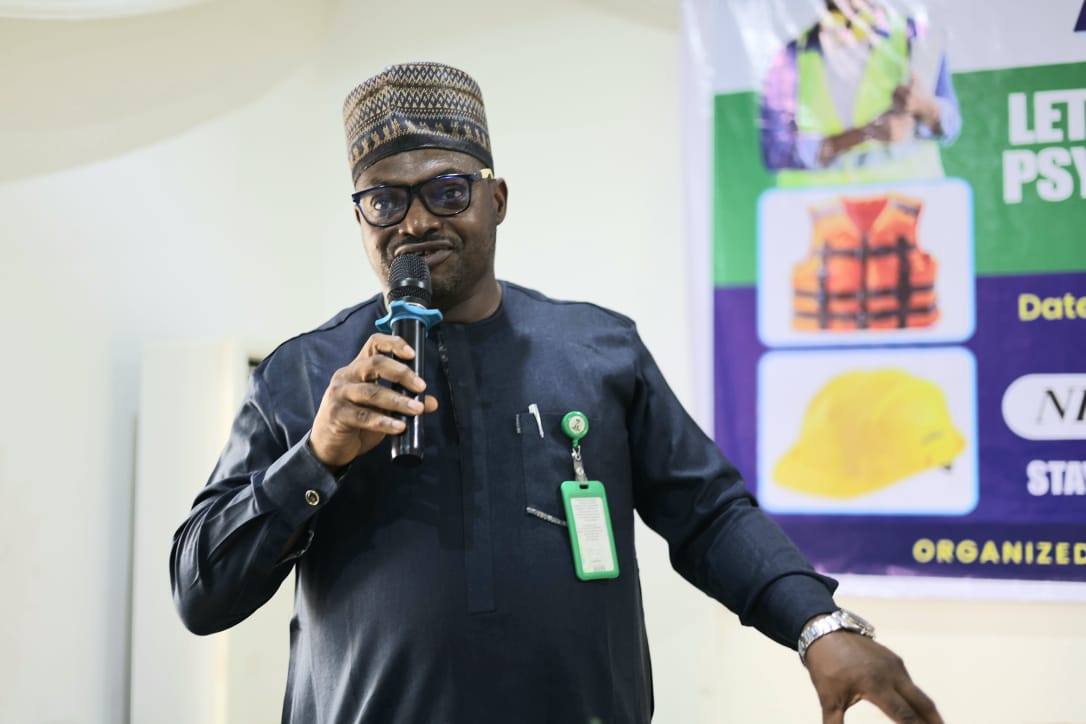
    The Acting Managing Director CEO of National inland waterways Authority NIWA Umar yusuf Girei has disclosed that the authority prioritizes staff safety to Improve their working environment.

    In a paper he delivered titled Good psycho-social working environment: A pathway to thriving workers workers and strong organization to Mark the world safety day on the 28 April 2026 at the Authority’s conference Hall, Lokoja, kogi state.

    The Ag MD said the management prioritized the provision of new offices and rehabilitation of old ones at the headquarters and selected area offices.

    “We have provided a well equipped staff clinic and ensured access to potable water and proper sanitation at the headquarters, Lokoja and some selected Area offices”.

    He said through partnership with relevant sister agencies such as the federal medical center Lokoja, periodic mental health talks are being organised to the benefit of the staff.

    “We have also implemented flexible work arrangements for nursing mothers in line with the existing circular from the office of the head of service “According to the Ag MD all categories of staff have enjoyed trainings in emotional intelligence, conflict resolution, and work place stress management in Turkey and Ruwanda.

    This years event had in attendance key stakeholders, including the Representatives of the Nigerian Navy (NNS) Lugard, Hydroelectric power producing Areas Development Commission (HYPPADEC), Kogi state ministry of Transportation, National Environmental Standards and Regulations Enforcement Standards (NESREA) and the Nigerian Security and Civil Defence Corps)
    Suleiman Makama
    AGM corporate Affairs)

  • LAWAN BUKAR MARGUBA: Godfather Of Nigeria’s Silent Beings — Frank Meke

    LAWAN BUKAR MARGUBA: Godfather Of Nigeria’s Silent Beings — Frank Meke

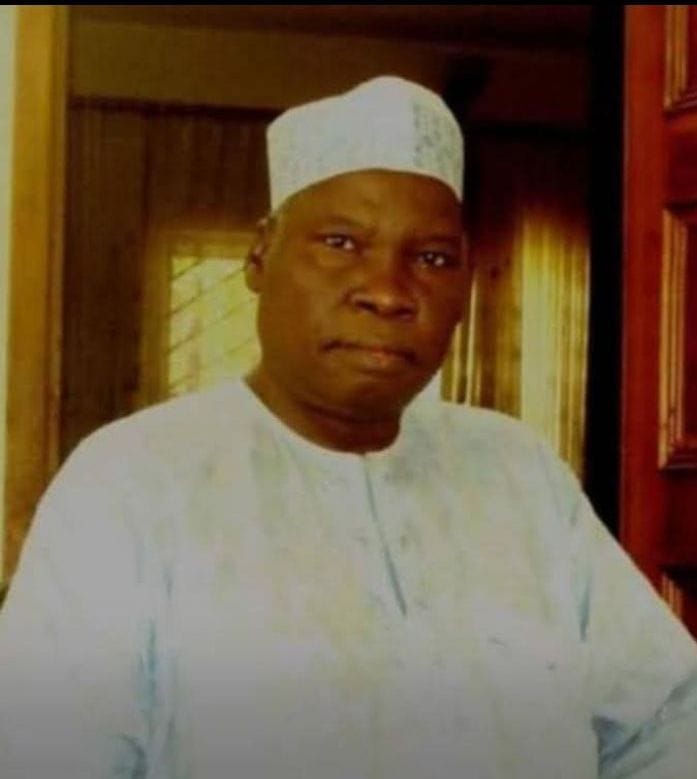
    He was more than a leader, he was my father and mentor. Lawan Bukar Marguba loved me deeply and intentionally, without pretence. He took pride in me, openly presenting me to friends, family, and colleagues with genuine affection.

    Lawan Marguba, widely regarded as the godfather of Nigeria’s conservation history, was a man driven by patriotism and an unwavering love for his country and its rich natural endowments. His legacy at the National Park Service reflects a bold vision, to give Nigeria a respected voice among global conservation leaders.

    Humble, strategic, God-fearing, and profoundly nationalistic, Lawan was a gentle giant. He bore no desire to hurt anyone, yet he stood firmly against disorder and indiscipline. His life was transparent, an open book, free of ambiguity. Tall, charismatic, kind, and witty, he was also a tireless workaholic whose foresight brought tomorrow’s vision into today’s reality, particularly in the transformation and protection of Nigeria’s vast forest ecosystems.

    His personal interests revealed even more about his character. A voracious reader, he had an insatiable appetite for knowledge and self-improvement. He consistently encouraged his subordinates to break professional and academic barriers. Under his leadership, the National Park Service developed one of the most robust libraries in natural resources and forest ecosystem studies in Nigeria.

    Lawan’s passion for nature photography was not merely recreational it became policy. He deliberately recruited and nurtured skilled photographers within the ecological tourism department. Across all park units, he encouraged the discovery and deployment of talented nature photographers to document Nigeria’s unique flora and fauna. Leading by example, he would embark on nature trails with a camera slung around his neck, later holding debriefing sessions to review and select the most compelling images.

    An accomplished and fearless traveler, he frequently visited park units unannounced, maintaining a hands-on leadership style. Internationally, he was a respected figure and resource person in conservation management. His interest in stamp collection reflected his curiosity about history and his appreciation for humanity’s shared story.

    Music, too, played a role in his life, it connected him to deeper emotions and reinforced his compassion for others. His “happy hours” were not mere leisure moments but opportunities to bond, uplift, and share love with those around him.

    To me, this conservation icon will forever remain alive in memory. I recall his concern for Nigeria’s environmental challenges, especially desertification. As Chairman of the World Bank’s Second Forestry Project, he led efforts to establish extensive tree-planting initiatives, many of which have matured into vital forest ecosystems mitigating environmental disasters across Northern Nigeria.

    He was instrumental in elevating ecological tourism, showcasing the immense potential of Kainji Lake and Yankari National Parks to the world. He firmly believed that conservation must deliver tangible benefits to people and the nation; otherwise, it risks becoming a wasted investment.

    Lawan Marguba also championed the transformation of rural communities located within or around protected areas. His initiatives attracted international attention, particularly from countries grappling with community resistance to conservation efforts. The National Park Service Support Zone Programme one of his enduring legacies, empowered local communities and integrated them into national economic development.

    He fought relentlessly to reform the park system, successfully transitioning it into a Service structure. Under his leadership, the number of parks expanded, and the institution gained strength and relevance. Notably, one of his mentees, Musa Ibrahim Goni, now serves as the Conservator General of Nigeria.

    His reforms extended to legal and operational frameworks, strengthening the park system into a formidable security outfit through the Ranger Corps, effectively combating poaching and illegal exploitation of forest resources, particularly in border regions.

    Many distinguished conservationists, both living and late passed through his mentorship. To mention a few, Alhaji Monsur Ayoade Lamidi Ejide, George okeyoyin, Alhaji Suleiman, late Tanko Abubakar and Alhaji Salami. His influence shaped generations of professionals who continue to uphold his vision.

    Born on July 4, 1951, Lawan Bukar Marguba dedicated his life entirely to Nigeria’s conservation efforts. As the founding Chief Executive and Director of the National Park Service from 1991 to 2005, he presided over what is widely regarded as the golden era of conservation in Nigeria.

    On a personal note, he guided me through my formative years in journalism, particularly in reporting on conservation and rural development. Unlike many leaders, he remained deeply humble and loyal in his relationships. Whenever he visited Lagos, he chose my modest home as his place of rest, bringing along his entourage. Despite access to the finest hospitality, he preferred the warmth of our home, often praising my wife’s cooking and showing grandfatherly affection to my children.

    It took me nearly two months after his passing to write this tribute. The loss was deeply personal within the National Park Service, many knew him as my father.

    I remain grateful for the opportunity he gave me to grow, to learn, and to belong. Lawan Marguba was the embodiment of a detribalized Nigerian. He mentored people beyond ethnic and social boundaries, raising leaders who would surpass him. Indeed, several Conservators General who served after his retirement were products of his mentorship.

    Today, we mourn, yet we also celebrate a life well lived. He ran his race with honour, and even the silent beings of the earth bear witness to his impact.

    Goodnight, my dear mentor and father. We will preserve your legacy and keep the National Park Service family united. May Nigeria, someday, rise to fully honour a man who gave everything in service of our conservation dreams.

  • Runsewe Salutes NANTA Golden Jubilee Honours Recognising ANJET, Veteran Travel Writer Frank Meke

    Runsewe Salutes NANTA Golden Jubilee Honours Recognising ANJET, Veteran Travel Writer Frank Meke

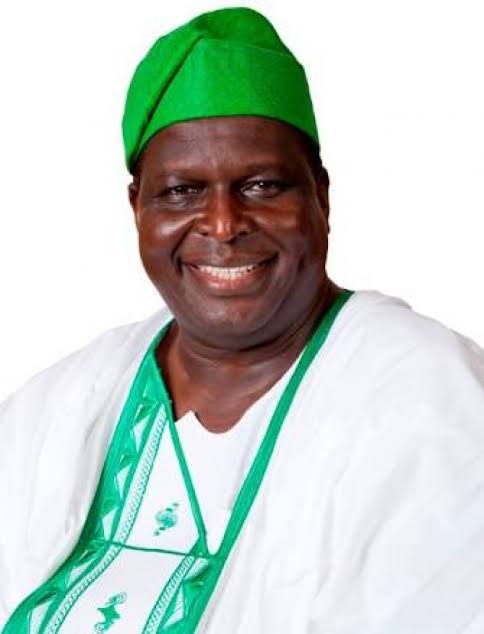
    The former Director General of the National Council for Arts and Culture (NCAC) and the Nigerian Tourism Development Authority (NTDA) Otunba Runsewe has commended the National Association of Nigerian Travel Agencies (NANTA) for recognizing the contributions of the Association of Nigerian Journalists and Writers of Tourism (ANJET), and eteran travel writer and Managing Director of Cre8tive Naija Media Group, Mr. Frank Meke to the growth and development of tourism in Nigeria.

    He also congratulated NANTA on its 50th anniversary acknowledging the association’s contribution to the growth on tourism in Nigeria.

    Runsewe, in a press release, praised NANTA for understanding the role of journalism and travel journalists in the development of tourism in any country.

    He said: “I am very happy that a body like NANTA understands the role the travel journalists play in developing and marketing of a country as a destination. Specifically in Nigeria, I have been part of the industry for many years, and I understand the key role journalism and the travel journalists play in shaping perception and helping to create necessary awareness for the growth of the sector. Generally, the travel journalists craft narratives that inspire interest in a destination.

    Their contributions help to grow local economy and boost businesses.

    “ANJET, for many years, has been dogged and resolute in the pursuit of growth and development of Nigerian tourism. It was this understanding that helped shaped my positive partnership and interaction with them while in office, and Nigeria was better for it. Together we positively put the country in the world tourism map. I am happy NANTA understands this and has honoured them with the award.

    “I am especially happy also with the award to Frank Meke. For more than three decades Meke has been at the forefront of tourism reporting in Nigeria. His reports and informed commentaries on tourism have led to better understanding of tourism in the country, and have helped shape policies and positions on key government positions in the industry.

    “Meke, guided by knowledge and experience, has been consistent in his tourism writing and advocacy. I congratulate him for this recognition and urge him to keep up the good work.”

    ANJET and Frank Meke were among the groups and personalities honoured during the 50th anniversary Annual General meeting of NANTA held recently in Ibadan, Oyo State.

  • Fidelity Bank Strengthens SME Support with High Impact Masterclasses on Pricing, Digital Growth and Global Expansion

    Fidelity Bank Strengthens SME Support with High Impact Masterclasses on Pricing, Digital Growth and Global Expansion

    In line with its commitment to accelerating the growth of Small and Medium Enterprises (SMEs) across Nigeria, leading financial institution, Fidelity Bank Plc, has rolled out a series of high impact masterclasses designed to equip business owners with practical skills, improve operational efficiency and expand market access throughout the month of April 2026.

    The first in the series, titled “Pricing That Works: How to Charge Right and Earn More,” held on Friday, April 10, 2026, at the Fidelity SME Hub in Gbagada, Lagos. The session focused on helping entrepreneurs set profitable, sustainable prices without losing customers, an essential factor for long-term business success.

    About a hundred SMEs from different sectors attended the masterclass which saw participants receive guidance on key areas many small businesses struggle with including costing, value-based pricing, pricing psychology and customer perception.

    Following the success of the pricing masterclass and testimonials from participants, the bank scheduled three additional masterclasses to run throughout April 2026. The second masterclass, held on Tuesday, 14 and Wednesday, 15 April 2026, was a practical, skill-building session titled, “Baking Masterclass: From Kitchen to Cashflow”. The session equipped bakers and food entrepreneurs with hands on techniques to refine their craft, improve product consistency and strengthen their earning potential.

    Commenting on the initiative, Divisional Head, Small and Medium-scale Enterprises Banking, Fidelity Bank Plc, Ugochi Osinigwe said, “At Fidelity Bank, we believe that when SMEs succeed, the economy grows. That is why we have curated a suite of masterclasses that provide entrepreneurs with the practical skills they can apply immediately.

    “Whether it is pricing correctly, improving product quality, mastering online sales, or preparing for international expansion, we are devoted to empowering SMEs with the tools they need to grow, thrive and prosper.”

    She added that the SME Masterclass Series is part of Fidelity Bank’s broader mandate to support SMEs with business advisory, funding, market access and capacity-building initiatives delivered through the Fidelity SME Hub as well as dedicated SME support programmes nationwide. Osinigwe noted that the Bank recently received the Best Retail and SME Bank Award from Independent Newspapers, underscoring its industry leadership and unwavering commitment to growing Nigeria’s MSME sector.

    A third masterclass, themed, “Grow Online Sales on a Budget”, is scheduled for April 24, 2026, and will equip entrepreneurs with practical strategies to boost visibility, engage customers, and increase sales using affordable online tools.

    Similarly, the fourth and final masterclass, titled, “Take Your Business Global: One-on-One Trade Advisory”, will hold on April 29, 2026 and will serve as a personalized advisory clinic where SME owners will receive expert guidance on export readiness, cross-border payments, global market opportunities, and compliance requirements.

    Ranked among the best banks in Nigeria, Fidelity Bank Plc is a full-fledged Commercial Deposit Money Bank serving over 10 million customers through digital banking channels, its 255 business offices in Nigeria and United Kingdom subsidiary, FidBank UK Limited.

    The Bank is a recipient of multiple local and international Awards, including the 2024 Excellence in Digital Transformation & MSME Banking Award by BusinessDay Banks and Financial Institutions (BAFI) Awards; the 2024 Most Innovative Mobile Banking Application award for its Fidelity Mobile App by Global Business Outlook, and the 2024 Most Innovative Investment Banking Service Provider award by Global Brands Magazine. Additionally, the Bank was recognized as the Best Bank for SMEs in Nigeria by the Euromoney Awards for Excellence and as the Export Financing Bank of the Year by the BusinessDay Banks and Financial Institutions (BAFI) Awards.

  • Nigeria Strengthens Coastal Security as Police and Navy Forge New Intelligence Sharing Pact in Apapa

    Nigeria Strengthens Coastal Security as Police and Navy Forge New Intelligence Sharing Pact in Apapa

    The Assistant Inspector General of Police in charge of Zone 2, Olohundare Jimoh Moshood, on Friday paid a strategic visit to the Western Naval Command Headquarters in Apapa, Lagos, signaling a renewed push for inter agency collaboration against rising security concerns.

    The high level engagement saw the AIG received by the Flag Officer Commanding Western Naval Command, Rear Admiral Abubakar Abdullahi Mustapha, in what both leaders described as a decisive moment for strengthening operational synergy across security formations.

    Moshood, in his remarks, warned that the evolving dynamics of crime, particularly within coastal and littoral corridors, demand a unified and intelligence driven response from all security stakeholders.

    He stressed that modern policing can no longer operate in silos, insisting that intelligence sharing, coordinated patrols and joint enforcement operations remain critical to safeguarding lives, infrastructure and economic assets.

    The AIG further identified cultism, illicit drug trafficking, land grabbing and other organised criminal networks as priority threats requiring sustained collaboration between the Nigeria Police Force and the Nigerian Navy.

    He commended the Western Naval Command for its consistency in securing Nigeria’s maritime space, noting that its operational efforts have contributed significantly to stability within the region.

    Responding, Mustapha described the visit as timely and strategic, congratulating Moshood on his appointment and expressing confidence in his capacity to strengthen security architecture within Zone 2.

    He underscored that contemporary threats have grown too complex for any single agency to tackle alone, adding that collective action remains the most effective pathway to lasting security outcomes.

    The naval chief also pointed to Nigeria’s recent removal from the global list of piracy prone nations as evidence of what sustained inter agency collaboration can achieve within the maritime domain.

    Reaffirming commitment to deeper cooperation, both commanders pledged to intensify joint patrols, intelligence exchange and coordinated operations across Lagos and Ogun States, reinforcing a shared resolve to protect national assets and preserve regional stability.

  • Nigeria’s 2026 Tobacco Tax Regime: A Win for Industry, A Loss for Public Health

    Nigeria’s 2026 Tobacco Tax Regime: A Win for Industry, A Loss for Public Health

    The Federal Government of Nigeria, through a circular, approved the implementation of the 2026 Fiscal Policy Measures and Tariff Amendments. The circular covers supplementary ECOWAS Common External Tariff measures, excise duties on non‑alcoholic beverages and tobacco products, and a Green Tax Surcharge, effective 1 April 2026.

    One of the critical areas included in the 2026 FPM is the approved excise duty for cigarettes and tobacco products which is alarmingly weak. The approval effectively puts in place a three-year tobacco tax regime running from 2026 – 2028 and retains the 30% ad-valorem excise tax component as implemented under the 2023 – 2025 regime. However, it makes minimal increments of N1.00 annually through the three-year regime on the specific excise component.

    The Civil Society Legislative Advocacy Centre (CISLAC) finds that these amendments fall far short of the objectives of health taxes and fail to meet public health expectations to reduce tobacco consumption and exposure to its preventable harm. The amendments also fail to meet the requirements and intent of Article 6 of the WHO Framework Convention on Tobacco Control (WHO FCTC), to which Nigeria is a State Party.

    The policy, as currently designed, fails to protect public health, undermines revenue mobilization, makes tobacco products more affordable and contradicts the government’s stated commitments on health taxes. More specifically, the policy in its current form raises several critical concerns, as outlined below:
    The proposed tax increases are ineffective against inflation – For clarity, the old regime charged a stick of cigarette at N5.20 in 2024, the last year of the three-year regime. Almost two years later, a N0.80 increment is approved for the first year of the new regime in 2026. In the same period under review, the increment stands at 13% while the inflation rate for the country stands at 15.06%. Mathematically, this dwarfs the increment made in this proposed regime and shows a lack of progress in the utilization of tax as an instrument to reduce affordability in tobacco use.

    Nigeria remains far below the ECOWAS specific excise benchmark – In comparison to the ECOWAS benchmark and recommendation of 0.40USD specific excise tax for a pack of cigarettes, the entire three-year regime remains very far from the regional benchmark. With 0.40USD roughly converting to N538, at N6.00, Nigeria would be achieving N120.00 per pack, N140 at N7.00 and N160.00 at N8.00. At these rates, even at the highest point of the regime in 2028, Nigeria would only be achieving 29.7% of the ECOWAS specific tax recommendation in a region where it operates as the biggest tobacco market and economic leader.

    The tobacco industry is the principal beneficiary – Simple interpretation of the new regime in Nigeria shows that the tobacco industry are the singular beneficiaries of the policy. The industry has been provided with a fiscal environment to maximize profits with an already existing high profit margin. For revenue generation and mobilization, this regime signifies revenue forgone and loss, for children and youth, it signifies increased access to tobacco products use and addiction. For adult smokers, affordability is increased as the products become cheaper while other essentials respond to inflation, for families, especially low-income households, the cycle of tobacco induced poverty continues to spin even as overall public health exposures associated with tobacco use are exacerbated.

    The policy contradicts wider fiscal reform efforts – It is even more shocking to see an administration that has put in so much to ensure effective revenue mobilization by quickly reforming the tax landscape in the country completely shielding its swords in asserting effective excise tax regimes on industries of harmful products like tobacco, alcohol and sugar sweetened beverages.
    Moreso, it is unbelievable that a regime which has effectively removed subsidies that directly benefited the citizens and subjected them to paying the premium on petrol and electricity playing soft balls with the tobacco industry.

    The regime breaks explicit manifesto commitments – Even more appalling, the President Tinubu administration came to power with a manifesto that specifically recognized and promised to implement health taxes as part of strategies to finance universal health care and discourage consumption of harmful products through enacting tax measures that reduce affordability and improve government revenue. This tax regime sadly reneges on those promises and makes the citizens and the country more vulnerable to the hazardous effects of tobacco use and exposure.

    CISLAC is urging the government to:
    Move decisively toward the ECOWAS specific excise benchmark as a minimum standard for effective tobacco taxation -be guided by the ECOWAS Directives on tobacco taxation as well as draw comparison with other West African countries where tobacco tax policies and implementation are gaining significant traction.

    Ensure that tobacco tax policy is protected from tobacco industry influence, in line with Nigeria’s WHO FCTC obligations – The government of Nigeria must immediately recognize and prioritize the health and wellbeing of Nigerians over ensuring increased profit margins for vested industries.

    Government must adopt encompassing approaches that integrate a wider stakeholders’ input to the review process to ensure helpful opinions are factored into consideration of tobacco tax policy formulations.

    iv. Use tobacco taxation as a genuine health and fiscal policy tool, supporting universal health coverage, protecting children and youth, and reducing preventable disease and death. Failure to strengthen tobacco taxation is not a neutral policy choice, it is a decision that sustains addiction, deepens inequality, and undermines Nigeria’s obligations under the WHO FCTC.

    Redesign the tobacco excise tax regime in line with WHO FCTC Article 6 and its Guidelines by adopting a strong, uniform specific excise tax that is automatically adjusted for inflation and income growth, ensuring significant and sustained real price increases.

    Auwal Ibrahim Musa (Rafsanjani)
    Executive Director, CISLAC

  • Inside Ekiti Bold Creative Economy Drive as NFVCB Pledges Support for Film Village

    Inside Ekiti Bold Creative Economy Drive as NFVCB Pledges Support for Film Village

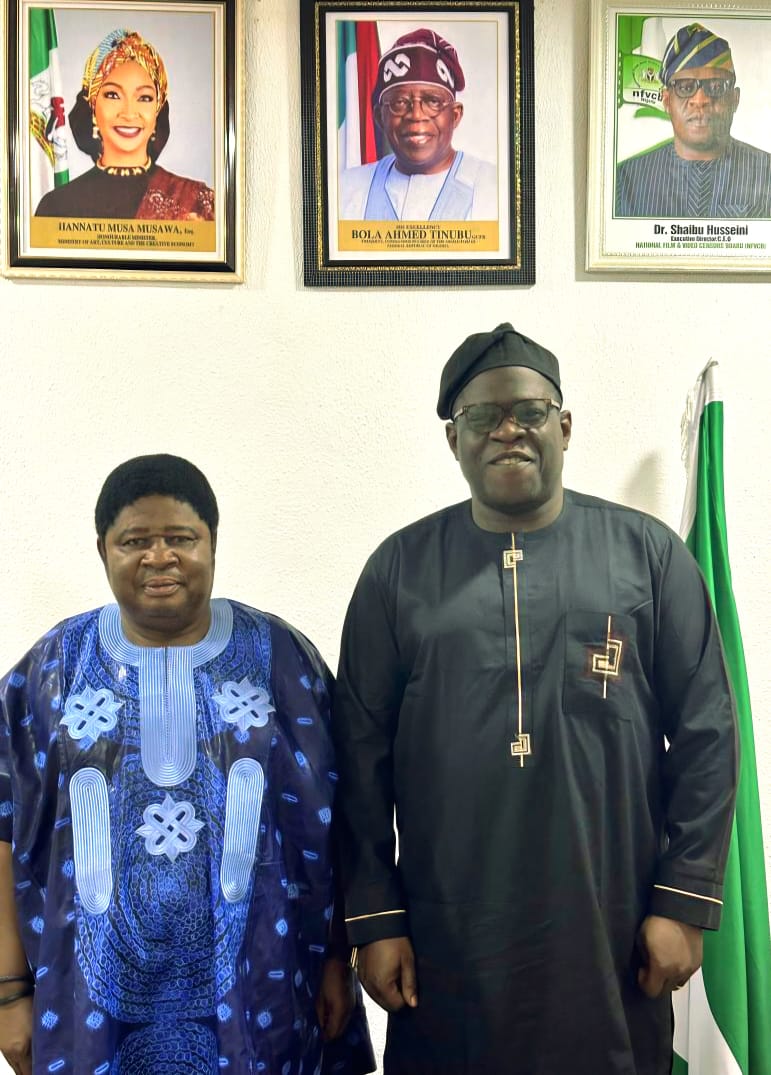
    The Executive Director/CEO of the National Film and Video Censors Board (NFVCB) Dr. Shaibu Husseini has commended the Governor of Ekiti State, Biodun Oyebanji, for what he described as bold, visionary and innovative strides in repositioning the arts, culture, and creative economy sector as a key driver of development in the state.

    The commendation was made during a courtesy visit by the Honourable Commissioner for Arts, Culture and Creative Economy of Ekiti State, Rasaki Ojo Bakare, to the NFVCB headquarters, where both parties held extensive discussions on ongoing and upcoming creative industry initiatives.

    Speaking during the visit, Professor Bakare highlighted the significance of the state government support for the epic film project ‘Kiriji: The Ekiti-Parapo War’ and the state governments deliberate investment in the creative sector including the institution of an endowment for the creative sector.

    According to him, Ekiti State Government played host to and actively supported the filming of Kiriji: The Ekiti-Parapo War, produced by Lateef Adedimeji and Adebimpe Adedimeji under their AL Notions Company. The filming, which spanned over four months, took place across various locations in Ekiti State and featured over 12,000 people comprising cast, crew, and service providers.

    His Excellency, the Governor, supported the project as a strategic initiative to boost tourism, create jobs, showcase the states natural beauty, and preserve our rich cultural heritage. I am happy to inform that His Excellency the governor has approved the proposal to turn the main location used for the film into a film village and we are already working on that”.

    Prof. Ojo-Bakare further noted that the film village and the endowment initiatives clearly reflect the practical implementation of Governor Oyebanjis Shared Prosperity Agenda, which prioritizes inclusive growth, job creation, and sustainable economic expansion through the creative industries.

    In his response, the NFVCB CEO particularly praised the Ekiti State Governments approval for the conversion of the principal filming location into a film village, describing it as a transformative initiative capable of positioning the state as a major destination for film production and cultural tourism.

    He noted that the film village project will catalyze further investments and deepen the creative ecosystem.

    The NFVCB boss also lauded the approval of an endowment fund by the state government to support operators in the arts and culture sector.

    The fund, which Dr. Shaibu described as a strategic intervention that will significantly ease access to financing for creatives and boost content development, offers production loans at a single-digit interest rate of 7 percent with a repayment period of up to eighteen months.

    The NFVCB CEO further assured the Ekiti State Government of the Boards readiness to provide the necessary technical support and regulatory guidance to ensure the smooth take-off and sustainability of the proposed film village project, as well as other film and audiovisual productions in the state.

    He emphasized that the NFVCB remains committed to partnering with sub-national governments to promote responsible storytelling, preserve Nigerias cultural heritage, and unlock the vast economic potential of the film and creative sectors.

error: Content is protected !!