Author: Dodo Elias Denen

  • Fidelity Bank’s Gross Earnings Rise By 45%, Shareholders’ Funds Cross N1trn Mark

    Fidelity Bank’s Gross Earnings Rise By 45%, Shareholders’ Funds Cross N1trn Mark

    Fidelity Bank Plc has reported a 45 percent increase in gross earnings for the 2025 financial year, as the lender’s shareholders’ funds crossed the N1 trillion mark following sustained balance sheet expansion and fresh capital injection.

    Analysis from the audited financial statements for the year ended December 31, 2025, reveals that the bank delivered robust results across key financial metrics, including Gross Earnings, which stood at N1.5 trillion, up from N1,04 trillion reported in 2024.

    Net Interest Income rose to N831.3 billion, compared to N629.7 billion in 2024, reflecting the bank’s stronger earnings capacity amid elevated interest rates and growth in interest-earning assets.

    Interest and similar income calculated using the effective interest rate rose by 38.7 percent to N1.11 trillion in 2025 from N803.05 billion in 2024, while other interest and similar income increased by 25.1 percent to N184.51 billion.

    Net interest income after credit loss also rose significantly by 41.2 percent to N809.74 billion from N573.33 billion. The bank also recorded an improvement in asset quality costs, as credit loss expense moderated to N21.61 billion from N56.44 billion, representing a 61.7 percent improvement year-on-year.

    Fidelity Bank continued to expand its digital banking footprint, enhance customer experience, and support key sectors of the economy. Non-interest revenue performance remained strong during the period, with fee and commission income increasing by 44.7 percent to N113.36 billion from N78.36 billion. This was driven by letters of credit commissions and fees (N12.5 billion), ATM charges fees (N11.6 billion), commission on travellers’ cheques and foreign bills (N8.9 billion), accounts maintenance charge (N7.13 billion and commission on E-banking activities (N2.2 billion),

    Other operating income rose by 200.5 percent to N8.24 billion, while foreign currency revaluation gains surged by 749.9 percent to N99.58 billion from N11.72 billion in 2024.

    Fidelity Bank’s investment assets expanded significantly during the year, reflecting the bank’s stronger positioning in fixed income and other securities markets. Debt instruments at fair value through other comprehensive income (FVOCI) rose by 199 percent to N557.78 billion from N186.57 billion, while debt instruments at amortised cost increased by 27.2 percent to N1.97 trillion from N1.55 trillion. Equity instruments at FVOCI also rose by 26.2 percent to N87.85 billion.

    The bank also recorded gains from financial assets measured at fair value through profit or loss (FVTPL), which increased by 280.7 percent to N2.75 billion. A new gain of N988 million from derecognition activities was also recorded during the period.

    On the balance sheet side, cash and cash equivalents increased sharply by 87 percent to N1.32 trillion from N707.45 billion, indicating stronger liquidity buffers. Restricted balances with the Central Bank of Nigeria (CBN) also rose to N1.65 trillion from N1.59 trillion.

    Other assets increased by 76.4 percent to N278.89 billion, while investments in property, plant, and equipment rose by 161.6 percent to N203.72 billion. Intangible assets climbed by 147.5 percent to N50.44 billion, indicating continued investment in technology and operational infrastructure. Deferred tax assets also increased significantly to N33.10 billion from N5.31 billion.

    The bank further reduced debts issued and other borrowed funds to N888.95 billion from N929.60 billion, reflecting lower reliance on external borrowings. Deferred tax liabilities declined completely from N727 million in 2024 to zero in 2025.

    The lender’s total assets grew by 18.6 percent to N10.46 trillion from N8.82 trillion, driven by growth in liquid assets and investment securities. Customer deposits rose by 16.1 percent to N6.89 trillion from N5.94 trillion, reflecting sustained customer confidence and expansion in the bank’s funding base.

    Fidelity Bank also strengthened its capital position during the year as total equity increased by 21.1 percent to N1.09 trillion from N897.87 billion, pushing shareholders’ funds above the N1 trillion mark, reinforcing the lender’s capacity to support larger transactions, absorb shocks, and expand its regional and international banking ambitions.

    The bank disclosed that it completed a private placement of 12.9 billion ordinary shares in December 2025, raising fresh capital that increased eligible capital to N532.6 billion, above the Central Bank of Nigeria’s N500 billion minimum requirement for banks with international authorisation.

    The exercise increased total issued shares from 50.2 billion units to 63.17 billion units, significantly boosting shareholders’ funds beyond the N1 trillion threshold.

    The stronger capital base is expected to improve the lender’s capacity to finance larger transactions, expand lending activities, and support future regional growth opportunities.

  • Fidelity Bank’s liquidity position rises above N1trn on stronger cash holdings

    Fidelity Bank’s liquidity position rises above N1trn on stronger cash holdings

    Fidelity Bank strengthened its liquidity position in the 2025 financial year as cash and cash equivalents rose by 87 percent to N1.32 trillion, reflecting improved cash buffers, stronger deposit mobilisation, and growth in interest-earning assets.

    The lender’s audited financial statement for the year ended December 31, 2025, showed that cash and cash equivalents increased from N707.45 billion in 2024, underscoring the bank’s stronger liquidity profile amid Nigeria’s tight monetary environment.

    Restricted balances with the Central Bank of Nigeria (CBN) also increased by 4.1 percent to N1.65 trillion in 2025 from N1.59 trillion in the previous year.

    The improved liquidity position came as Fidelity Bank recorded strong growth in customer deposits, which rose by 16.1 percent to N6.89 trillion from N5.94 trillion, indicating sustained customer confidence and expansion in the bank’s funding base.

    The bank’s total assets also expanded by 18.6 percent to N10.46 trillion from N8.82 trillion, driven by increases in investment securities, liquid assets, and other financial instruments.

    Analysis of the bank’s earnings performance showed that gross earnings rose by 45.6 percent to N1.52 trillion from N1.04 trillion in 2024, supported by growth in interest income and foreign exchange-related gains. Interest and similar income increased by 38.7 percent to N1.11 trillion, while net interest income rose by 32 percent to N831.35 billion.

    The bank also improved its credit risk position during the year as credit loss expense moderated significantly to N21.61 billion from N56.44 billion in the previous year. This contributed to a 41.2 percent increase in net interest income after credit losses to N809.74 billion.

    Non-interest income performance remained strong, with fee and commission income rising by 44.7 percent to N113.36 billion. Foreign currency revaluation gains surged to N99.58 billion from N11.72 billion recorded in 2024.

    The bank also expanded its investment portfolio during the year. Debt instruments measured at fair value through other comprehensive income (FVOCI) rose by 199 percent to N557.78 billion, while debt instruments at amortised cost increased by 27.2 percent to N1.97 trillion.

    Fidelity Bank’s shareholders’ funds crossed the N1 trillion mark during the year as total equity increased by 21.1 percent to N1.09 trillion from N897.87 billion. Statutory reserves rose by 32.7 percent, while non-distributable regulatory reserves climbed by 92.5 percent.

    Fidelity began the year with a share price of N19.00 and closed at N21.9 on Monday, gaining 15.3 percent year-to-date on the NGX.

    The bank is currently the 25th most valuable stock on the NGX with a market capitalisation of N1.1 trillion, which is about 0.686 percent of the Nigerian Stock Exchange equity market.

  • Customs Bust Major Smuggling Network in Ogun Recover 10126 Parcels of Ghana Loud

    Customs Bust Major Smuggling Network in Ogun Recover 10126 Parcels of Ghana Loud

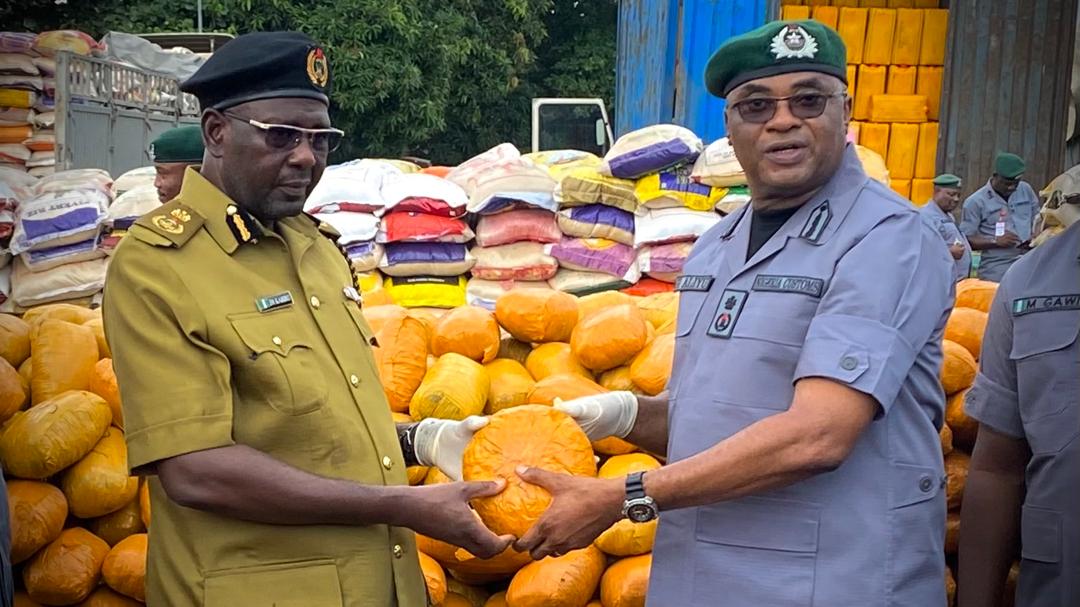
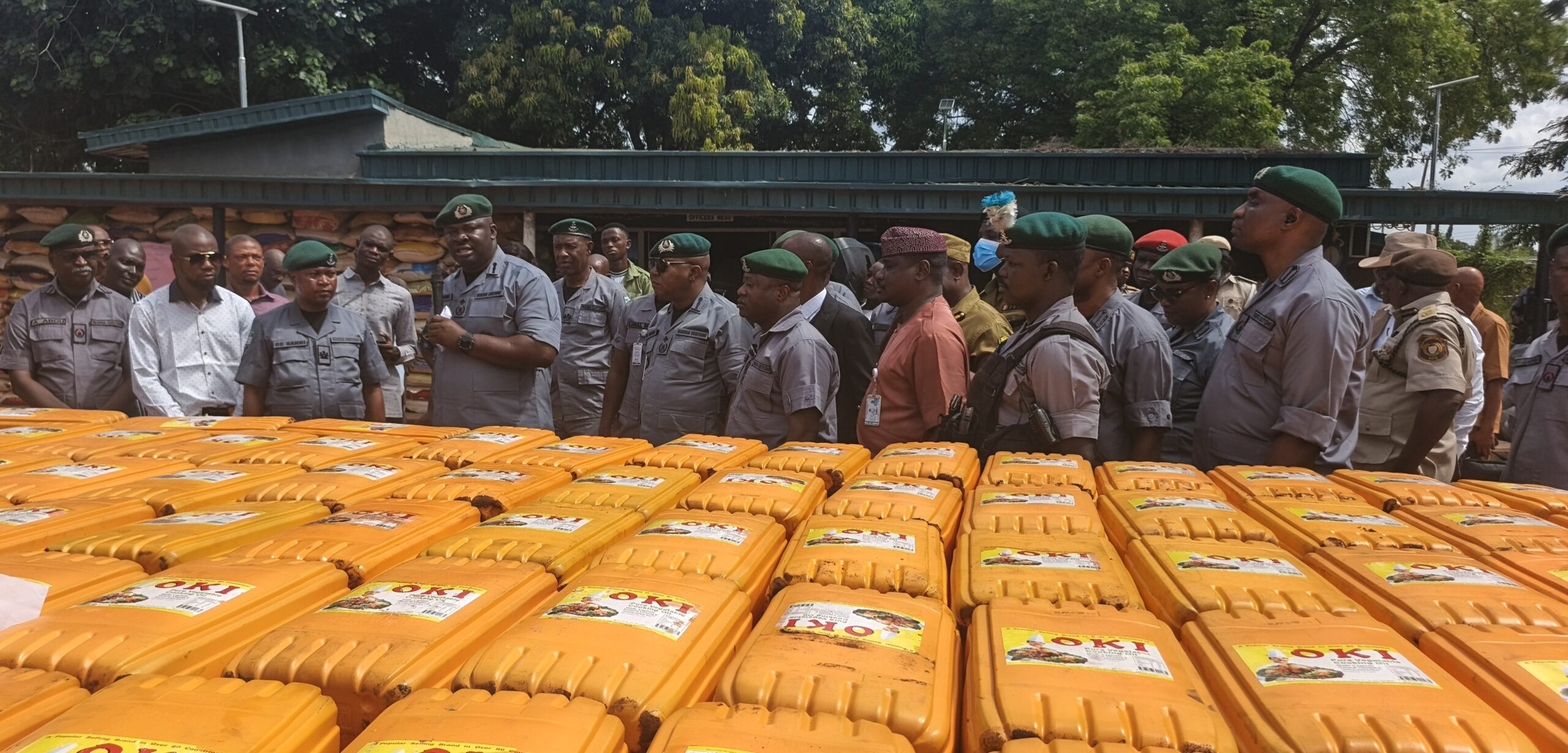
    The Ogun I Area Command of the Nigeria Customs Service has intensified its anti smuggling offensive with the interception of prohibited items valued at over N6.7 billion across border communities in Ogun State.

    Addressing journalists in Idiroko on Tuesday, the Acting Customs Area Controller, Deputy Comptroller Oladapo Afeni, said the command recorded 73 seizures within 41 days through coordinated intelligence driven operations targeting economic saboteurs and transborder criminal networks.

    Afeni disclosed that the seizures included 10,126 parcels of cannabis indica popularly known as Ghana Loud, weighing 4,627 kilograms with an estimated street value exceeding N5 billion.

    The command also intercepted 1,759 bags of foreign parboiled rice, 2,685 kegs of vegetable oil, 14,550 litres of Premium Motor Spirit, 46 bags of foreign sugar, 858 packs of macaroni, cartons of expired food products, unregistered pharmaceutical injections and several other prohibited imports.

    According to him, the cumulative Duty Paid Value of all seized items stood at N6,777,236,000, describing the development as a major breakthrough in the fight against smuggling and illicit trade along the nation’s borders.

    He revealed that the command had earlier, on March 16, handed over 2,543 parcels of cannabis sativa to the National Drug Law Enforcement Agency Idiroko Special Command, stressing that the latest operation demonstrated the command’s renewed resolve against drug trafficking.

    Afeni stated that from January till date, Ogun I Command had removed a total of 26,002 parcels of cannabis from circulation, warning that unchecked drug abuse remained a growing threat to national security and public safety.

    He linked the proliferation of narcotics to rising incidents of cultism, kidnapping, armed robbery, terrorism and other violent crimes, particularly among youths.

    The Customs boss explained that the Federal Government’s restriction on rice importation through land borders was aimed at strengthening local production and attaining food sufficiency, urging Nigerians to support policies that protect domestic industries.

    He warned that continued smuggling of foreign rice and vegetable oil would undermine local manufacturers, weaken agricultural investments and trigger job losses within Nigeria’s food production chain.

    Highlighting one of the major interceptions, Afeni disclosed that officers intercepted a DAF truck along the Shagamu Interchange Ogere corridor on May 5 and discovered 2,185 kegs of smuggled vegetable oil concealed inside the vehicle after a thorough physical examination.

    He added that another Volvo truck intercepted on May 7 along the same route was found conveying 77 cartons of Analgin injections without registration numbers, 50 cartons of expired seasoning cubes, 226 sacks of Basmati rice, used clothing, footwears, handbags and other contraband items.

    The command also confirmed the rescue of six live pangolins which have since been transferred to the appropriate wildlife protection agency for further action.

    Beyond enforcement activities, Afeni announced that the command generated N125.4 million between March 16 and May 12 through baggage assessment and auction of seized petroleum products paid into the Federation Account.

    He further disclosed that the command facilitated exports valued at over N1 billion Free On Board, noting that efforts were ongoing to eliminate operational bottlenecks and promote seamless cross border trade for compliant traders.

    Afeni said the command had now commenced a transition into digital enforcement operations in line with the modernisation agenda of Bashir Adewale Adeniyi, with the deployment of advanced geospatial intelligence technology to monitor smuggling routes and strengthen border surveillance across Ogun State.

    He commended the support of sister security agencies including the Department of State Services, Nigeria Immigration Service, Nigeria Police Force and the NDLEA, while reaffirming the command’s commitment to protecting the nation’s economy, safeguarding legitimate trade and sustaining pressure against smugglers operating along Nigeria’s borders.

  • Esther Onyegbula, others shine At Bukber Awards

    Esther Onyegbula, others shine At Bukber Awards

    Vanguard correspondent, Esther Onyegbula, alongside over 49 accomplished women from diverse sectors, has been honoured by Bukber Communications for outstanding contributions to national development, leadership, mentorship and community impact.

    The award ceremony, held during the “40 Women Redefining Leadership Within and Beyond Lagos State” event, celebrated women described as trailblazers whose influence continues to shape society through service, innovation and empowerment.

    Speaking at the event, Executive Director of Bukber Communications, Dr. Omotola Bukola, said the recognition was strictly merit-based and aimed at spotlighting women whose work has transformed lives and inspired hope across communities.

    “In every generation, a rare group of women rises above the ordinary to shape history, not merely through positions held, but through the depth of their impact,” she said.

    Bukola said the initiative was designed to celebrate women who have distinguished themselves through purposeful leadership, mentorship and service.

    “This event is about impact. We are celebrating women who have made life meaningful for others and helped them rediscover purpose,” she said, adding that the award cut across age groups and sectors.

    She, however, cautioned against the growing obsession with quick wealth among young people, urging them to embrace diligence, integrity and mentorship.

    In her citation, Onyegbula was described as “a compelling force of clarity, integrity and purpose” in the media space, recognised for crime, human interest and metro reporting.

    The organisers noted that her over a decade-long journalism career has been marked by truth-driven reporting, compassionate storytelling and advocacy for vulnerable groups.

    “She goes beyond headlines, uncovering human realities and restoring dignity to overlooked voices,” the citation read.

    Beyond journalism, Onyegbula was also recognised for her work in media strategy, reputation management and communications advisory for organisations and institutions.

    Shortly after receiving the award, she described the honour as humbling and a strong affirmation of her career journey, noting that the most meaningful aspect was the nomination process itself.
    “What makes this recognition even more special is how I was nominated,” she said.

    She explained that curiosity and humility led her to contact Bukber Communications to inquire about her nomination, a decision that led to an unexpected revelation.
    “Their response left me speechless,” she said.

    According to her, the organisers disclosed that she was nominated by colleagues and stakeholders across multiple industries, with strong mentions in the print media category.

    “They said colleagues across different industries nominated me, and in print media alone, more than 10 people mentioned my name,” she said.

    She added that the revelation reinforced her belief in consistency, integrity and hard work.
    “Hearing this reminded me that consistency and grace never go unnoticed,” she said.

    Onyegbula dedicated the award to God, describing Him as the foundation of her journey, and also paid tribute to her husband, whom she called her “number one cheerleader,” for his unwavering support.

    “To my husband, thank you for giving me the wings to fly. Your love and belief in me mean more than words can express,” she said.
    She also dedicated the recognition to her children, Gideon and Gaius, appreciating their patience and understanding.

    “To my adorable generals, this is for you. Thank you for sharing me with my work,” she added.

    Onyegbula expressed appreciation to Bukber Communications, noting that the recognition holds deep meaning in her professional journey.

    She also paid special tribute to Vanguard Media, describing the organisation as instrumental to her growth and development in Journalism.

    “To Vanguard Media for grooming me, nurturing my career, and consistently providing me with the platform to grow, I remain deeply grateful,” she said.

    Other awardees included Professor Gbemisola Morounke Saibu, honoured for contributions to biochemistry and cancer research; Major Dorcas Onuwa Ekpenisi, recognised for leadership in military engineering; and Kehinde Charity Awujoola for youth leadership and gender advocacy.

    Others were Caroline Aderonke Kuwayenu for education and personal development, Deborah Jesuyon Hunge for cultural promotion through fashion, Folashade Peter Kumayon Ajose for grassroots development, and Elizabeth Hunpe for women-focused welfare and community service.

    Delivering a goodwill message on behalf of the Executive Chairman of Badagry Local Government, Babatunde Hunpe, represented by Adagba Benjamin, urged women and youths to embrace purposeful leadership and become agents of positive change.

    “We must be people of impact. Wherever you find yourself, let your presence be felt,” he said.
    He also encouraged women leaders to mentor younger generations and lead with humility.

    The organisers further stressed the importance of leadership continuity, urging successful women to intentionally raise others.

    “The next generation should not start from zero. Leadership is a relay; if the baton is not passed, the race is lost,” Bukola said.
    She added: “True leadership is incomplete if it does not reproduce itself.”

  • Kosofe Farmers Association Visits Hon. Dr. Musiliu Alade Aigoro, Declares Support For His Aspiration

    Kosofe Farmers Association Visits Hon. Dr. Musiliu Alade Aigoro, Declares Support For His Aspiration

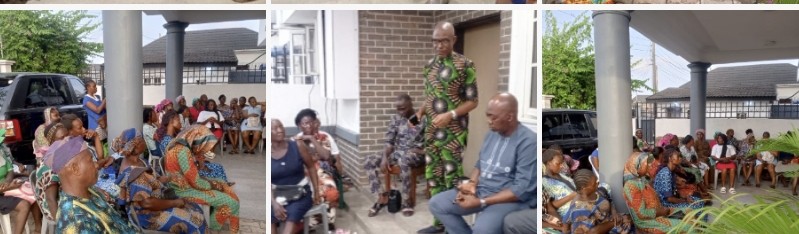
    The Farmers Association in Kosofé paid a courtesy visit to Hon. Dr. Musiliu Alade Aigoro in a strong show of solidarity and support for his aspiration to represent Kosofe Constituency 1 in the Lagos State House of Assembly.

    According to the press statement by Hon. Musiliu Alade Aigoro Campaign Structure. The meeting gave an opportunity for the association to formally endorse the candidacy of Hon. Dr. Aigoro, as members of the association turned out in large numbers alongside their leaders to express confidence in his leadership capacity, accessibility, and vision for the growth and development of the constituency.

    The visit, coordinated by Honorable Whytee, featured extensive engagement between the association and Hon. Aigoro on issues relating to community development, grassroots empowerment, and the welfare of farmers and agricultural stakeholders within Kosofe.

    Speaking during the meeting, representatives of the association commended Hon. Aigoro’s longstanding relationship with the grassroots and described him as a leader who understands the realities and needs of the ordinary people.

    In his response, Aigoro expressed appreciation to the association for the visit and the overwhelming show of support, describing the endorsement as both humbling and encouraging.

    He reiterated his commitment to advancing policies and initiatives that will improve the welfare of farmers, expand opportunities for agricultural growth, and support people-oriented programs capable of positively impacting livelihoods across the constituency.

    Hon. Aigoro further emphasized the importance of agriculture and local economic empowerment in strengthening communities, assuring the association of inclusive representation and sustained engagement with stakeholders across Kosofe.

    Members of the association applauded his plans and pledged their loyalty and continued support, while also encouraging him to remain committed to delivering on his promises when entrusted with office.

  • Nigeria Tourism Professionals Blame Poverty, Envy As Reasons For Afrophobia Attacks In South Africa — By Onyeka Ezike

    Nigeria Tourism Professionals Blame Poverty, Envy As Reasons For Afrophobia Attacks In South Africa — By Onyeka Ezike

    Following the increasing attacks on African migrants, particularly Nigerians, Industry Professionals have attributed these incidents to poverty and a lack of education among some South African citizens. In recent times, the crime rate in South Africa has risen, with some citizens accusing migrants of being responsible for criminal activities in the country. This perception has contributed to the growing wave of xenophobic attacks, which have increasingly evolved into acts of Afrophobia.

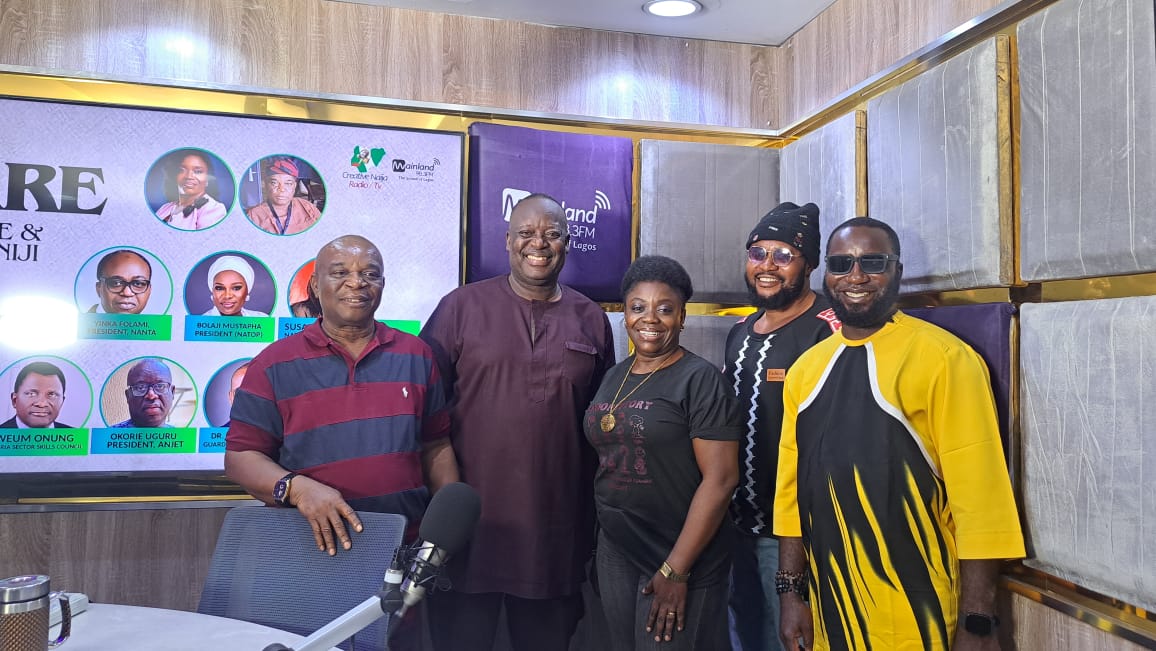
    The issue was extensively discussed at Villa Square, a special segment of Cr8tive 9ja, a weekly tourism and cultural magazine programme aired every Thursday on Mainland 98.3 FM, Lagos. The programme, anchored by renowned tourism journalist Frank Meke alongside Bunmi Bade Adeniji, focused on the topic: “Afrophobia: A Threat to Africa’s Unity, Trade, and Tourism.”

    Speaking through a telephone interview from Abuja, Susan Akporiaye, National Deputy President of the Federation of Tourism Associations of Nigeria (FTAN), emphasized the need for Africans to promote unity and mutual respect. She noted that both Nigerians and South Africans share responsibility in addressing the issue.

    “We should not ignore our own faults,” she said. “From my findings and investigations through sources in South Africa, I was informed that some Nigerians from the Igbo community installed a king in Durban, known as the Eze Ndi Igbo Durban. South Africans highly respect their traditional Zulu King, and according to their customs, only one king is recognized. Many Zulu people perceived this as an attempt to interfere with their culture.”

    Akporiaye stressed the importance of African countries working together toward shared goals. She also called on South African President Cyril Ramaphosa to openly condemn Afrophobia, as well as the destruction of property and killings of fellow African nationals in South Africa.

    Also speaking, Okorie Uguru, President of the Association of Nigerian Journalists and Writers of Tourism, attributed the profiling of Africans in South Africa to ignorance and lack of education.

    “When people are judged based on tribe, nationality, or religion, it is wrong and unacceptable in any responsible society,” he said. “As travellers, we have discovered that it is unfair to stereotype an entire group of people because of the actions of a few individuals.”

    One of the guests, Bolaji Seun, a Youth tourism enthusiast who has travelled around the African continent also highlighted the importance of African unity and regional integration. “I do not understand why Africans find it difficult to remain united,” he said. “For example, when travelling within countries under the Economic Community of West African States (ECOWAS), travellers still face unnecessary immigration bottlenecks and unofficial charges for passport stamping, which should not be the case.”

    Seun further shared that a South African acquaintance once told him her negative perception of Nigerians stemmed from a personal emotional experience involving romance relationship gone sour with a Nigerian man. According to Bolaji Seun such experiences often contribute to generalized stereotypes against Nigerians in South Africa.

    Dr. Wole Oyebade, a member of the Guardian Editorial board who spoke from South African, blamed the Political tension in South Africa, stating that the coming elections and political tension have contributed to the situation. He said that the oppositions are blaming the immigration policies of the current administration as a major contributor to the increasing crime rate in South African.

    “For the African continent, they are of the opinion that the, Xenophobia attacks have become a reoccurring situation in South Africa, we realize if the government can discourage this attack and insist things are done the normal way, things might change” Dr. Oyebade noted.

    Nkereweum Onung, the Chairman Nigeria Hospitality and Tourism Sector Skills Council, blamed envy for the rising attacks on Africa immigrants in South-Africa. He stated that such situation is destroying the African Unity, and progress of the continent. He also attributed the issue to the increasing poverty in South-Africa stressing that the government should speak to the citizens and educate them. “The South-Africans might be on the losing side with over 25% of their investment in foreign countries like the MTN, DSTV, Shoprite and others, this continuous attack will affect them on a long run” he said.

    The President of the Nigeria Association of Tour Operators, Bolaji Mustapha, stated that the persistent attacks have negatively affected trade and tourism across Africa.

    “For tourism, many Africans are now more reluctant to visit fellow African countries and instead head to destinations in Europe or Asia because of developments in South Africa and visa restrictions across the continent,” she said. “As tour operators, we are working to promote intra-African tourism, but these incidents send the wrong message to potential travellers.”

    Mustapha added that her association had advised tour operators to suspend the promotion of South African tour destinations until the safety of foreign nationals can be guaranteed.

    “We do not want to expose tourists to danger, despite South Africa’s efforts over the years to market its tourism sector,” she said, while urging the South African government to take decisive action to protect foreign nationals living in the country.

    In his remarks, Frank Meke, Chief Executive Officer of Cr8tive 9ja Media, said Africa is currently facing a critical moment, with the international community closely observing developments on the continent.

    He called on African leaders to handle the issue with caution and urgency in order to preserve African unity, regional cooperation, and economic growth.

    Over the years, Xenophobia attacks have been carried out on Nigerians in South Africa, but a recent trend has emerged with the Afrophobia attacks. The Afrophobia is a form of racism, prejudice, and discrimination specifically targeting Black people and people of African descent. It involves dehumanizing attitudes, systemic discrimination, and violence including hate speech and crimes rooted in stereotypes of “inferiority” or “incompatible difference.

    The South African Economy in the last five years has witnessed a sluggish growth from (2021 – 2025). In 2023, the country suffered a 0.8% decline, and in 2025, a 1.1% decline in GDP. The country’s unemployment rate remained consistently high, with the official rate rising to 32.9% in Q1 2025. The Country has enjoyed good business relationship with Nigeria as key of her establishment are domiciled in Nigeria like MTN, DSTV, Standard Chacter Bank among other businesses.

    Some Nigerians are of the option that if the South African government fails to handle the issue and strongly condemn the Afrophobia attacks, some countries might as well send their South African Nationals packing..

  • Time To Audit Tourism Sector, Fish Out Subversive Elements — By Frank Meke

    Time To Audit Tourism Sector, Fish Out Subversive Elements — By Frank Meke

    Recently, president Bola Ahmed Tinubu insisted that the heightened insecurity issues in the country were the handiwork of his political distractors, boldly telling the subversive elements hiding either as business men, religious leaders, sponsors of kidnappers and opposition politicians that he has the capacity to beat them all to the game.

    Like his emilokan declaration some years back, the president frank and bold confession that he is aware of the plans of his enemies to bring down his government, is a grave concern for patriotic citizens of a greater Nigeria.

    Unfortunately, due to its soft power and cultural opportunities, the potentials of the tourism industry to breed and instigate great damage to the security of Nigeria has failed to attract serious security scrutiny and interrogation.

    Today, Nigeria does not have a verifiable register of hospitality, Travel, logistics and boat operators. The country parade a mixture of quacks and half baked operators, pretending as professionals but cleverly subverting all efforts of government to strategically connect to global cultural tourism and creative economy best ethics.

    Recently, the Nigerian Drugs laws Agency (NDLA) has made substantial arrests of illicit drug traffickers who hide as hotels and hospitality investors, most using their facilities as holding bays for kidnapped Nigerians and foreigners, thus giving the country a bad name.

    No day passes with the security agencies, bursting rings of occult men and women pretending and operating as “travel agents”, with fully furnished offices, most kingpins of human trafficking and transnational enablers and cartels of all manners of illegal businesses.

    But for the careful nature and detailed investigations behind tracking and arresting such subversive elements, if full disclosures are thrown into public space, only God knows those who are genuine trade operators.

    Indeed, lack of operational register and data of professionals in the sector has made it not only difficult but tough and expensive for our security agencies to track these subversive elements.

    There are indications too that our aviation sector, particularly the non scheduled operators are dressed up as cartels, using their private jets to ferry around all kinds of unregistered cargo, human and materials, fueling insecurity in the country. Though, Nigeria Civil Aviation Authority not too recently, inaugurated an intentional inventory and registration of private jet owners, sanitising that area of our aviation transport ecosystem cannot be over emphasised.

    On our inland waterways, to curb the nefarious activities of smugglers and smuggling by the subversive elements parading themselves as boat operators, government through National inland waterways Authority insists of a mandatory registration of all boat owners, their operational vessels and jetties. Specifically, all un manned and illegal jetties across the country are tracked and subsequently shut down, with the navy, marine police, NDLEA and Nigeria immigration service patrolling our vast waterways to discourage enemies of Nigeria from turning our maritime opportunities into gateways for subversive activities.

    On our highways across the country, the increased checks and stop and search of inter state transportation operators, is clear indication that Nigeria is threatened by these cartels and subversive elements who have deliberately chosen the soft belly of our entire enabling environment to grow tourism and travel, to upend our national development.

    Let me shock and if you’re in doubt, go check the growing ambush and seizures of illegal exports of fuana resources, some unknown to science by the Nigerian Customs service. Though Nigeria, surrounded by many west coast and central neighbours,has been a transit route for illegal transportation of rare species of fauna resources, the country in recent times and due to activities of non state actors and militants groups hiding in our forests, suddenly became notoriously attractive for cartels and illegal merchants of not only our flora and fauna resources but also our our mineral resources

    To check these debilitating tendencies, the government of president Bola Ahmed Tinubu insisted that a network of reforms across board must drive a new Nigeria socioeconomic and political development, strategically encouraging all government ministries and agencies to cause an audit of the mandatory delivery ecosystem. While the aviation and marine industry seems to braced for reforms, our sector parading an alarming entry and exist regime without coordination and official register of operators and trade stakeholders, has witnessed the emergence of cartels and trade fly by night operators instigating resistance to head count and professional competence valuation.

    It’s has always our trade mark of our own cartels and mafia to ambush government policies and it didn’t start today. To cut these subversive elements to size, the Buhari regime inaugurated an enabling and duly sanctioned act of the National Assembly to empower National Institute for Hospitality and Tourism ( NIHOTOUR) to sanitise the sector and power a veritable register of authentic professionals and the hospitality facilities across the country.

    Indeed, the anxieties and crafted gross misinformation out in the public space by a section of the industry against the nihotour regulatory reforms is instigated by those afraid to stand up for public scrutiny.

    Their fear to join and support government reforms of hospitality sector, would expose their illicit activities, and blow up their covers as tax evaders, pimps, brothel operators and enablers of subversive elements.

    The Inspector General of Police should detail a thorough investigation into this sector, and in collaboration with other sister agencies, particularly immigration, customs, NDLEA, team up Nihotour and the Ministry of Justice to clean up the industry.

    In an industry parading over twenty three associations, with ninty percent operating as ghosts and special purpose vehicles to rig industry associations elections, time has come for the federal government to audit the activities and operational leadership of the associations and where they are found wanting, de register them and withdraw their certifications if any.

    The funding of these associations should also interest the federal government and including their registered trustees, if any. A situation where unregistered immigrants and questionable ” investors ” would front Nigerians and instigate them to ambush government policies and developmental strides, is very worrisome and must be fully addressed before another war will break out from our hospitality and tourism sector.

  • Unity Bank Disburses Over N500 Million Through SHOCOF To Support Traders

    Unity Bank Disburses Over N500 Million Through SHOCOF To Support Traders

    As part of efforts to promote SMEs and strengthen support for operators in the informal sector, Unity Bank has continued to empower small-scale traders and shop owners across Nigeria through its initiative called Shop Collateralised Facility, SHOCOF.

    SHOCOF is an innovative loan product, and Unity Bank has disbursed over N500 million to beneficiaries, significantly improving access to financing, and further driving financial inclusion.

    Originally introduced as a targeted intervention for traders in Southeast Nigeria, SHOCOF quickly gained traction and broad acceptance for its flexibility and tailored structure, prompting the Bank to expand the product nationwide.

    Under the initiative, eligible customers can use their shops as collateral to access financing. The product simplifies access to credit by leveraging the commercial value and stability associated with fixed business locations, enabling traders to secure funds without the stringent collateral requirements associated with traditional lending structures.

    The facility provides working capital support that enables beneficiaries to restock goods, increase inventory turnover, improve cash flow, and respond more effectively to market demand.

    Recent reports indicate that more than 80 per cent of Nigeria’s small businesses operate informally, with many relying on personal savings and informal borrowing channels due to limited access to Bank credit. SHOCOF was developed to bridge this gap through a lending model tailored to the realities of market traders and small shop owners.

    Speaking on the impact of the product, the Group Head, Risk Management, Unity Bank, Olusegun Oladipo, said the Bank recognised the need for financing solutions aligned with the realities of informal sector businesses.

    “SHOCOF was created to address a critical gap within the small business ecosystem by providing access to credit through a structure that traders can satisfactorily meet without much ado,” Oladipo said.

    He added: “By recognising the value and stability embedded in their businesses, we have been able to support traders with the capital required to sustain and grow their operations.”

    Also commenting, Divisional Head, SME & Retail Banking, Unity Bank, Adenike Abimbola, said the nationwide adoption of the product reflects proper market segmentation to meet the growing demand for accessible financing among small business owners.

    “What started as a targeted intervention in the Southeast, which quickly gained momentum because the product directly addressed the realities of everyday traders,” Abimbola said.

    Over the years, Unity Bank has continued to introduce targeted solutions aimed at empowering entrepreneurs, including its flagship Yanga account package developed to support female entrepreneurs.

    The Bank reaffirmed that expanding access to capital for underserved business segments remains critical to boosting trade, strengthening local economies, and driving sustainable economic growth.

  • Tourism Rednecks And Their Shadow Boxing Tactics By Frank Meke

    Tourism Rednecks And Their Shadow Boxing Tactics By Frank Meke

    In the past year, the tourism industry has witnessed the emergence of what can best be described as “shadow boxing” experts, individuals more invested in self-validation than in the genuine growth and development of the sector. They strive to appear impactful, yet often lack the depth of thought required to drive meaningful progress.

    It is easy to forget that every great journey begins with deliberate steps. Growth is not a competition, nor is it measured by comparison with others; it is ultimately defined by the legacy one builds over time.

    Breaking my deliberate silence on industry matters, I was compelled last night to reflect on a report indicating that the Federation of Tourism Associations of Nigeria had advised its member groups to boycott the ongoing industry competency exercise and registration regime spearheaded by the National Institute for Hospitality and Tourism, a statutory initiative backed by law. The justification, reportedly, was the absence of adequate stakeholder engagement.

    Curious, I examined the advisory to see whether the Federation had articulated the potential short- and long-term benefits of NIHOTOUR’s regulatory initiative. Unfortunately, it appeared more like an exercise in shadow boxing, what Apostle Paul once described as “beating the air.”

    The prolonged back-and-forth between the Federation and regulatory authorities reflects a troubling trend: the pursuit of perfection in policy matters through agitation rather than constructive engagement. Even if we assume that the Honourable Minister advised broader stakeholder consultations and that such efforts did not meet the Federation’s expectations, one must ask: where is the wisdom in urging members to reject a legally binding initiative without fully exploring opportunities for a mutually beneficial outcome?

    With both NIHOTOUR and the Federation headquartered in Abuja, meaningful engagement should not be difficult. If “Mohammed cannot go to the mountain,” must the mountain not be moved closer to Mohammed?

    In her 1929 essay A Room of One’s Own, Virginia Woolf cautioned against the relentless pursuit of external validation. Her words “No need to hurry. No need to sparkle. No need to be anybody but yourself” underscore the importance of thoughtful reflection over performative action. In the context of our industry, they remind us that genuine growth is rooted in dialogue, not noise.

    Contrary to claims of exclusion, there is evidence that NIHOTOUR has engaged stakeholders across the sector. Notably, as recently as yesterday, a group of restaurant operators met with the Institute and formalized their support for the initiative, recognizing the need for a credible register of practitioners and organizations within the industry.

    Given the sector’s vast diversity and its long-standing lack of structured entry and exit frameworks, regulatory reform should be welcomed as a necessary step forward. It is concerning that, rather than championing such progress, the Federation appears quick to mobilize resistance.

    To its credit, the Federal Government, through NIHOTOUR has made considerable efforts to clarify the legal and operational framework guiding the industry. While no policy is perfect, forward-thinking stakeholders typically embrace reform as a foundation for improvement, contributing constructively to its refinement over time.

    The true strength of industry players lies not in issuing threats or engaging in rhetorical battles, but in sustained, sincere dialogue with government. Encouragingly, NIHOTOUR has continued to deepen its relationship with member associations, even appointing respected industry figures to lead reform efforts. What more meaningful form of engagement could there be than entrusting our own to drive change?

    It is therefore imperative that the Bola Ahmed Tinubu administration, alongside the National Assembly of Nigeria, provides increased budgetary support to key institutions such as the Nigerian Tourism Development Authority and NIHOTOUR. This should form the cornerstone of advocacy efforts within the sector, rather than resistance to regulatory advancement.

    Ironically, the current NIHOTOUR regulatory framework traces its origins to one of the Federation’s own leaders, a former Vice President (North West) who once headed the Institute. It is therefore puzzling that the Federation now appears to be at odds with a legacy shaped, in part, by its own ranks.

    One cannot help but wonder: is there more to this conflict than meets the eye?

  • Customs intercept 473 smuggling attempts seize drugs worth over 5 billions in Southwest Nigeria

    Customs intercept 473 smuggling attempts seize drugs worth over 5 billions in Southwest Nigeria

    The Federal Operations Unit Zone ‘A’ of the Nigeria Customs Service has unveiled sweeping enforcement gains across the South-west, detailing a surge in anti-smuggling operations that disrupted illicit trade networks and boosted revenue recovery within eight weeks.

    Addressing journalists in Lagos, Comptroller Gambo Aliyu said the unit intensified its offensive against economic saboteurs, reinforcing border security and tightening compliance with federal fiscal policies and the Nigeria Customs Service Act 2023.

    He disclosed that operatives thwarted no fewer than 473 smuggling attempts through intelligence-led operations, inter-agency collaboration, and advanced surveillance systems deployed across Lagos, Ogun, Oyo and Ondo states.

    The seizures recorded within the period include 8,794 bags of foreign rice equivalent to 15 trailer loads, 22 used vehicles, 1,863 used refrigerator compressors, and 328 bales of used clothing.

    Other intercepted items comprised 1,188 kegs of vegetable oil, 31,705 litres of Premium Motor Spirit, 485 used tyres, 69 cartons of foreign spaghetti, 24 bags of sugar, five cartons of ST Louis products, and 531 cartons of poultry products.

    Aliyu said the unit also launched a targeted anti-drug initiative codenamed Operation Hawk to dismantle trafficking networks and protect communities from the rising threat of illicit substances.

    Under the operation, officers seized 3,340 parcels of synthetic cannabis popularly known as Ghanaian Loud, weighing 1,540 kilogrammes, in what he described as a major blow to drug syndicates operating within the zone.

    In a separate breakthrough, customs officers intercepted a Toyota Highlander along the Lagos Abidjan corridor, leading to the arrest of a suspect and the discovery of 6.4 kilogrammes of cocaine and methamphetamine with an estimated street value of N2.35 billion.

    He confirmed that the narcotics would be handed over to the National Drug Law Enforcement Agency for further investigation and prosecution, underscoring the importance of inter-agency cooperation in combating transnational crimes.

    The unit also seized four cylinders of high-grade mercury concealed in a vehicle at the Gbaji outpost, noting that the substance poses severe environmental risks and is regulated under international conventions.

    Aliyu said the suspect linked to the mercury seizure has been granted administrative bail, while the items would be transferred to the National Environmental Standards and Regulations Enforcement Agency for further action.

    Beyond enforcement, the comptroller highlighted a Duty Paid Value of N5.5 billion recorded within the review period, reflecting the scale and impact of operations aimed at recovering revenue and curbing duty evasion.

    He added that the unit recovered an additional N97.7 million through demand notices issued on under-declared consignments, in collaboration with post-clearance audit mechanisms.

    Aliyu stressed that the command is advancing digital transformation, integrating geospatial intelligence, satellite imagery, drones, and real-time tracking to monitor high-risk corridors and disrupt smuggling routes proactively.

    He noted that the forthcoming relocation to a newly commissioned command headquarters in Iperu, Ogun State, would further enhance operational efficiency, intelligence coordination, and real-time surveillance capabilities.

    Reaffirming commitment to trade facilitation, the comptroller assured that legitimate businesses would continue to enjoy seamless cargo movement, even as enforcement remains firm against illicit activities undermining the nation’s economy.

error: Content is protected !!