Author: Dodo Elias Denen

  • Oyo 2027: Civic Group Raises Alarm Over Alleged Political Maneuvering, Demands Integrity in Governorship Race

    Oyo 2027: Civic Group Raises Alarm Over Alleged Political Maneuvering, Demands Integrity in Governorship Race

    A civic advocacy group, Oyo Defender, has sounded a strong warning over what it describes as emerging political scheming ahead of the 2027 governorship election in Oyo State, urging stakeholders to prioritize integrity and accountability in the selection of candidates.

    In a statement signed by its Secretary, Adedosu Ifaponle, the group expressed concern over reported efforts to position a former Commissioner for Finance, Budget and Planning under the late former governor, Abiola Ajimobi, as a leading contender in the upcoming election.

    The group specifically referenced Bimbo Adekanmbi, who it said has been linked in public reports to an alleged ₦30 billion financial matter involving the Economic and Financial Crimes Commission (EFCC). While acknowledging the legal principle of presumption of innocence, Oyo Defender stressed that allegations of such magnitude must not be overlooked without thorough and transparent investigation.

    According to the group, the timing of these political developments is troubling, coming at a period when citizens are increasingly demanding credible, transparent, and people-oriented governance. It argued that leadership at the gubernatorial level requires not only administrative competence but also unquestionable integrity and public trust.

    “The management of state resources is a sacred responsibility,” the statement noted, emphasizing that any aspirant to the state’s highest office must possess a clean record and a reputation beyond reproach.

    Oyo Defender called on anti-corruption agencies to ensure that all pending allegations are comprehensively investigated and openly addressed, insisting that the electorate deserves clarity and accountability from those seeking public office.

    The group also urged political parties, civil society organizations, and voters to resist any attempt to impose candidates whose credibility is under serious scrutiny. It warned that the 2027 election must not devolve into a contest shaped by political manipulation, but rather serve as a defining moment to restore integrity and rebuild public confidence in governance.

    Reaffirming its stance, the group concluded that the future of Oyo State depends on leadership grounded in honesty, accountability, and genuine service to the people—not ambition overshadowed by controversy.

  • Disu Leads POWA Alliance with Nurses as Lagos Outreach Promises Lifeline for Police Families

    Disu Leads POWA Alliance with Nurses as Lagos Outreach Promises Lifeline for Police Families

    The Police Officers’ Wives Association (POWA) has strengthened its collaboration with the National Association of Nigerian Nurses and Midwives (NANNM) ahead of a major welfare outreach for police families in Lagos.

    POWA President, Mrs Olufunmilola Disu, received a high-level delegation of the nursing association at the POWA office in Abuja, in a meeting described as a step towards deepening cooperation on healthcare delivery for police communities.

    The delegation, led by NANNM National President, Comrade Haruna Mamman, included senior executives of the association, who discussed ways to support the upcoming POWA Cares Initiative in Lagos.

    The Lagos outreach marks the second phase of the initiative, a nationwide programme designed to improve the health, economic stability and overall well-being of police families.

    Speaking during the meeting, Mrs Disu emphasised the importance of partnership in delivering impact at scale.

    She said the success of the first phase, held in Abuja, demonstrated the urgent need for structured welfare interventions.

    More than 1,000 beneficiaries received free eye screening, treatment and basic medical consultations during that exercise, with many reporting improved productivity and quality of life.

    Building on that momentum, the Lagos phase will expand beyond healthcare to include broader support measures, including scholarships for 10 children of police officers to study nursing as part of efforts to promote educational inclusion and strengthen the healthcare pipeline.

    Mrs Disu, who is also a trained nurse, described the collaboration with NANNM as “critical to delivering quality, people-centred care”.

    “As nurses, we understand what it means to care beyond the surface. This partnership allows us to extend that care to the families of those who protect our nation,” she said.

    She added that the initiative reflects a growing recognition that the effectiveness of police officers is closely linked to the well-being of their families.

    The meeting also addressed concerns raised by the nursing association over the rise of unlicensed medical practitioners, with both sides agreeing on the need for stronger collaboration to protect public health.

    The Lagos outreach, scheduled for later this month, is expected to bring together healthcare professionals and stakeholders to deliver integrated support services to police families across the state.

  • Ogun Police and Medical University Forge Security Alliance Ojajuni Hosts Vice Chancellor in Abeokuta

    Ogun Police and Medical University Forge Security Alliance Ojajuni Hosts Vice Chancellor in Abeokuta

    In a renewed push to strengthen institutional safety, the Commissioner of Police, Ogun State Command, CP Bode Ojajuni, on Wednesday received the Vice Chancellor of the Federal University of Medicine and Medical Sciences, Abeokuta, Prof. Fatiu Abiola Arogundade, alongside his management team at the Command Headquarters, Eleweran.

    The high-level courtesy visit signalled a growing alignment between law enforcement and academia, with both sides seeking practical pathways to secure campuses and sustain an environment conducive to learning.

    Details of the engagement were contained in a statement issued by the Police Public Relations Officer, DSP Oluseyi B. Babaseyi, who noted that the meeting centred on deepening collaboration in tackling emerging security challenges.

    At the heart of the discussions was the need to safeguard students, staff and critical infrastructure within the university system, particularly against evolving threats that could disrupt academic activities.

    Both parties explored proactive strategies, including intelligence sharing frameworks and early warning mechanisms designed to prevent incidents before they escalate.

    Ojajuni, while addressing the visiting delegation, underscored the importance of synergy, stressing that effective policing thrives on strong partnerships with key societal institutions.

    He assured the university management of the Command’s readiness to deploy necessary resources to ensure a secure academic environment across Ogun State.

    The Police Commissioner further reiterated that the Command remains committed to sustaining peace and order, especially within educational institutions that play a vital role in national development.

    In his remarks, Arogundade commended the Police for their continued support and professionalism, noting that security remains a critical pillar for academic excellence.

    The visit, observers say, reflects a broader strategy to integrate community and institutional stakeholders into the state’s security architecture, as Ogun continues to prioritise safety across all sectors.

  • Election Security Tightens in Ogun as Customs Chief Afeni Rallies Olu of Ilaro Against Illegal Arms

    Election Security Tightens in Ogun as Customs Chief Afeni Rallies Olu of Ilaro Against Illegal Arms

    In a decisive move to safeguard Nigeria’s electoral integrity, the Ogun I Area Command of the Nigeria Customs Service has intensified border security operations, taking its campaign directly to traditional institutions at the frontline of cross-border activities.

    Leading the charge, the Acting Customs Area Controller, Deputy Comptroller of Customs Oladapo Afeni, paid a high-level courtesy visit to the Paramount Ruler of Yewaland, Oba Kehinde Olugbenle, at his palace in Ilaro, underscoring the urgency of pre-election security coordination.

    The engagement, according to a statement issued by the Command’s Public Relations Officer, Deputy Superintendent of Customs Chado Zakari, focused on blocking the influx of dangerous items such as small arms, light weapons and illicit narcotics through Ogun’s porous land borders.

    Afeni, in his remarks, warned that communities bordering international frontiers must not serve as conduits for destabilising elements, stressing that the stakes are higher as the nation inches closer to another electoral cycle.

    He declared that the Service has activated a strict zero tolerance posture against smuggling, particularly of items capable of undermining peace, noting that the support of traditional rulers remains critical to success.

    The Controller outlined a raft of proactive measures already in motion, including the establishment of direct communication channels with border leaders, round-the-clock surveillance of identified smuggling routes and intensified inspection of transit goods.

    He maintained that the strategy is not only enforcement-driven but also collaborative, aimed at building trust with host communities while ensuring that legitimate trade is not disrupted.

    Responding, Oba Olugbenle commended the Customs Service for its foresight and proactive engagement, reaffirming the readiness of the Yewa people to partner with security agencies in preserving peace.

    The monarch pledged to mobilise community structures, particularly the youth, against aiding illegal trade, stressing that a violence-free election begins with cutting off the supply of weapons at the borders.

    Expanding the outreach, Afeni also embarked on a strategic tour of other key border communities, visiting the Onihumbe of Ohunbe, Oba Adekola Oje Oladokun, and the Olu of Owode, Oba Mathew Akindele, where he reinforced the message of shared responsibility in securing the nation’s gateways while sustaining lawful commerce.

  • Nestlé Nigeria Celebrates 15 Years of Impact with 20 Graduates from Flowergate Technical Training Centre

    Nestlé Nigeria Celebrates 15 Years of Impact with 20 Graduates from Flowergate Technical Training Centre

    Nestlé Nigeria is celebrating 15 years of impact with the graduation of twenty young trainees from the Flowergate Technical Training Centre. This milestone reinforces the company’s long-standing commitment to youth empowerment through the development of technical and vocational skills among young Nigerians.

    The Nestlé Technical Training Centre is part of Nestlé Needs YOUth, Nestlé’s global youth initiative launched in 2013 to equip young people with skills, experience, and opportunities to access meaningful employment, with a goal of reaching 10 million youths worldwide by 2030.

    Since its establishment in 2011 at Agbara Factory, the Nestlé Technical Training Centre has equipped 309 young Nigerians with hands-on technical and vocational skills across its three locations in Agbara, Flowergate, and Abaji. With an investment of over ₦6 billion, the programme delivers an intensive 18-month curriculum that combines theoretical learning with practical engineering training.

    The curriculum provides comprehensive instruction in food technology, engineering, and manufacturing operations, equipping trainees with the technical expertise required to thrive in today’s industrial environment. This culminates in the internationally recognized City and Guilds of London Technicians’ Certification, significantly enhancing participants’ employability within Nigeria and beyond.

    Speaking at the graduation ceremony, Mr. Wassim Elhusseini, Managing Director and Chief Executive Officer of Nestlé Nigeria, emphasized the alignment of the initiative with Nestlé’s core purpose “At Nestlé, our purpose is to unlock the power of food to enhance quality of life for everyone today and for generations to come. It is this purpose that drives initiatives such as this. Through the Nestlé Technical Training Centre, we are investing in the future of our industry, our communities, and the thousands of talented young Nigerians ready to grow and excel. Over the past 15 years, we have seen firsthand how this pipeline of talent has strengthened our operations, built critical capabilities within the industry, and created meaningful pathways for young people to thrive. We remain firmly committed to continuing this journey, expanding opportunities, deepening impact, and empowering the next generation of skilled professionals who will shape the future of our industry and our nation’’

    The Country Human Resource Manager Shakiru Lawal, highlighted Nestle’s broader impact of the Nestlé Needs YOUth initiative under “At Nestlé, our youth development work across Central and West Africa is guided by a simple belief: unlocking potential through skills, opportunity, and real pathways to work. Through structured training, apprenticeships, and strong industry partnerships, we are helping young people build the skills they need to succeed in today’s workforce while also strengthening the future of our industry. In Nigeria, this commitment comes to life through the Nestlé Technical Training Centres. With an impressive 98% of graduates moving into employment within Nestlé, the programme has become a key talent pipeline for the business. Most importantly, it reflects our purpose of creating shared value through industry knowledge, practical skills, and meaningful job opportunities.

    In his speech, the valedictorian of the graduating set, Mr. Samuel Oladokun, spoke on behalf of his fellow graduates, sharing a powerful testimony of the programme’s impact “This training has gone far beyond building our technical skills. It has shaped our discipline, strengthened our confidence, and prepared us in a real and practical way for for us to perform in demanding industrial environments. As graduates, we are leaving this Centre not only with technical competence, but also with a stronger sense of responsibility, teamwork, and professionalism. We are grateful for the opportunity we have been given, and we step forward with confidence, ready to contribute meaningfully, grow in our careers, and make a positive impact wherever we find ourselves.”

    His Royal Majesty, Oba Babatunde Adewale Ajayi, the Akarigbo and Paramount Ruler of Remo Land, who was ably represented at the event commended the initiative for its positive impact on local communities and reaffirmed the support of the community in sustaining such developmental programmes.

    Professor Abayomi Adelaja Arigbabu, Commissioner for Education, Science and Technology, Ogun State, also commended Nestlé Nigeria for its continued support of government efforts in youth empowerment and skills development.

    Other distinguished guests present at the ceremony included Regional Human Resource Manager, Nestlé Nigeria, Antoinette Arkoh, Hon Wasiu Isiaka, Honourable Commissioner for Youth and Sports, Ogun State, Ms. Conny Camenzind, Consul General of Switzerland as well as representatives from the Ministry of Trade, Industry and Investment, the Nigerian Employers’ Consultative Association (NECA), and the Alliance for Youth initiative. They commended the progress of the programme and reaffirmed their continued support for its success.

    The Nestlé Technical Training Initiative remains a key pillar of Nestlé Needs YOUth in Nigeria, a global initiative focused on capacity building for young people. Other programmes under this umbrella include the Nestlé Nigeria Youth Development Programme, Nesternship, and the Alliance for YOUth, all aimed at improving employability and creating opportunities for young Nigerians to thrive.

    Nestlé Nigeria is Africa’s top food and beverage company, known for its quality, excellence, and commitment to creating shared value. With a heritage of more than 63 years in Nigeria and its house-hold brands, the firm continues to ensure the availability and accessibility of nutritious food and beverage products. In addition, the firm supports the communities closest to its operations and takes action to safeguard the environment through sustainable business practices.  

    With over 2,300 direct employees, 3 factories and 7 branch offices across Nigeria, Nestlé produces and markets iconic brands including Maggi, Milo, Golden Morn, Nestlé Pure Life and Cerelac.  

  • Unity Bank, Experts Advocate Green Investment, Climate Innovation to Drive Economic Resilience

    Unity Bank, Experts Advocate Green Investment, Climate Innovation to Drive Economic Resilience

    Nigeria’s retail lender, Unity Bank Plc, alongside leading climate innovation experts, has called for increased investment in the green economy and the adoption of frontier technologies as critical pathways to driving economic resilience and reducing the impact of climate change on vulnerable populations across Africa.

    The call was made during a thought-provoking webinar hosted by the Bank to commemorate this year’s Earth Day, themed “The True Cost of Climate Change and Who Pays?”. Climate experts and stakeholders convened to examine the human, economic, and institutional costs of climate change, while spotlighting practical solutions to address its growing impact.

    In his opening remarks, Unity Bank’s Head of Strategy and Innovation, Ibukun Coker, emphasised the urgency of addressing climate risks from both a societal and business perspective.

    He said: “Climate change is no longer a distant or abstract challenge. It is an existential threat with direct consequences for individuals, businesses, and economies. At Unity Bank, we recognise the role institutions must play in incorporating sustainability in project financing, supporting businesses and promoting solutions that build resilience in communities where we operate.”

    The webinar featured Chinwe Udo-Davis, Founder and CEO of Instollar, and Oluwatosin Ajide, Programme Manager at the Nigeria Climate Innovation Centre, both of whom provided insights into the drivers of climate change and the pathways to mitigation and adaptation.

    Speaking during the session, Udo-Davis highlighted the disproportionate burden which climate change places on underserved communities and the need for inclusive solutions.

    “The true cost of climate change is not evenly distributed. Communities with the least resources are often the most affected, whether through energy poverty, environmental degradation, or limited access to sustainable alternatives. Addressing this imbalance requires intentional investment in clean energy solutions that are both accessible and scalable.”

    Ajide underscored the importance of coordinated, system-wide approaches in tackling climate challenges, particularly through innovation and policy alignment.

    “Climate change is fundamentally a structural problem, and its solution requires a paradigm shift: from innovation and policy to financing and implementation. Stakeholders must work collaboratively to drive solutions that are sustainable and inclusive.”

    The session also explored emerging opportunities in climate technology, renewable energy, and ecosystem financing, reinforcing the role of innovation and cross-sector collaboration in building long-term resilience.

    By hosting the webinar, Unity Bank continues to demonstrate its commitment to advancing sustainability-focused dialogue and supporting initiatives that promote responsible growth and environmental stewardship.

    The initiative underscores the Bank’s broader strategic focus on environmental sustainability as well as its commitment to financial inclusion.

  • Dairy Technical Skills Development Centre

    Dairy Technical Skills Development Centre

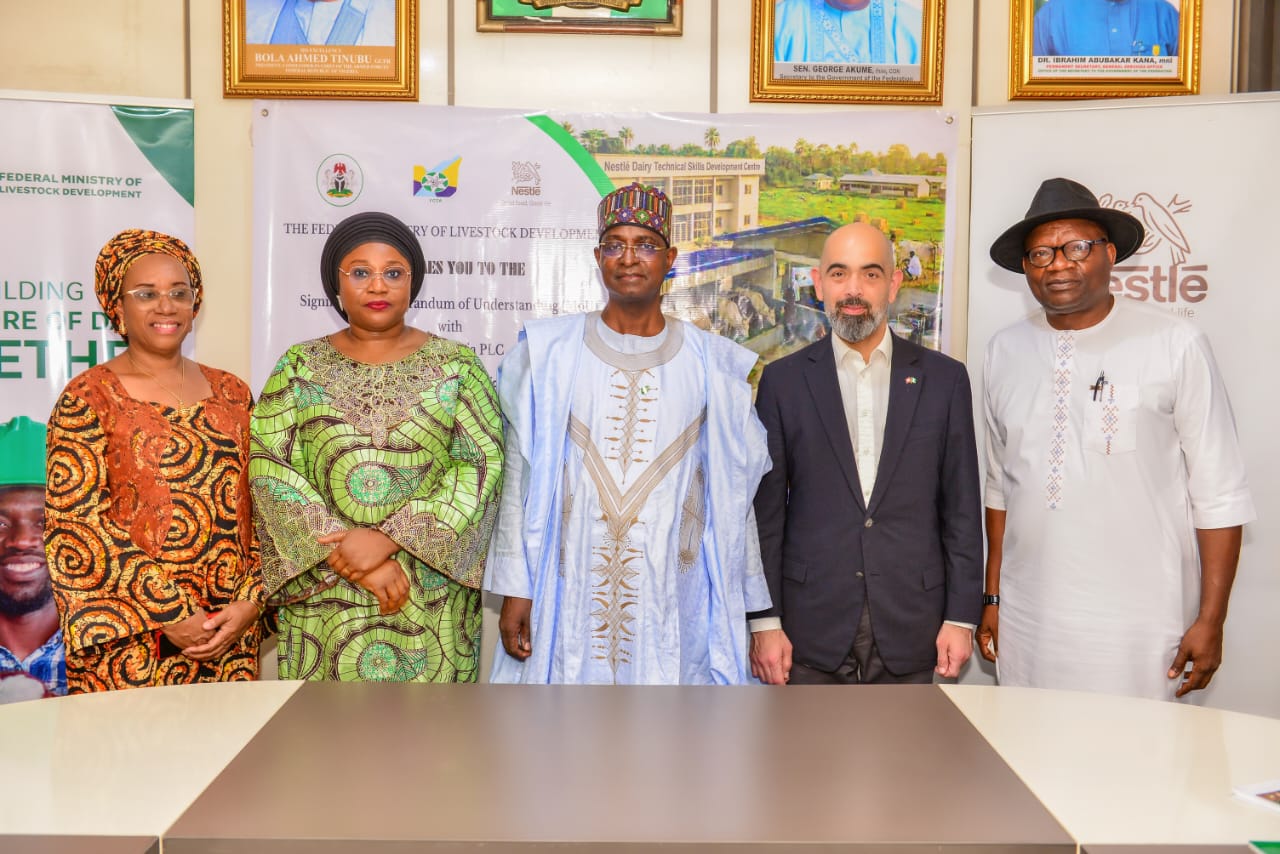
    Nestlé Nigeria Plc has signed a Memorandum of Understanding with the Federal Ministry of Livestock Development to establish a Dairy Technical Skills Development Centre in Paikon Kore, Gwagwalada, as part of efforts to strengthen technical capacity, improve milk quality, and enhance productivity within Nigeria’s dairy sector.

    According to the press statement by Toritseju Egbebi Corporate Affairs Manager, Nestle Nigeria. The Centre, to be located at the Nestlé Dairy Demonstration Farm, builds on the company’s ongoing Livestock Development Project (NLDP). It reflects a deliberate progression of interventions, from the launch of the Demonstration Farm in 2025 to the signing of a Letter of Intent on World Milk Day 2025. Together, these milestones signal the transition from pilot initiatives to full implementation and a more structured, scalable approach to skills development across the dairy value chain.

    The collaboration will deliver structured training programmes and targeted interventions focused on: Strengthening on-farm practices across milk production, processing, hygiene, and farm management Developing industry-relevant technical skills in collaboration with key stakeholders Improving value chain coordination and milk quality outcomes across local dairy clusters

    Speaking at the signing ceremony, Managing Director and CEO of Nestlé Nigeria Plc, Wassim Elhusseini, said, “At Nestlé, we have been working over the years to strengthen the dairy value chain in Nigeria. What we have seen is clear, when capability improves, outcomes follow. This partnership with the Federal Ministry of Livestock Development allows us to expand the reach of our structured approach to building the skills required to improve productivity, enhance quality, and support long-term sustainability in the sector.”

    He added that the company’s investment in dairy development has consistently focused on creating shared value for communities while supporting the growth of a resilient local supply base.

    Since 2019, the Nestlé Livestock Development Project has been working with dairy communities in Nigeria to improve milk quality, increase productivity, and strengthen livelihoods. To date, the initiative has established 83 dairy cooperatives, benefiting over 3,000 milk producers and aggregating more than 1 million litres of raw milk. More than 2,000 pastoralists have been trained, over 36,744 cattle vaccinated, and key infrastructure introduced to support production.

    Also speaking at the event, the Honourable Minister of Livestock Development, Mukhtar Idi Maiha, said: “Nigeria’s dairy sector holds significant potential, but unlocking it requires stronger technical capability across the value chain. This partnership represents a practical step towards improving productivity and quality, and I commend Nestlé Nigeria for their continued commitment and proven track record through the Nestlé Livestock Development Project, demonstrating what is possible when the right systems are in place. At the Ministry, we are committed to creating an enabling environment that supports investments such as this, ensuring that policy and partnerships work together to drive meaningful impact and build a more resilient and competitive dairy industry.”

    The Minister noted that the initiative aligns with the objectives of the National Dairy Policy under the National Development Plan, which aims to catalyse growth in the livestock and dairy sectors while enhancing food security and economic opportunity.

    Following the signing of the MoU, both parties will move into implementation, including finalizing the training framework, preparing the site at the Demonstration Farm, and commencing phased rollout of the programme in collaboration with relevant stakeholders.

    The Dairy Technical Skills Development Centre will provide a structured platform for training and capacity building, with a focus on developing mid-level technical skills that are critical to the long-term sustainability of the sector. The programme will be implemented in collaboration with relevant stakeholders to ensure alignment with national standards and industry needs.

    By scaling proven interventions and strengthening technical capability, the partnership contributes to building a more resilient dairy sector that supports livelihoods, strengthens local production, and advances national development.

    Nestlé Nigeria is one of the largest food and beverage companies in Africa. The Company’s purpose is to unlock the power of food to enhance quality of life for everyone today and for generations to come. For over 62 years of its operation in Nigeria, Nestlé has delighted consumers around Nigeria by consistently delivering high quality nutritious food and beverages under its iconic brands: MAGGI, MILO, GOLDEN MORN, NESTLÉ PURELIFE, CERELAC, NESCAFÉ and NIDO.

    With 3 manufacturing sites, 7 branch offices and a head office located in Lagos, Nestlé Nigeria is a force for good, helping to improve the wellbeing and livelihood of individuals and families to build thriving communities while taking action to protect the planet.

  • AIG Jimoh Air Force Talks Open New Chapter In Security Coordination

    AIG Jimoh Air Force Talks Open New Chapter In Security Coordination

    The push for stronger inter agency cooperation took centre stage yesterday as Olohundare Moshood Jimoh, Assistant Inspector General of Police in charge of Zone 2, paid a strategic visit to the Nigerian Air Force Logistics Command in Ikeja.

    Jimoh, who led his management team to the Sam Ethnan Air Force Base, engaged the Air Officer Commanding, Abdul Suleh, in what observers described as a significant move to reinforce security collaboration.

    Speaking during the visit, the AIG underscored the urgency of deepening synergy among security agencies, noting that evolving threats demand a unified and intelligence driven response.

    He recalled the strong working relationship between the police and the Nigerian Air Force during his tenure as Lagos State Commissioner of Police, stressing that such cooperation played a critical role in curbing criminal activities.

    According to him, sustained collaboration in intelligence sharing, surveillance operations, joint patrols and coordinated enforcement contributed meaningfully to the relative stability witnessed across the state.

    Jimoh explained that his visit was also forward looking, aimed at strengthening institutional ties as his current mandate now covers both Lagos and Ogun states under Zone 2 command.

    He further highlighted how both institutions had consistently managed potential friction among personnel, ensuring that disagreements were swiftly resolved to preserve operational harmony.

    Reaffirming commitment to national security objectives, Jimoh said the police under the leadership of Olatunji Disu would continue to prioritise collaboration to enhance investigative efficiency and public safety.

    In his response, Suleh described the visit as timely and commendable, praising Jimoh as a disciplined and professional officer with a reputation for effective leadership.

    The Air Officer Commanding recalled past engagements with the AIG, noting that his approach to conflict resolution and respect for inter agency relations had strengthened trust, while assuring that the Nigerian Air Force would sustain its support in advancing a seamless security framework.

  • Five Year State Police Plan Sparks Debate As Panel Breaks Silence

    Five Year State Police Plan Sparks Debate As Panel Breaks Silence

    The Steering Committee on state policing, led by Professor Olu Ogunsakin, has defended the proposed five year rollout plan, insisting it represents the most realistic pathway to restructuring Nigeria’s policing architecture without exposing the country to security risks.

    Details of the 60 month implementation framework were contained in a comprehensive report submitted to the Inspector General of Police, Olatunji Disu, following the committee’s inauguration on March 4.

    The panel said the timeline was carefully calibrated to reflect the scale of legal reforms, personnel redistribution, institutional development and training required to transition from a centralised to a decentralised policing system.

    Amid criticisms that the proposed duration may slow down reform, the committee clarified that its recommendation is in fact shorter than the 71 month transition earlier canvassed by the Nigerian Governors’ Forum.

    It stressed that the five year window is the minimum practical period needed to redeploy over 200,000 personnel of the Nigeria Police Force across the 36 states and the Federal Capital Territory while maintaining uninterrupted federal policing operations.

    According to the report, the transition would unfold in five carefully sequenced phases, beginning with preparatory activities and progressing through application processing, personnel transfers, restructuring of federal formations and final consolidation.

    The committee warned that each phase is interdependent, noting that any attempt to compress the timeline could destabilise institutions and weaken coordination across the national security framework.

    It explained that the first phase alone would require far reaching constitutional and legislative actions, including amendments to Sections 214 and 215 of the 1999 Constitution, passage of a State Police Act by the National Assembly and enactment of enabling laws by all states and the FCT.

    Beyond legal reforms, the panel said each state must build its policing system from the ground up, covering recruitment processes, community policing structures at local government level, custody facilities, forensic laboratories and modern digital infrastructure.

    It also proposed the creation of a National Police Standards Board with inspection oversight across six zonal offices to ensure uniformity, professionalism and accountability across emerging state police services.

    The committee acknowledged the heavy financial implications of the reform, noting that costs would need to be distributed over several years to guarantee sustainability and operational efficiency.

    On personnel matters, the report indicated that redeployment would be voluntary, supported by structured career guidance, while pensions and service benefits would remain fully protected throughout the transition.

    Special provisions, it added, would be made for officers nearing retirement, those on medical grounds, personnel deployed in conflict zones and female officers requiring additional welfare considerations.

    Simultaneously, new recruitment into state police formations would run alongside transfers from the federal force, with structured training programmes and phased deployment tied to professional certification milestones.

    The final stages of the transition would see the integration of national policing databases, including a central criminal records system, an intelligence portal and an upgraded fingerprint identification system, alongside a nationwide performance review to refine the legal and operational framework.

    The committee maintained that the proposed 60 month plan offers a balanced and secure route to state policing, preserving national cohesion while laying the foundation for a more responsive and locally driven security system.

error: Content is protected !!