Category: News

  • Comptroller Wale Adenuga Takes Over the leadership of Seme Area Command

    Comptroller Wale Adenuga Takes Over the leadership of Seme Area Command

    …vows to Deepen Trade Facilitation and Make the Seme Border a Nigeria’s Pride

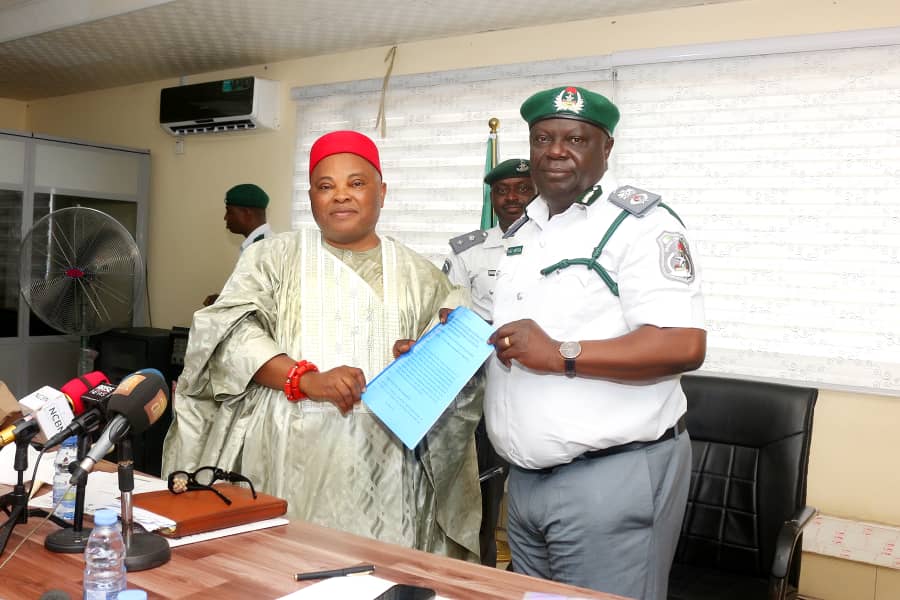
    The Nigeria Customs Service, Seme Area Command, has witnessed a seamless change of leadership as Comptroller Wale Adenuga formally took over the mantle of leadership of the Command yesterday at the ECOWAS Joint Border Post, Seme-Krake Border Post.

    According to the press statement signed by CSC Isah Sulaiman, Public Relations Officer
    Seme Area Command, the handing over ceremony brought together senior officials from sister security agencies, representatives of trade and transport stakeholders, community leaders and members of the Fourth Estate.

    In his inaugural address, Comptroller Wale Adenuga praised the outgoing CAC for his achievements and pledged to consolidate on them. He outlined his vision for the Command, placing trade facilitation at the heart of his leadership. “Trade facilitation is my keyword,” he stated.

    “When stakeholders make proper declarations, their consignments will leave Customs control within the shortest possible time. The more we facilitate trade, the more revenue we generate and the less smuggling we have,” he added.

    Adenuga pledged to collaborate closely with sister agencies, including the DSS, Nigeria Police, Immigration, NDLEA, Nigerian Military, NAFDAC and others to reduce crime and create a conducive environment for business to thrive. He also committed to maintaining open communications with the traditional rulers, the youth of Badagry and the media and assured all that “his doors remain open”.

    He promised to lead from the front and ensure officers remain disciplined and committed to their responsibility and not to compromise their duties.

    Acknowledging the leadership of the CGC, who is also the President of the World Customs Organization (WCO) Council and the first Nigerian to hold the role, Comptroller Adenuga stressed the need to make the CGC proud through exemplary performance.

    In his farewell remarks, ACG Oramalugo described the day as one of “mixed emotions” joy at God’s faithfulness and his promotion, but nostalgia for the bonds built during his time in Seme. He highlighted key achievements under his leadership, including sustained suppression of smuggling with significant seizures of prohibited goods. Improved revenue collection and enhanced trade facilitation to ease legitimate business while safeguarding national security, as well as fostering inter-agency cooperation and community engagement, among others.

    He expressed gratitude to the Comptroller-General of Customs and NCS Management for their support, thanked his officers for their loyalty and discipline and urged all stakeholders to extend “even greater support” to his successor.

    The ceremony featured goodwill messages from heads of sister agencies and stakeholders, including the Comptroller of Immigration at the Joint Border Post, Comptroller of Immigration Land Border Patrol, Nigeria Shippers Council, NDLEA, FRSC, among others.

    The event ended with a collective pledge from all agencies and stakeholders to work in synergy with the new leadership to boost revenue, curb smuggling, enhance security and promote seamless trade at the Seme Border.

  • Apapa Port Gets New Customs Leader as Oshoba Targets Efficiency and Compliance

    Apapa Port Gets New Customs Leader as Oshoba Targets Efficiency and Compliance

    Comptroller Oluwadare Oshoba on Monday officially assumed duty as the new Customs Area Controller of the Apapa Area Command, Nigeria’s busiest port, pledging to consolidate on past achievements and chart fresh paths in revenue generation, enforcement, and stakeholder engagement.

    Speaking at the official handover ceremony held at the Command headquarters, Oshoba expressed gratitude to the Comptroller-General of Customs, Bashir Adewale Adeniyi, and the NCS management for the confidence reposed in him, assuring of his commitment to deliver on the Service’s mandate.

    He outlined three key pillars of his leadership agenda: enhancing revenue collection through transparency and accountability, deepening enforcement with intelligence-driven operations, and strengthening partnerships with port stakeholders.

    “Trade facilitation and compliance are two sides of the same coin. The port community is our partner in progress, and together we must work to improve efficiency while safeguarding national interests,” Oshoba said.

    The new CAC also emphasized the importance of technology and modernization, vowing to build on the gains of the Unified Customs Management System (B’Odogwu) and push forward other trade facilitation programmes such as the Authorised Economic Operator (AEO), Time Release Study (TRS), and Advanced Ruling (AR).

    “As Nigeria currently chairs the World Customs Organization Council, we must lead by example in compliance, innovation, and service delivery,” he added.

    In his farewell remarks, the outgoing Area Controller, now Assistant Comptroller-General (ACG) Babatunde Olomu, fsi, PhD, reflected on his 15-month tenure, describing it as a period of remarkable milestones for the Command.

    He disclosed that under his watch, Apapa Command achieved record-breaking revenue performance, including a historic ₦2 trillion annual collection and daily collections peaking at ₦18.9 billion. As of September 8, 2025, the Command had already generated ₦1.83 trillion, representing 60 percent of its ₦3 trillion target for the year.

    Olomu also highlighted landmark trade facilitation achievements, including Nigeria’s historic first shipment under the African Continental Free Trade Area (AfCFTA) in July 2024 and subsequent shipments that positioned the country as an active participant in intra-African trade.

    On enforcement, he revealed that the Command made 75 seizures in 15 months, comprising 62 containers of 40ft and 13 containers of 20ft loaded with fake, expired, and prohibited items such as controlled drugs, Indian hemp, and used clothing.

    Expressing gratitude to officers, stakeholders, and sister agencies, Olomu urged them to extend even greater cooperation to his successor. “As Oliver Twist, I ask that you do more for Comptroller Oshoba, who is fully capable of taking this Command to greater heights,” he said.

    The ceremony was attended by Customs Comptrollers, terminal and unit heads, port stakeholders, and representatives of sister security and regulatory agencies.

  • NEITI, CISLAC Demand Renewed Civil Society Engagement in Oil and Gas Oversight

    NEITI, CISLAC Demand Renewed Civil Society Engagement in Oil and Gas Oversight

    The Nigeria Extractive Industries Transparency Initiative (NEITI) has urged civil society organisations (CSOs) in Nigeria to adopt a new agenda that goes beyond routine advocacy and monitoring, and to embrace knowledge-driven leadership in the governance of the country’s extractive industries.

    Executive Secretary of NEITI, Dr. Orji Ogbonnaya Orji, made this call on Monday, September 8, 2025, during a courtesy visit to the Civil Society Legislative Advocacy Centre (CISLAC) in Abuja.

    Dr. Orji said the evolving realities of global energy transition, fiscal pressures, and governance challenges demand a stronger role for civil society in shaping extractive sector reforms.

    “Civil society must move from simply demanding accountability to providing knowledge-based, evidence-driven, and solution-oriented leadership that adds real value to governance,” he said. “This new agenda calls for leadership in energy transition accountability, fiscal justice, contract analysis, and vigilance in curbing illicit financial flows.”

    He highlighted ongoing institutional linkages by NEITI, including collaborations with the EFCC, ICPC, NFIU, and NNPC Ltd., as well as the establishment of a Data Centre to provide real-time disclosures on revenues, ownership, and host community funds. According to him, these platforms are open opportunities for CSOs to deepen their civic impact.

    The NEITI boss specifically challenged CISLAC to take the lead in driving civil society’s contribution to the Extractive Industries Transparency Initiative (EITI) process. He recommended that CISLAC expand its information platforms from bulletins to peer-reviewed scholarly journals that could support research, teaching, and global thought leadership.

    In his welcome address, CISLAC’s Executive Director and Head of Transparency International Nigeria, Hon. Auwal Musa Rafsanjani, reaffirmed CISLAC’s long-standing partnership with NEITI and its role in establishing Nigeria’s EITI framework. He noted that the collaboration between both institutions has historically advanced transparency and accountability in the oil, gas, and solid minerals sectors.

    Rafsanjani acknowledged NEITI’s contributions through data disclosures and reforms, while stressing the need for stronger accountability at sub-national levels and tangible benefits for communities in extractive regions.

    “Today, Nigeria is navigating complex challenges—declining oil revenues, energy transition, and governance risks in the solid minerals sector. This makes our collaboration with NEITI even more urgent,” Rafsanjani said.

    He outlined areas of future partnership, including tracking audit recommendations, legislative advocacy, capacity building for journalists and parliamentarians, and safeguarding civic space in extractive governance.

    Both leaders agreed that the future of Nigeria’s extractive governance depends largely on how civil society evolves from watchdogs to solution providers, and from observers to reform architects.

  • Nationwide Military Operations Yield Significant Gains Against Terror Threat

    Nationwide Military Operations Yield Significant Gains Against Terror Threat

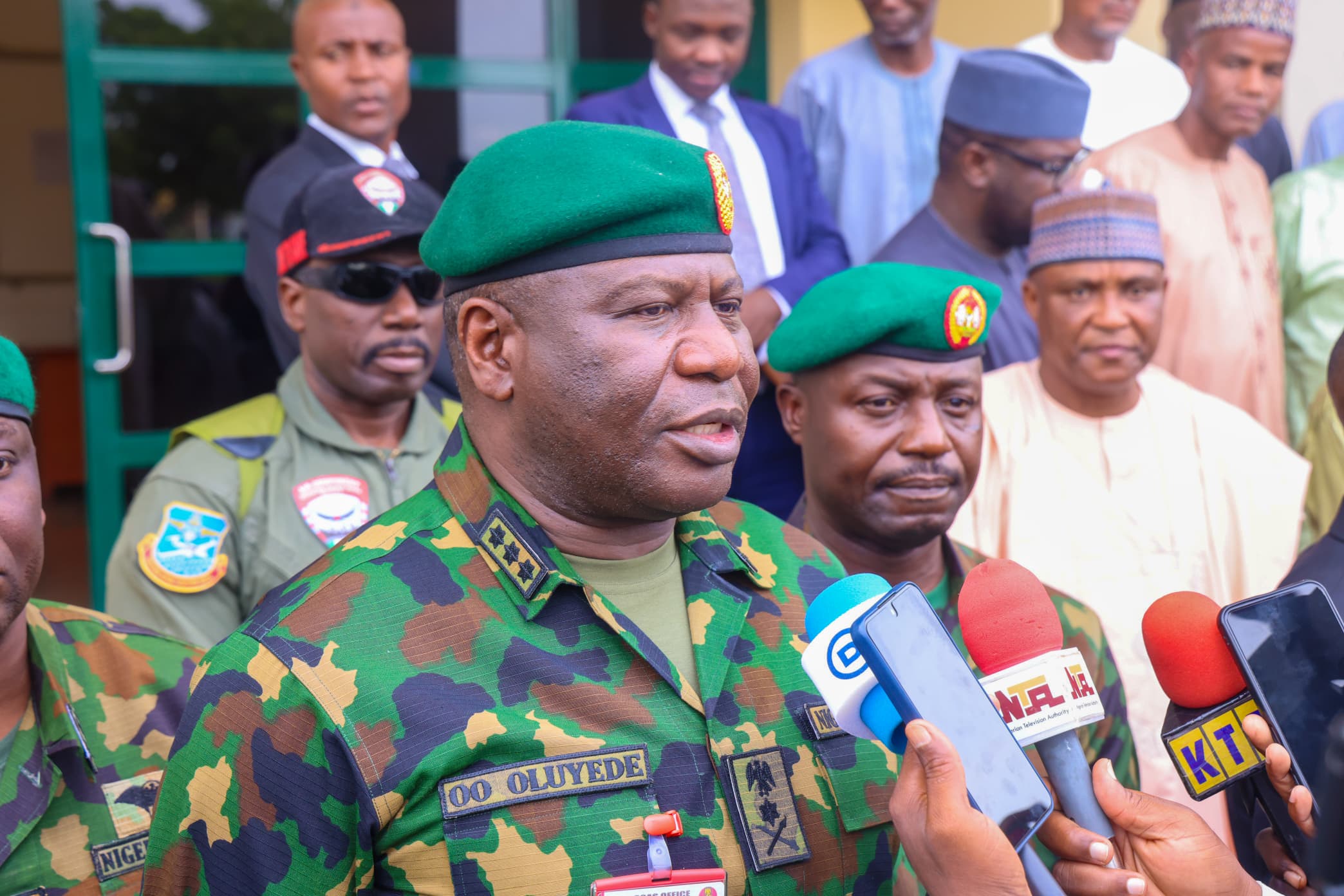
    The Nigerian Army has recorded fresh successes in its nationwide counter-terrorism and anti-crime operations, neutralising two terrorists, arresting seven suspects—including a female logistics supplier—and recovering weapons, petroleum products, and a stolen vehicle between September 4 and 6, 2025.

    In Borno State, troops of 192 Battalion with the Hybrid Force engaged Islamic State West Africa Province (ISWAP) fighters near Kwatara Kasa Village along the Gwoza–Limankara Road. Following a fierce firefight, one terrorist was neutralised while others fled towards the Mandara Mountains.

    In Adamawa State, troops of 232 Battalion intercepted two suspected petroleum smugglers in Mubi South Local Government Area with 19 jerrycans of petroleum products loaded on motorcycles.

    Troops in Zamfara State, acting on intelligence and in coordination with the Department of State Services (DSS), arrested a female logistics supplier linked to notorious terrorist kingpin Ado Aliero. The suspect, apprehended at Kucheri in Tsafe LGA, was found with a mobile phone, ₦37,000 cash, and other items. She confessed to also being a drug peddler.

    In the Federal Capital Territory, troops of 176 Guards Battalion mounted a snap roadblock to intercept a stolen vehicle traced from Osun State. Although the suspects initially fled, they were tracked to a hotel in Gwagwalada, where three were arrested. Troops recovered the stolen vehicle, 11 mobile phones, and ₦29,700 cash, before handing the suspects and exhibits over to the police.

    Similarly, in Plateau State, troops of Operation Enduring Peace secured a breakthrough after interrogating a terrorist informant arrested at Dadin Kowa on September 4. He led troops to a hidden weapons cache in Mista Ali Village, Bassa LGA. However, he attempted to escape and was neutralised. Two AK-47 rifles were recovered from the site, and efforts are ongoing to track his accomplices.

    The Army said the operations highlight its determination to dismantle terrorist networks, disrupt criminal activities, and recover illicit arms nationwide.

    It reiterated its commitment to sustaining security operations that will create safer conditions for agriculture and economic activities in line with the Federal Government’s food security agenda.

  • 64 Suspects Arrested as Nigerian Army Steps Up Anti-Terror Operations Nationwide

    64 Suspects Arrested as Nigerian Army Steps Up Anti-Terror Operations Nationwide

    The Nigerian Army has intensified its nationwide counter-terrorism and anti-crime operations, recording significant successes between September 1 and 5, 2025. The operations led to the neutralisation of four terrorists, arrest of 64 criminal suspects, rescue of kidnapped victims, and recovery of weapons, ammunition, and logistics.

    In the North East, troops of 117 Task Force Battalion, supported by Civilian Joint Task Force and vigilantes, engaged terrorists at Yimurmuze in Chibok Local Government Area of Borno State, killing one and seizing an AK-47 rifle, a magazine, and 24 rounds of ammunition. Similarly, troops of 159 Battalion in Geidam LGA neutralised another terrorist and recovered an AK-47 rifle with two magazines. In Adamawa State, 115 Task Force Battalion apprehended eight suspected cattle rustlers in Askira Uba, recovering a Dane gun, cartridges, knives, bows and arrows, and mobile phones. Troops also discovered improvised explosive devices in New Marte, disrupting planned attacks.

    In the North West, airstrikes by the Air Component of Operation FANSAN YAMMA, in collaboration with ground troops, destroyed terrorist hideouts at Zango in Katsina State. Intercepted communications confirmed up to 15 terrorists were killed, while others fled with gunshot wounds. In Sokoto State, troops of the Chief of Army Staff Intervention Battalion arrested two terrorist informants and logistics suppliers in Gudu LGA.

    In the North Central region, troops of Operation WHIRL STROKE neutralised an armed herder in Logo LGA, Benue State, recovering an AK-47 rifle and ammunition. In Niger State, soldiers rescued two kidnapped victims and recovered 28 rustled cows during coordinated air and ground operations in Mariga LGA.

    Elsewhere across the country, the Army also recorded major breakthroughs. In Kaduna State, 19 suspects were arrested in raid operations across Unguwan Dosa, Rigasa, Mando, and Tudun Wada. In Rivers State, troops uncovered 35 sacks of illegally refined petroleum products, amounting to about 1,750 litres, and arrested a suspect despite stiff resistance from bunkerers. In Delta State, soldiers working alongside the NDLEA apprehended three drug peddlers in Sapele, seizing cocaine, tramadol, and other illicit substances, while in Oshimili South LGA, two suspected IPOB/ESN members linked to improvised explosive device production were arrested.

    Operations also extended to Lagos, Plateau, and the Federal Capital Territory, leading to the arrest of armed robbers, kidnappers, and drug dealers, with recoveries of firearms, ammunition, and narcotics.

    The Army said the sustained operations are part of efforts to stabilise communities, dismantle criminal networks, and create an enabling environment for agricultural and socio-economic activities in support of the Federal Government’s drive for food security.

  • $300 De Minimis Limit Approved; Customs Officers Warned on Misconduct

    $300 De Minimis Limit Approved; Customs Officers Warned on Misconduct

    The Nigeria Customs Service Board (NCSB) has approved a De Minimis Threshold Value of $300 for low-value consignments, in a move aimed at simplifying clearance procedures and boosting trade facilitation in line with global best practices.

    The decision was reached at the Board’s 63rd regular meeting, held on Tuesday, September 2, 2025, under the chairmanship of the Minister of Finance and Coordinating Minister of the Economy, Mr. Wale Edun. The policy takes effect from Monday, September 8, 2025.

    Explaining the framework, the Board noted that the $300 threshold will apply to low-value imports, e-commerce consignments, and passenger baggage, with a restriction of four importations per annum. Goods falling under this category will be exempted from import duties and taxes, provided they are not prohibited or restricted items.

    The Service also clarified that consignments within the threshold will enjoy immediate clearance without post-release documentation. However, it warned that strict enforcement measures would be applied against any attempt to manipulate invoices or evade duties. Penalties include forfeiture, arrest, and sanctions under the Nigeria Customs Service Act, 2023.

    To ensure smooth implementation, the Service announced plans to establish multi-channel helpdesks that will serve as engagement points for stakeholders, providing compliance guidance and resolving complaints. The initiative is expected to stimulate cross-border e-commerce, reduce delays, and consolidate Nigeria’s position as a leader in trade facilitation across the region.

    Beyond policy decisions, the Board also addressed disciplinary cases involving officers, following viral social media videos showing acts of misconduct. Two officers were demoted and subjected to mandatory medical re-evaluation, while two others were reinstated after a favourable review of their cases.

    The Board issued a stern warning against substance abuse and other unethical conduct among personnel, stressing that such behaviour would not be tolerated under any circumstances.

    Reaffirming its stance, the Customs Service pledged continued commitment to accountability, discipline, and integrity, with reforms designed to strengthen public trust and ensure fairness in operations.

  • Nationwide Military Raids Yield Terrorist Deaths, Dozens in Custody

    Nationwide Military Raids Yield Terrorist Deaths, Dozens in Custody

    The Nigerian Army has intensified its nationwide operations against terrorism and criminality, recording significant breakthroughs between September 1 and 5, 2025. The operations led to the neutralization of four terrorists, arrest of 64 suspects, rescue of kidnapped victims, and recovery of weapons, ammunition, and other logistics.

    In the North East, troops of 117 Task Force Battalion, supported by the Civilian Joint Task Force and vigilantes, engaged terrorists in Yimurmuze, Chibok Local Government Area of Borno State, killing one terrorist and seizing an AK-47 rifle, a magazine, and 24 rounds of ammunition. Similarly, troops of 159 Battalion in Geidam, Yobe State, neutralized another terrorist, recovering weapons and ammunition, while 115 Task Force Battalion in Askira Uba, Adamawa State, arrested eight suspected cattle rustlers with assorted weapons and communication gadgets. Soldiers also discovered improvised explosive devices in New Marte.

    In the North West, coordinated strikes by the Air Component of Operation FANSAN YAMMA and ground troops targeted terrorist hideouts in Zango, Katsina State, killing up to 15 insurgents, according to intercepted communications. In Sokoto State, troops of the Chief of Army Staff Intervention Battalion arrested two terrorist informants and logistics suppliers in Gudu Local Government Area.

    Troops of Operation WHIRL STROKE in the North Central region neutralized one armed herder during a gun duel in Logo, Benue State, recovering an AK-47 rifle and ammunition. In Niger State, joint air and ground operations in Mariga LGA led to the rescue of two kidnapped victims and the recovery of 28 rustled cattle.

    Similar successes were recorded across other regions. In Kaduna State, 19 suspects were arrested during raids in Unguwan Dosa, Rigasa, Mando, and Tudun Wada. In Rivers State, soldiers uncovered 35 sacks of illegally refined petroleum products, amounting to about 1,750 litres, and arrested a suspect despite resistance from bunkerers. In Delta State, troops working with the NDLEA arrested three drug peddlers in Sapele, seizing cocaine, tramadol, and other illicit substances. In Oshimili South LGA, troops arrested two suspected IPOB/ESN members linked to improvised explosive device production.

    Further operations in Lagos, Plateau, and the Federal Capital Territory also led to the arrest of armed robbers, kidnappers, and drug traffickers, as well as the recovery of firearms, ammunition, and illicit substances.

    The Nigerian Army reaffirmed its commitment to restoring security across the country and creating a safe environment for farming and other socio-economic activities, in line with the Federal Government’s agenda on food security.

  • Nigeria Customs Service Automates Excise Register, Starts Pilot Phase

    Nigeria Customs Service Automates Excise Register, Starts Pilot Phase

    The Nigeria Customs Service (NCS) has commenced live operations of its Automated Excise Register System (ERS), marking a significant step in its ongoing trade modernisation agenda aimed at strengthening excise administration and transparency.

    According to the Service, the ERS officially went live after the successful conclusion of a pilot phase carried out between July and August 2025. The system has now been deployed at three strategic excise factories — British American Tobacco Nigeria (BATN) PLC in Oyo State, International Tobacco Company (ITC) Limited in Kwara State, and Leaf Tobacco & Commodities Nigeria Ltd in Kaduna State.

    The facilities were selected as pilot sites due to their prominence in the excise sector and their capacity to provide a strong foundation for nationwide implementation. During the test phase, the system recorded a 75 per cent efficiency score at BATN, integrated production and reporting systems across the factories, and improved collaboration between Customs officers and factory management teams.

    With the system now live, all excise-related transactions at the pilot factories — including the recording of production figures, computation of excise duties, and generation of statutory reports — will be conducted exclusively through the ERS. The NCS stated that the platform is expected to drastically reduce manual documentation, eliminate inconsistencies in data reporting, and enhance transparency within the excise value chain.

    The Customs Service added that insights gained from the pilot will guide the system’s nationwide rollout, with plans to extend its coverage to other excise-regulated industries such as beverages, spirits, and segments of the manufacturing sector.

    The National Public Relations Officer of the Service, Abdullahi Maiwada, said the ERS is a central pillar of the NCS’s broader Trade Modernisation Project. He called on industry operators and stakeholders to embrace the reform and provide constructive feedback to support the system’s nationwide expansion.

    “The Service seeks stakeholders’ support in building a more robust and transparent excise regime that fosters compliance, enhances operational efficiency, and guarantees sustainable revenue growth for the Federal Government,” he stated.

  • Partnership for Equity: FCC Teams Up with CISLAC

    Partnership for Equity: FCC Teams Up with CISLAC

    The Chairman of the Federal Character Commission (FCC) has reaffirmed the Commission’s commitment to equity, transparency, and inclusiveness in governance, calling for stronger collaboration with civil society organizations in promoting awareness and accountability across Nigeria.

    He made this known while welcoming members of the Civil Society Legislative Advocacy Centre (CISLAC) during an advocacy visit to the Commission’s headquarters in Abuja.

    Highlighting the FCC’s constitutional mandate, the Chairman explained that the Commission’s role extends beyond Abuja and federal ministries, stressing that equity in appointments, promotions, and resource distribution must be reflected at all levels of governance.

    “Our jurisdiction goes beyond federal institutions. At the state level, governors must ensure diversity in governance, while at the local government level, recruitment and projects must reflect fairness across wards and communities. Even in the private sector, corporations employing thousands of Nigerians are expected to embrace inclusivity in their workforce and leadership,” he said.

    According to him, the federal character principle is not an administrative exercise but the foundation of national unity in a diverse country of over 250 ethnic groups. “Equity must be systemic. It must flow from the centre to the grassroots, touching every Nigerian where they live and work,” he added.

    On the role of civil society, the FCC Chairman emphasized that NGOs are indispensable partners in bridging the Commission’s limited reach. He noted that groups like CISLAC play a vital role in sensitizing citizens about their rights, monitoring compliance, and raising alarms where exclusion or imbalance occurs.

    “Civil society creates trust between institutions and citizens. When groups like CISLAC stand beside the FCC to advocate fairness, Nigerians are reassured that inclusivity is a shared value,” he said.

    Calling for stronger partnership, the Chairman urged CISLAC to help expand grassroots awareness of the federal character principle and to hold institutions at all levels accountable. He assured that the Commission remains open to collaboration and committed to enforcing equity across public and private sectors.

    The advocacy visit, he noted, underscores the importance of working together to ensure that no Nigerian feels excluded and that opportunities are fairly shared as part of a collective effort to strengthen national unity.

  • Fidelity Bank Leads Charge for Non-Oil Export Growth

    Fidelity Bank Leads Charge for Non-Oil Export Growth

    Nigeria’s diversification drive has gathered momentum in recent years as government initiatives push to reduce dependence on crude oil and strengthen non-oil sectors as engines of growth. From the Central Bank of Nigeria’s RT200 programme to incentives offered by the Nigerian Export Promotion Council (NEPC), the country has implemented policies designed to encourage exporters, boost foreign exchange inflows, and integrate local enterprises into global value chains.

    Complementing these efforts, Fidelity Bank Plc has steadily positioned itself as one of the private-sector leaders advancing the country’s non-oil export agenda. Through its flagship initiative—the Fidelity Nigeria International Trade & Creative Connect (FNITCC), the bank has built a global platform that links Nigerian exporters with international buyers, diaspora markets, and strategic investors.

    For a country where oil revenues remain vulnerable to global shocks, FNITCC is more than a corporate innovation. It is a deliberate tool to help Nigeria unlock new streams of foreign exchange, strengthen small businesses, and showcase the creativity and resilience of its people to the world.

    Beyond Commodities: A Broader Vision

    The design of FNITCC reflects Fidelity’s conviction that Nigeria’s future global competitiveness lies not only in raw commodities but also in value-added goods and services. The expo has created space for agriculture and consumer-packaged goods, but equally for sectors such as fashion, cosmetics, fintech, and the wider creative economy.

    The federal government has also increasingly emphasized the need for value addition rather than the mere export of raw commodities. A recent policy directive on shea butter, for instance, underscores this shift by encouraging local processors to refine and package the product before it leaves Nigeria. The move aligns with broader industrialisation and job-creation objectives, while ensuring that the country captures more value across the production chain—a goal that platforms like FNITCC are now helping to actualize by connecting these upgraded products to international markets.

    FNITCC events are immersive and deliberately multi-sectoral.

    They combine product exhibitions, breakout sessions, diaspora investment panels, curated workshops, art displays, and even theatrical and fashion performances. The aim is clear: to connect the breadth of Nigerian enterprise to global markets, while ensuring that exporters are able to meet international standards and access the finance required to scale.

    In a statement announcing this year’s FNITCC, Fidelity Bank’s Managing Director and Chief Executive Officer, Dr. Nneka Onyeali-Ikpe, said: “Since 2022 when we hosted the maiden edition, FNITCC has evolved beyond a platform for promoting Nigeria’s non-oil exports to become a veritable showcase of the immense value Nigeria has to offer the global market.”

    London to Houston to Atlanta: Showcasing Nigeria on the Global Stage

    The FNITCC journey began in London in November 2022. Hosted at the Novotel London West, the inaugural event drew more than 100 exhibitors and 90 speakers, attracting over 1,000 daily attendees. It unlocked trade and investment deals worth about $250 million, validating the proposition that Nigerian businesses could compete abroad if given the right exposure and institutional support.

    A year later, the platform moved to Houston, Texas a city known for its energy base but also home to one of the largest Nigerian diaspora communities in the United States. FNITCC Houston, held in October 2023, attracted over 160 Nigerian and U.S.-based businesses across fintech, commodities, fashion, agriculture, and creative industries. The highlight was a landmark $40 million pre-export finance facility in favour of JohnVents Industries, one of Nigeria’s fast-rising cocoa exporters. The facility, arranged by Afreximbank with Fidelity Bank as the local administrative agent, demonstrated how trade promotion could be matched with access to finance to deliver real outcomes for exporters.

    This month, September 18-20, 2025, FNITCC is heading to Atlanta, Georgia. The choice is deliberate: Atlanta has become a hub for Black entrepreneurship, cultural exchange, and diaspora investment in the United States. Its large Nigerian and African diaspora population provides a ready market for ethnic and value-added products, while its robust chambers of commerce and international trade networks make it an attractive gateway for exporters. Fidelity is also partnering with Amplify Africa, the organizers of AFRICON, one of the largest African diaspora business and culture summits in the U.S., to amplify the reach of this edition.

    By situating FNITCC in Atlanta, Fidelity Bank is tapping into a dynamic U.S. market and aligning with diaspora-led networks that can act as long-term anchors for trade and investment flows.

    Onyeali-Ikpe added: “As part of our commitment to developing platforms that promote economic growth, creativity, and sustainable trade both within Nigeria and internationally, we are pleased to announce the third edition of FNITCC. Since 2022, when we hosted the inaugural edition, the FNITCC expo has been at the heart of driving global market access for local businesses, and I am delighted that this year we will be in the city of Atlanta, USA.”

    Consolidating Success and Expanding Scope

    Between the London and Houston editions, FNITCC generated a consolidated deal pipeline of over $500 million. For Nigeria, where non-oil exports are still under $5 billion annually, this is a significant achievement. It demonstrates the potential of structured, private-sector-led platforms to complement government diversification policies with measurable outcomes.

    FNITCC Atlanta is expected to attract more than 3,000 participants—including exporters, U.S. buyers, policymakers, investors, multinational corporations, and development finance institutions. Programming highlights include B2B matchmaking sessions, policy dialogues, diaspora investment roundtables, and sector-specific workshops. Strategic sectors in focus will include agriculture, consumer goods, energy transition minerals, fashion, beauty, and creative services.

    By positioning exporters side-by-side with financiers, regulators, and global buyers, FNITCC provides the missing ecosystem Nigerian businesses often lack when venturing into foreign markets.

    Nigeria’s FX Outlook and the Case for Diversification

    The timing of Fidelity’s intervention could not be more strategic. The naira has shown greater stability in recent months, supported by a mix of policy reforms and improving inflows, helping to restore investor confidence in the broader economy. With global attention once again turning to Nigeria’s vast potential, this is an opportune moment to deepen non-oil export growth.

    The long-term case remains clear: as the world transitions away from fossil fuels, Nigeria cannot afford to depend solely on crude oil revenues. Building new, resilient export pillars is essential to sustaining growth, creating jobs, and securing foreign exchange inflows that are less vulnerable to commodity price swings.

    FNITCC sits at the heart of this shift. By showcasing value-added goods, creating structured access to global markets, and linking exporters to international buyers, the platform helps convert Nigeria’s comparative advantages into tangible competitiveness. In doing so, it strengthens the broader diversification drive while reinforcing the growing sense of economic optimism.

    A Shared Path to Diversification

    Ultimately, what makes FNITCC unique is its ability to bring together policy, finance, and culture under a single umbrella. It complements government-led initiatives and continental frameworks like AfCFTA by giving exporters practical exposure to international markets. It also addresses the financing gap through partnerships with institutions such as Afreximbank, ensuring that deals struck at the expos are not just ceremonial but backed by capital. And by spotlighting Nigeria’s creative and service industries, fashion, fintech, music, and art, FNITCC underscores the country’s growing soft power as a source of foreign exchange in its own right.

    In this way, FNITCC is more than an exhibition; it is a platform for national transformation. It embodies the collaboration between government policy and private initiative, while providing exporters the tools to compete on a global stage. From London to Houston and now Atlanta, it has grown into an institution that is helping Nigeria move closer to the long-held dream of economic diversification, reinforcing optimism that the non-oil sector can become the bedrock of a more resilient, export-led economy.
error: Content is protected !!