Category: News

  • Unity Bank Shareholders Approve Merger With Providus Bank

    Unity Bank Shareholders Approve Merger With Providus Bank

    Shareholders of Unity Bank Plc have approved the proposed merger with Providus Bank Limited, marking a major milestone in the business combination of the two financial institutions.

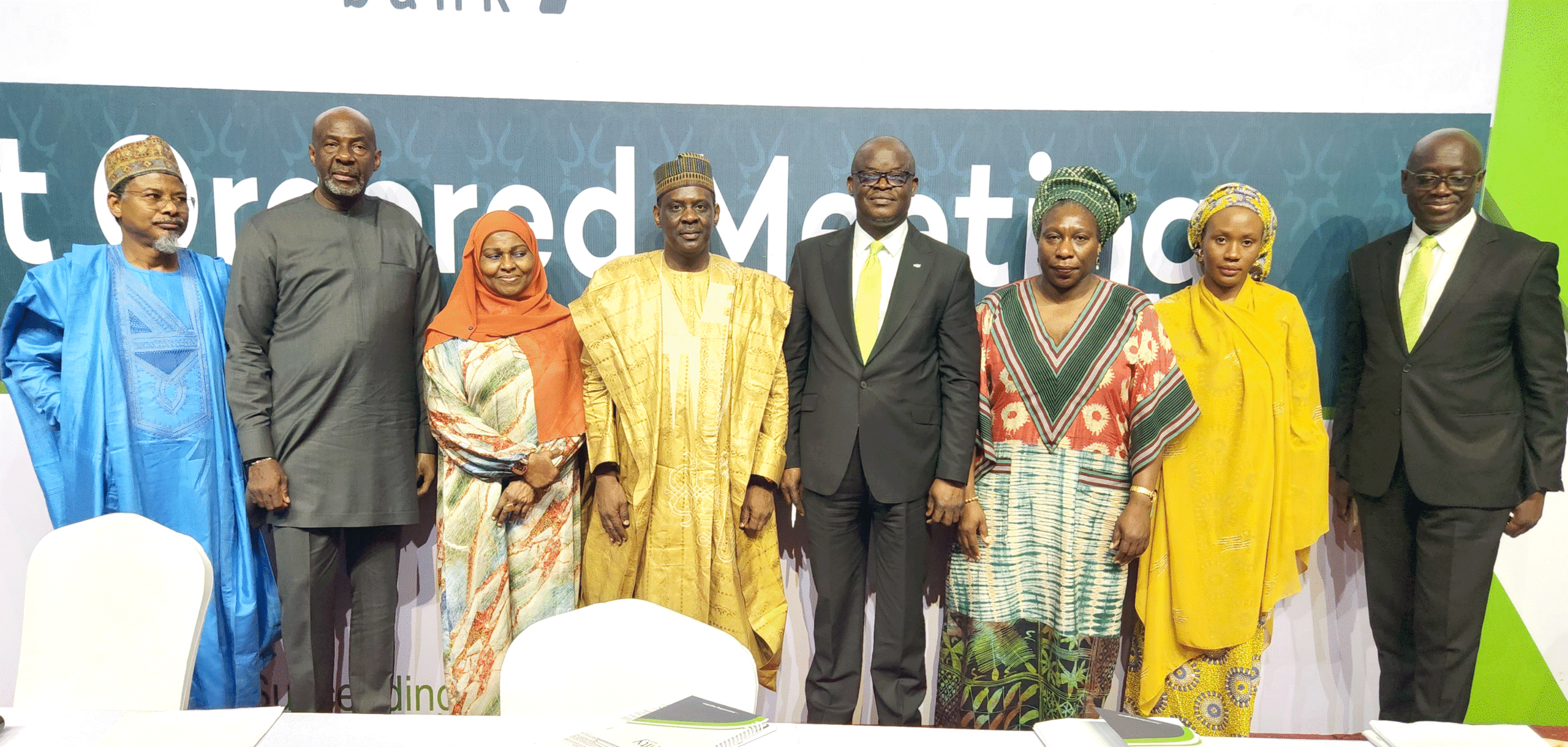
    At the Court-Ordered Meeting held on September 26, 2025, at the OOPL Hotel in Abeokuta, Ogun State, 295 shareholders participated and deliberated on all items in the Scheme of Merger. Of these, 293 shareholders representing 99.32% of total shareholding (₦4.4 billion in value) voted in favour of the resolutions, while 2 shareholders representing 0.68% voted against.

    As part of the Scheme Consideration, Unity Bank shareholders will receive ₦3.18 per share or be allotted 18 ordinary shares of ₦0.50 each in Providus Bank Limited (credited as fully paid) for every 17 ordinary shares of Unity Bank Plc held. Upon completion, Unity Bank’s entire share capital will be cancelled, and the Bank dissolved without winding up, while Providus Bank Limited will retain its certificate of incorporation as the enlarged bank.

    Speaking on the development, Chairman of Unity Bank Plc, Hafiz Mohammed Bashir, said: “This approval by our shareholders is a strong vote of confidence in the merger and what it represents for the future. By joining forces with Providus Bank, we are creating a stronger, more competitive, and more resilient institution that will deliver long-term value to our customers, shareholders, and the Nigerian economy.”

    He stated that the new name of the enlarged entity shall be Providus-Unity Bank (PUB) to reflect the core loyalty present in the vast northern market.

    The Chairman clarified to the shareholders during the Court-ordered meeting that the NGX lifted the suspension of trading of Unity Bank shares on the floor of The Exchange on 25th September 2025, with a remarkable crossing of 4.004Billion units of AMCON shares (representing 34% of issued shares of Unity Bank Plc) to an existing shareholder of Unity Bank and not to Providus Bank.

    Shareholders also authorised the Bank’s Directors and Solicitors/Transaction Advisers to seek the necessary Court orders and take all required actions to give full effect to the Scheme.

    Analysts commend the shareholders for endorsing the merger to pave the way for the emergence of a financial powerhouse anchored on strong market positioning with the capacity to take on the competition on the strength of both traditional and modern digital Banking.

  • Bill Gates Presents 2025 Plan to Save Millions of Children’s Lives at Goalkeepers Event

    Bill Gates Presents 2025 Plan to Save Millions of Children’s Lives at Goalkeepers Event

    Chair of the Bill & Melinda Gates Foundation, Bill Gates, has called on global leaders to make bold choices that could save millions of children’s lives and consign some of the world’s deadliest diseases to history by 2045.

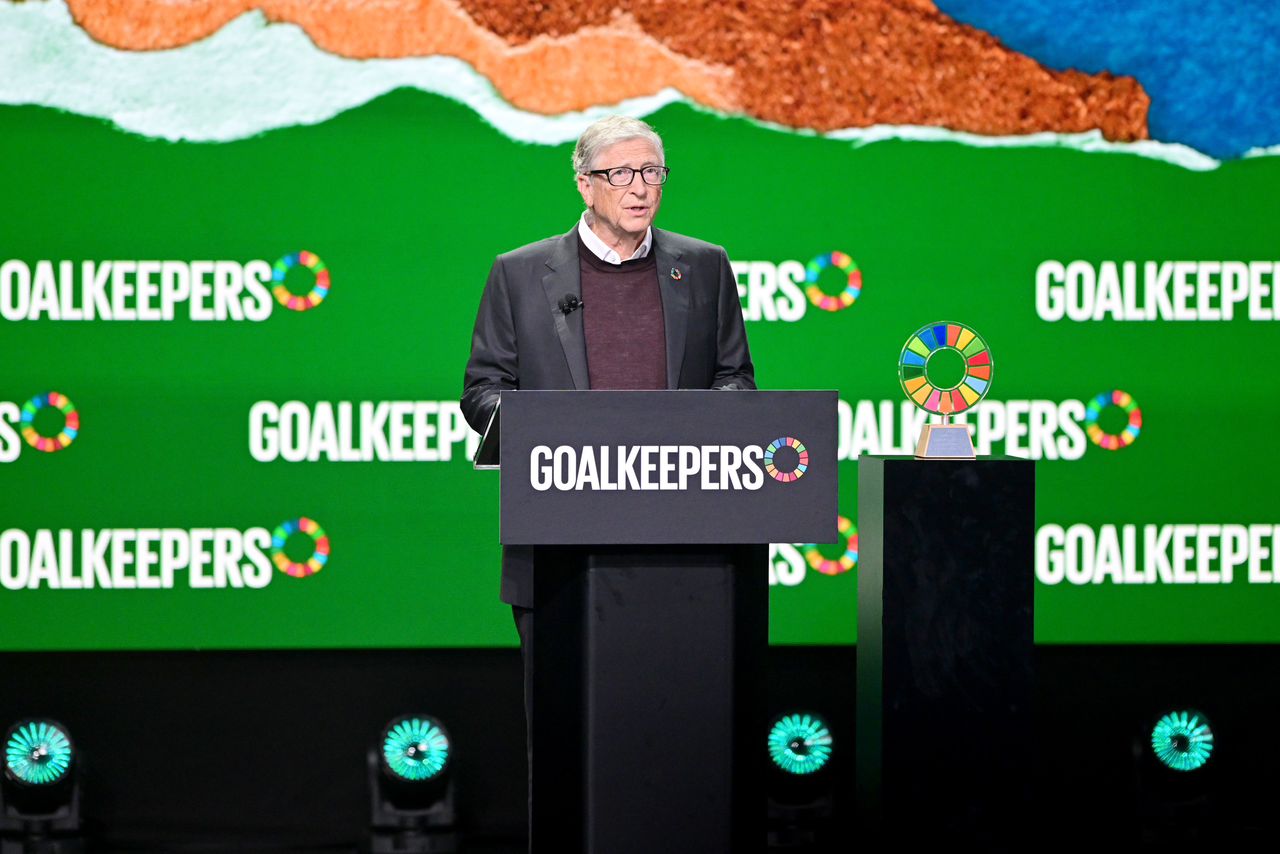
    Speaking before an audience of more than 1,000 policymakers, philanthropists, private sector leaders, and community advocates at the 2025 Goalkeepers event, Gates warned that the world was “at a crossroads” as health aid faces historic cuts.

    “Humanity is at a crossroads. With millions of children’s lives on the line, global leaders have a once-in-a-generation chance to do something extraordinary,” Gates said. “The choices they make now—whether to go forward with proposed steep cuts to health aid or to give the world’s children the chance they deserve to live a healthy life—will determine what kind of future we leave the next generation.”

    According to the Institute for Health Metrics and Evaluation (IHME), global development assistance for health fell by 21 percent between 2024 and 2025, sinking to its lowest point in 15 years. The cuts threaten decades of progress that saw child mortality halved since 2000.

    To counter the decline, Gates announced a $912 million pledge by the Gates Foundation to the Global Fund’s 2026–2028 replenishment drive. Since its inception in 2002, the Global Fund has saved more than 70 million lives, cut deaths from AIDS, tuberculosis, and malaria by over 60 percent, and strengthened global health security.

    Gates laid out a roadmap which, if followed, could halve child deaths again over the next 20 years. The plan includes renewed investments in proven initiatives like the Global Fund and Gavi, prioritization of primary healthcare, and investment in breakthrough innovations.

    Some of the innovations highlighted include single-dose malaria treatments, long-acting HIV drugs, maternal vaccines against respiratory illnesses, and the use of artificial intelligence to deliver medicines more effectively and cheaply.

    “What’s happening to the health of the world’s children is worse than most people realize, but our long-term prospects are better than most people can imagine,” Gates said.

    The Goalkeepers event also celebrated global leaders and advocates making strides in child survival and health equity. Spanish Prime Minister Pedro Sánchez received the 2025 Global Goalkeeper Award for expanding Spain’s support for the Global Fund and Gavi, while several “Goalkeepers Champions” from around the world were recognized, including Nigerian actress Osas Ighodaro for her malaria advocacy.

    The event, co-hosted by musician Jon Batiste and actress Olivia Wilde, carried the theme *“We Can’t Stop at Almost”*, underscoring the urgency of finishing the work on preventable child deaths.

    ### Looking Ahead

    Later this year, Goalkeepers will expand to the Middle East for the first time, with a major convening set for December 8 in Abu Dhabi. The Gates Foundation will also release its 2025 Goalkeepers Report, focused on how leaders’ decisions in the coming months will shape the future of global child health.

    Earlier in the year, Gates announced plans to give away virtually all of his wealth, pledging $200 billion over the next two decades to advance progress in maternal and child health, eradicate deadly infectious diseases, and lift millions out of poverty.

  • Group Hails Tinubu’s Economic Reforms As Nigeria Records 4.23% GDP Growth

    Group Hails Tinubu’s Economic Reforms As Nigeria Records 4.23% GDP Growth

    A pro-development group has commended President Bola Ahmed Tinubu for what it described as “bold and pragmatic” economic reforms that have placed Nigeria on the path of recovery and growth, citing the latest figures from the National Bureau of Statistics (NBS).

    According to the NBS, Nigeria’s Gross Domestic Product (GDP) expanded by 4.23 percent in the second quarter of 2025, compared with 3.48 percent recorded in the same period of 2024. The group said the performance reflects the impact of far-reaching reforms introduced by the Tinubu administration.

    Before May 2023, when President Tinubu assumed office, the group noted that the economy was “haemorrhaging,” weighed down by unsustainable fuel subsidy payments, multiple foreign exchange rates that encouraged arbitrage, dwindling reserves, and a widening fiscal deficit.

    It stated that the removal of petrol subsidy, unification of the forex market, fiscal consolidation measures, and social intervention programmes have since begun to yield results, despite the initial pain they caused Nigerians.

    Among the gains highlighted were improvements in GDP growth, which rose to N100.73 trillion in aggregate, compared with N84.48 trillion in 2024; an increase in external reserves to $42 billion; and six consecutive months of declining inflation, with projections for single-digit inflation by 2026.

    The group further pointed out that the agriculture sector grew by 2.82 percent in Q2 2025, boosted by mechanisation and the National Agricultural Development Fund (NADF), while the industrial sector surged by 7.45 percent, up from 3.72 percent the previous year.

    Manufactured goods exports were said to have grown by 173 percent, pushing Nigeria’s trade surplus to over N10 trillion in the first half of the year. Infrastructure projects such as the Lagos–Calabar Coastal Highway and the $3.02 billion Port Harcourt–Maiduguri Eastern Rail Line were also cited as key drivers of industrial and trade growth.

    On social protection, the group said over N330 billion had been disbursed through the Conditional Cash Transfer programme to 8.1 million households, while the Nigerian Education Loan Fund (NELFUND) had supported more than 400,000 students with loans worth N80 billion.

    Commending the administration’s “Poverty Exit Plan” championed by Vice President Kashim Shettima, the group expressed optimism that between 40 and 50 million Nigerians could be lifted out of multidimensional poverty in the next decade.

    The statement urged citizens to support the government’s efforts, warning against what it described as “divisive distractions.”

    “Nigeria is not just recovering—it is rising,” the group declared.

  • NACOLM Commandant, NAFDAC Director Advocate Closer Collaboration with 81 Division

    NACOLM Commandant, NAFDAC Director Advocate Closer Collaboration with 81 Division

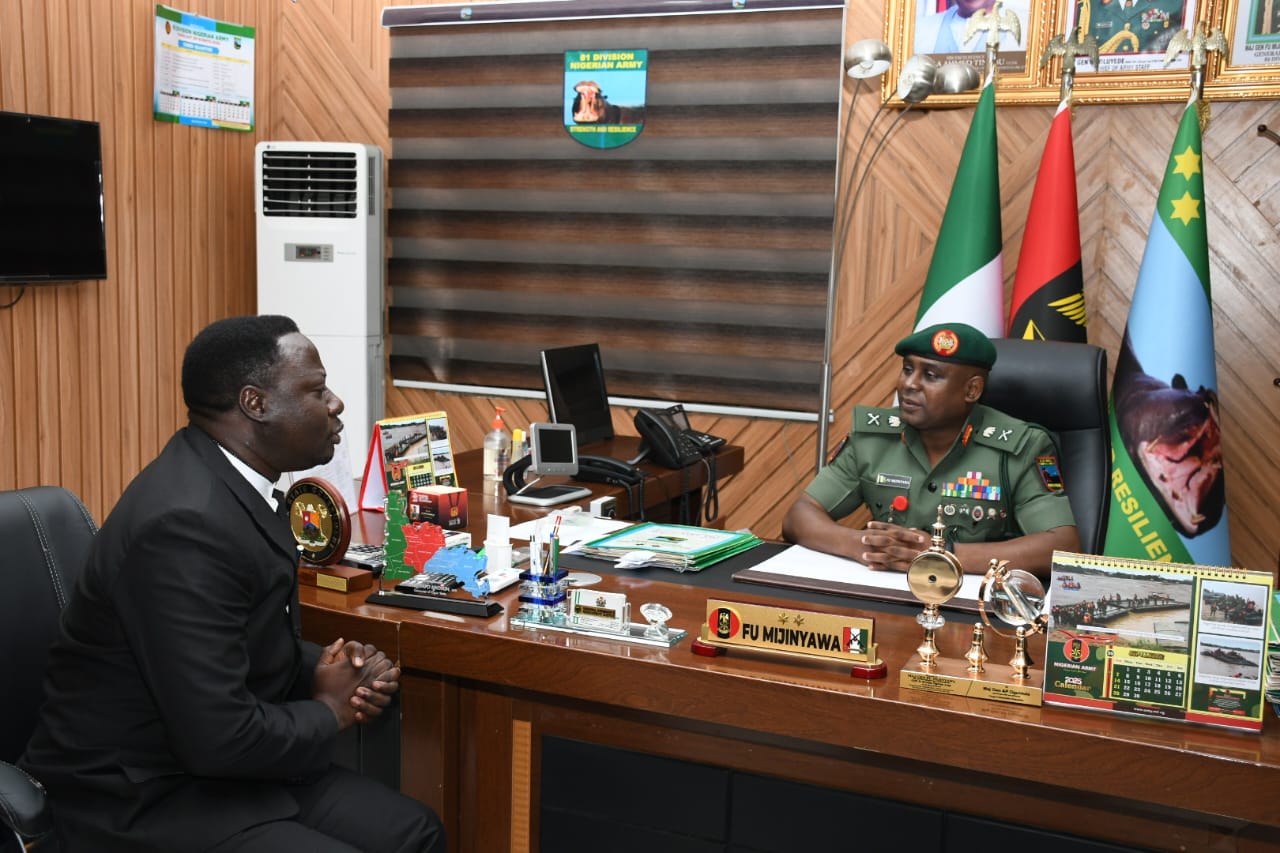
    The General Officer Commanding (GOC) 81 Division of the Nigerian Army, Major General Farouk Mijinyawa, on Tuesday received courtesy visits from the Commandant of the Nigerian Army College of Logistics and Management (NACOLM), Major General AC Adetoba, and the Director of Investigation and Enforcement, National Agency for Food and Drug Administration and Control (NAFDAC), Mr. Martins Iluyomade.

    The visits, which took place at the Division’s Headquarters on Kofo Abayomi Street, Victoria Island, Lagos, on September 23, 2025, focused on strengthening collaboration and consolidating existing partnerships.

    During his visit, Major General Adetoba explained that his tour formed part of a familiarization exercise with units and formations within the Division’s Area of Responsibility (AOR). He emphasized the importance of sustaining synergy with the Division, noting that the College’s successes have been made possible by such support.

    Responding, the GOC congratulated the Commandant on his appointment and assured him of the Division’s continuous backing, particularly in facilitating training activities and exercises geared towards the College’s mandate.

    In a related development, Mr. Iluyomade, who also chairs the Federal Task Force on Fake Drugs and Unwholesome Processed Foods, visited with his management team. He highlighted the critical need for military support to enhance NAFDAC’s operations, stressing that the Army’s involvement would significantly strengthen the agency’s enforcement capacity.

    Major General Mijinyawa, in his response, pledged the Division’s support, underlining the Nigerian Army’s readiness to collaborate with relevant agencies to ensure food and drug safety as well as national security. He further reiterated that such inter-agency cooperation is vital to building a stronger and more efficient security framework.

    Both visits ended with a mutual commitment to deepen collaboration in pursuit of shared national objectives.

  • CHIEMELIE EZEOBI: Global Leaders Spotlight Partnerships as Key to Advancing SDGs at Goalkeepers 2025

    CHIEMELIE EZEOBI: Global Leaders Spotlight Partnerships as Key to Advancing SDGs at Goalkeepers 2025

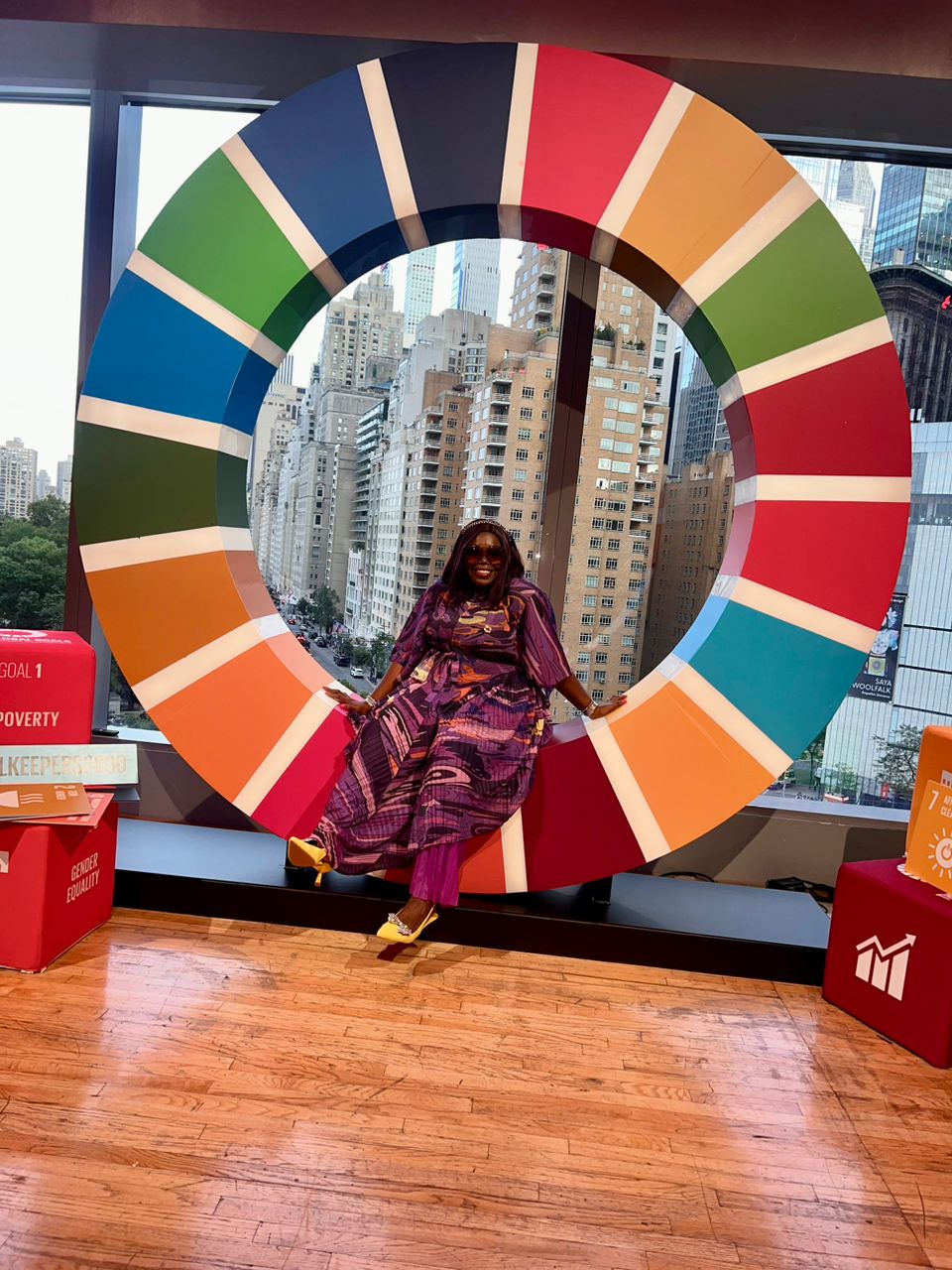
    New York played host to the 2025 edition of Goalkeepers, where world leaders, changemakers, and development partners underscored the critical role of collaboration in achieving the United Nations Sustainable Development Goals (SDGs).

    Held under the theme *“We Can’t Stop at Almost,”* the gathering emphasised the urgency of sustaining progress, particularly in child health (SDG 3). Speakers highlighted that true breakthroughs in reducing preventable child deaths hinge on interconnected goals such as Zero Hunger (SDG 2), Quality Education (SDG 4), Gender Equality (SDG 5), and Clean Water and Sanitation (SDG 6).

    At the heart of this year’s conversations was SDG 17, which focuses on *Partnerships for the Goals.* Stakeholders stressed that governments, the private sector, civil society, and communities must work hand-in-hand to mobilise investments, scale innovations, and accelerate action across sectors.

    A Goalkeeper delegate noted that partnerships remain central to driving impact. “Our role within Goal 17 is to strengthen collaborations, amplify innovations, and mobilise resources for lasting change. With stronger alliances, we can accelerate progress, end preventable child deaths, and secure a healthier future for children worldwide,” the delegate said.

    The 2025 spotlight reaffirmed that advancing the SDGs is a collective responsibility that requires unwavering commitment to inclusive partnerships and global solidarity.

  • COWA Ogun I Chapter Extends Support to Idiroko Hospital and Customs Medical Center

    COWA Ogun I Chapter Extends Support to Idiroko Hospital and Customs Medical Center

    The Customs Officers’ Wives Association (COWA), Ogun I Command Chapter, led by its Chairperson, Mrs. Fausat Otunla, today, carried out a remarkable Corporate Social Responsibility (CSR) initiative with visits to the General Hospital, Idiroko, and the Customs Medical Center, Idiroko.

    This was disclosed in an official statement endorsed by DSC Zakari Chado, Public Relations Officer
    Ogun 1 Area Command.

    At the General Hospital, the COWA team was warmly received by the Chief Medical Director, Dr. Kilanko Margaret, alongside the Chief Matron and other members of staff. The executives and members of the association were taken on a guided tour of the hospital wards, where patients and pregnant women attending antenatal clinics were presented with a large quantity of mosquito nets. In addition, the association donated 50 pieces of bed sheets to the hospital.

    Speaking on behalf of the hospital management, Dr. Kilanko expressed profound gratitude for the benevolence of COWA, noting that the donations will go a long way in improving patient welfare. She also assured the association of the hospital’s readiness to extend medical outreach to COWA members and their spouses. In a show of appreciation, a representative of the pregnant women, Mrs. Sodiq Ola thanked COWA for the thoughtful gifts and offered prayers for the continued success and well-being of the association.

    In a similar gesture at the Customs Medical Center, Idiroko, COWA also donated mosquito nets and customized bed sheets. The items were received with great appreciation by Superintendent of Customs (SC) Dr. Abdulmalik Zakariyyah on behalf of the medical staff, who conveyed their heartfelt thanks to the association for the kind and impactful support.

    While speaking during the exercise, Mrs. Fausat Otunla emphasized that the initiative was part of COWA’s commitment to community development and the well-being of families within and around Idiroko. She reiterated the association’s resolve to continually support health institutions and enhance the living conditions of the people. “This CSR activity once again underscores the compassionate vision of COWA and its contribution to the health and welfare of communities”, She stated.

  • France and Allies Recognise Palestine: Symbolic Act or Diplomatic Turning Point? — By Senator Iroegbu

    France and Allies Recognise Palestine: Symbolic Act or Diplomatic Turning Point? — By Senator Iroegbu

    On September 22, 2025, French President Emmanuel Macron addressed the United Nations General Assembly in New York and formally recognised the State of Palestine. Coming after similar moves by the United Kingdom, Canada, Spain, Belgium, and others, the announcement has been hailed in some quarters as a historic step toward justice. To others, it is reckless diplomacy that rewards violence and undermines security.

    Macron’s words were deliberate and forceful. “The time has come to free the hostages, to stop the bombings, to end the massacres, to seize peace before it slips away forever. One life is worth one life.” He framed recognition as both a moral duty and a strategic necessity—an attempt to salvage the dying two-state solution and re-anchor diplomacy in a conflict where Gaza’s two million residents face starvation, disease, and despair. France, alongside its allies, is betting that moral clarity, backed by aid, diplomacy, and multilateral engagement, can tilt the balance toward peace.

    But Israel sees it differently. Foreign Minister Gideon Saar branded the recognition “dangerous,” warning it indirectly legitimises Hamas. The fear in Tel Aviv is that unilateral recognition undermines Israel’s security, emboldens extremists, and weakens the negotiation table. Israel has even threatened to annex more of the West Bank—a move that could escalate the crisis rather than calm it.

    Macron, however, insists recognition is a blow against Hamas and a victory for moderates willing to pursue peace. He outlined a three-phase plan: an immediate ceasefire and hostage release; stabilisation and reconstruction of Gaza under a transitional Palestinian administration with international backing; and final-status negotiations on borders, security, and Jerusalem, paving the way for a sovereign Palestinian state alongside Israel.

    Supporters of the move argue that recognition empowers the Palestinian Authority, aligns Arab and European states, and injects urgency into stalled talks. Critics counter that it bypasses genuine negotiations, creates false hope for civilians who need governance rather than gestures, and risks deepening instability. The truth lies somewhere between symbolism and substance.

    France’s recognition of Palestine could become the spark that revives the two-state solution—or it could prove another diplomatic mirage. The direction it takes will depend not on speeches in New York, but on the hard work of building peace, disarming extremists, and delivering justice on the ground. That requires genuine commitment from all parties: Israel must embrace compromise rather than endless war; Palestinian leaders must prove they can govern responsibly; and the international community—including Africa—must move beyond rhetoric to sustained action.

    Recognition without enforcement risks being an empty gesture. But recognition combined with resources, security guarantees, and political will could become a turning point. History is replete with moments where bold declarations changed the course of nations. The question is whether September 22, 2025, will be remembered as such a moment—or as another chapter of missed opportunities.

    And that is where Africa must decide its role. Will we applaud Europe’s boldness, or will we step forward to influence the peace process, while pressing the world to pay equal attention to our own conflicts and quests for justice?

    France has chosen its path, declaring: “The time has come.” The challenge for Africa is whether we will echo those words not just for Palestine, but for ourselves as well.

    So what should Africans make of this moment?

    Nigeria and much of Africa have long sympathised with the Palestinian struggle, shaped by our own histories of colonialism, apartheid, and contested nationhood. Our leaders have consistently expressed solidarity with Palestine in international forums, often framing it as a moral duty tied to our own liberation struggles. Yet we also understand the perils of hollow recognition. Diplomatic statements do not feed hungry children, disarm militias, or rebuild shattered institutions. Without enforceable guarantees for security, humanitarian access, and accountable governance, recognition risks becoming another headline that fades while people in Gaza bury their dead.

    Still, dismissing France’s move as mere symbolism misses the point. Recognition can shift international momentum, embolden moderates, and force hard questions: Is the global community finally willing to back words with resources, enforcement, and courage? Or is this just another cycle of lofty declarations while ground realities worsen?

    For Africa, the Israeli-Palestinian conflict is not a remote issue. It has ripple effects on our own security and diplomacy. Across the continent, sectarian tensions often flare in response to events in the Middle East, sometimes spilling into violence in our streets. At the same time, Africa has its own unhealed conflicts—from Sudan to the Sahel, from the Horn of Africa to the Great Lakes region—where questions of recognition, self-determination, and sovereignty echo eerily with Palestine’s plight. If France and its partners can push for justice in Gaza, why does the world remain so indifferent to African conflicts that displace millions?

    This is where Africa must resist the temptation of passive applause. Too often, the continent stands by on the sidelines, cheering global powers while having little say in shaping the outcomes. Recognition of Palestine should prompt a different response. Africa can leverage its collective diplomatic weight within the UN, the African Union, and regional blocs to insist that any peace plan in the Middle East reflects lessons from our own experiences with post-conflict reconstruction, power-sharing, and reconciliation.

    For instance, Africa has pioneered peacekeeping and transitional justice models that could inform Gaza’s stabilisation. The African Union Mission in Somalia (AMISOM), despite its flaws, demonstrated how regional actors can take the lead in containing extremist threats while laying the groundwork for governance. Truth and reconciliation processes in South Africa, Sierra Leone, and Rwanda remind us that peace is not only about territory or borders, but about confronting trauma, restoring dignity, and building inclusive institutions.

    More importantly, Africa must ask uncomfortable but necessary questions: If Europe can recognise Palestine as a moral imperative, why can’t Africa demand equal urgency in resolving its own crises? Why should Darfur, Eastern Congo, or the Lake Chad Basin continue to fester in silence while Palestine commands the world’s conscience?

    _Iroegbu is the Convener of the Geopolitics Series, a platform that analyses global issues from an African context._

  • Can the Quad’s Ceasefire Initiative Succeed Where Jeddah Talks Fell Short? — By Sami Abdelhalim Saeed, PhD

    Can the Quad’s Ceasefire Initiative Succeed Where Jeddah Talks Fell Short? — By Sami Abdelhalim Saeed, PhD

    Two Diplomatic Initiatives for One Crisis
    On September 12, 2025, the Quad—comprising Egypt, Saudi Arabia, the United Arab Emirates, and the United States of America—released a joint statement proposing a path to end the conflict in Sudan. The statement recalls that the war has provoked the world’s worst humanitarian crisis and poses grave risks to regional peace and security. The Quad ministers called for an initial three-month humanitarian truce to facilitate the swift entry of humanitarian aid, which should lead to a permanent ceasefire and an inclusive transition process immediately.

    Earlier, in May 2023, the United States and Saudi Arabia facilitated lengthy negotiations between the Sudanese Armed Forces (SAF) and the Rapid Support Forces (RSF), resulting in the signing of the Jeddah Declaration of Commitment to Protect the Civilians of Sudan. Both the Jeddah Declaration and the Quad proposal share the fundamental goal of ending the conflict in Sudan, protecting civilians, and facilitating humanitarian aid. However, there are significant differences in their scope, approach, and the political context in which they were created.

    Shared Foundations and Core Similarities Between the Initiatives
    Humanitarian Focus: Both initiatives prioritise addressing the humanitarian crisis. They call for the protection of civilians, ensuring safe passage, and providing unhindered access for humanitarian assistance.

    Adherence to International Law: Both documents explicitly reference the obligations of the warring parties under International Humanitarian Law. The Quad proposal even references the commitments made in the Jeddah Declaration, indicating a continuity of purpose.

    Rejection of a Military Solution: Both statements agree that the conflict cannot be resolved militarily and that a political solution is the only viable path forward.

    Civilian-Led Governance: Both initiatives emphasise the importance of a future Sudanese government being led by civilians. They emphasise that the Sudanese people, not the warring parties, should determine their country’s future.

    External Mediation: Both are products of external diplomatic efforts. The Jeddah Declaration was facilitated by Saudi Arabia and the United States. At the same time, the Quad proposal involves a broader coalition of regional and international powers (Egypt, Saudi Arabia, the UAE, and the U.S.).

    Key Differences in Scope and Approach
    Scope and Detail: The Jeddah Declaration is a “Declaration of Commitment” focused on specific, on-the-ground rules of conduct for the warring parties regarding civilians and humanitarian aid. It is essentially a humanitarian and short-term ceasefire framework. In contrast, the Quad proposal is a more comprehensive political roadmap. It not only addresses humanitarian issues but also lays out a detailed timeline for a political transition, including a three-month humanitarian truce followed by a nine-month transition to civilian rule.

    Actors Involved: This is a crucial distinction. The Jeddah Declaration was a direct agreement signed by the Sudanese Armed Forces (SAF) and the Rapid Support Forces (RSF). The Quad proposal is a joint statement from a group of concerned nations, not a direct agreement between the warring parties themselves.

    This is the fundamental point at which the Quartet initiative differs from the Jeddah Declaration. The challenge facing the Quartet initiative is how to persuade the two parties to sit down for negotiations and sign a ceasefire agreement. This challenge tests the Quartet countries’ influence on both parties, as well as the strength and cohesion of the Quartet alliance itself. It is necessary to consider the Jeddah Declaration as part of the negotiating framework, as it represents the foundations of the ceasefire and was previously signed by the parties under the auspices of Saudi Arabia and the United States.

    Rejection of Specific Groups: The Quad proposal goes a step further by explicitly rejecting a role for “violent extremist groups part of or evidently linked to the Muslim Brotherhood” in Sudan’s political future. This political dimension was not explicitly stated in the initial

    Jeddah Declaration.

    After the war lasted for more than two years, the role of extremist and violent groups became prominent. Social media has begun documenting the roles of these groups and the crimes they commit. Due to their danger and clearly growing role, the US Treasury Department issued sanctions against some of them, describing them as a threat to regional stability.

    External Military Support: The Quad proposal specifically calls for an end to external military support to the conflict parties, acknowledging a key factor that has prolonged the war. The Jeddah Declaration, while focused on the actions of the SAF and RSF, did not explicitly address the role of foreign powers in supplying them.

    An Uphill Battle: Challenges Facing the Quad Proposal
    Despite its comprehensive nature, the Quad proposal faces several significant challenges, primarily stemming from its nature as a high-level diplomatic plan rather than a signed agreement.

    Lack of Buy-in from Warring Parties: The most immediate challenge is the lack of direct commitment from the SAF and RSF. The Sudanese government, aligned with the SAF, has already rejected the proposal. It has pushed back against the suggestion of being excluded from a post-war transition, arguing that only the Sudanese people, led by existing institutions, should decide their future. Both the SAF and the RSF are still pursuing a military victory, making it unlikely that they will agree to a political process that would sideline them. The SAF has repeatedly refused direct negotiations with the RSF, a stance observers attribute to the influence of the Muslim Brotherhood within key military institutions, which insist on being part of the future political equation.

    Failure of Past Agreements: The Jeddah Declaration itself, despite being a signed commitment, was repeatedly violated. This history of non-compliance raises doubts about whether the warring parties will honour a new proposal, especially one perceived as being imposed from the outside. Members of the former National Congress Party and Islamists within the military fear any future change that might lead to accountability for past crimes and corruption. This fear is also present within the RSF leadership, which has committed widespread violations of the rules of war.

    External Influence and Proxy Conflicts: The proposal’s call to end external military support acknowledges a significant challenge. The conflict is fueled by foreign powers providing arms and funding to both sides. Persuading these external actors to cease their support is a significant diplomatic hurdle, complicated by the fact that some Quad members have themselves been accused of taking sides.

    Internal Divisions within Sudan: The proposal calls for an “inclusive and transparent transition process.” However, unifying Sudan’s diverse political and civil society groups is a monumental task. The conflict has deepened existing political, ethnic, and regional divisions, with numerous factions holding competing visions for the country’s future.

    Ambitious Timeline and Weak Enforcement: The proposed timeline—a three-month truce followed by a nine-month transition—is highly ambitious given the ongoing hostilities. Without a robust and effective enforcement mechanism, this timeline risks being disregarded, as were previous ceasefire attempts. The Quad’s ability to “exercise their good offices” and “discuss further steps” may be insufficient to compel compliance.

    Whatever else is said about the Quad Initiative, it is the result of international and regional consensus to halt the devastating war that has been ongoing in Sudan since 2023, during which thousands of people have died. The country’s infrastructure has been destroyed to an extent unprecedented in any other war. The initiative came after the world had remained silent on the war in Sudan for so long that the Sudanese felt the world had abandoned them to death, destruction, and genocide. This initiative is expected to achieve many milestones in favour of peace if it succeeds in engaging all influential actors in the Sudanese political scene and exerting pressure on the warring parties.

    Dr Saeed, a Sudanese constitutional lawyer, is the Vice President of the African Network of Constitutional Lawyers (ANCL), based in Cape Town, South Africa. He can be reached via: advosami@gmail.com
  • SHETTIMA: FG Reforms and Stakeholder Commitments Target Lifting 50 Million Nigerians Out of Poverty

    SHETTIMA: FG Reforms and Stakeholder Commitments Target Lifting 50 Million Nigerians Out of Poverty

    Nigeria’s fight against poverty received a renewed boost on Tuesday as government leaders, development partners, academics, and civil society actors converged at the Nextier Development Solutions Festival (DevFest2025) in Abuja to chart bold pathways for poverty eradication.

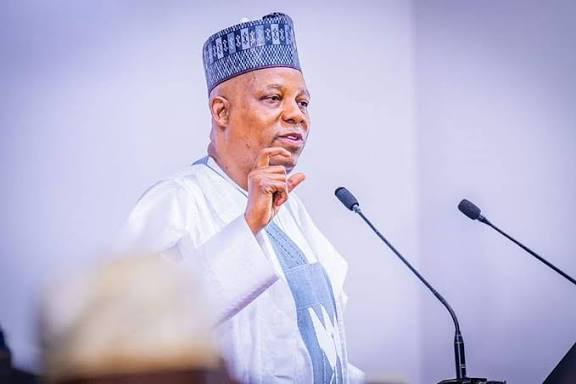
    Vice President Kashim Shettima, represented by the Special Adviser to the President on Power Infrastructure, Sadiq Wanka, said the Federal Government’s ongoing reforms and development initiatives could lift between 40 and 50 million Nigerians out of multidimensional poverty within the next decade.

    Unveiling the government’s “Poverty Exit Plan”, Shettima described the strategy as both a moral obligation and a strategic compact to ensure no Nigerian is left behind. The plan, he explained, rests on three pillars: investing in infrastructure, driving economic and financial inclusion, and transforming agriculture from subsistence to value-driven, mechanised production.

    “If we remain consistent in applying these policies, GDP growth will soar, inequality will reduce, food and multidimensional poverty will fall, and inflation could reach single digits by 2026. Overall, our reforms could free 40 to 50 million Nigerians from poverty within a decade, enabling them to fulfil their God-given potential,” Shettima said

    The Vice President highlighted positive economic indicators already taking shape: external reserves rising to $42 billion, six consecutive months of inflation decline, Naira stabilisation under Central Bank policies, and a 44.3% trade surplus increase in H1 2025, amounting to over N10 trillion.

    He disclosed that more than N330 billion has been disbursed to 8.1 million households through Conditional Cash Transfers, while the Nigerian Education Loan Fund (NELFUND) has provided over N80 billion in loans to 400,000 students. In agriculture, the National Agricultural Development Fund (NADF) has attracted over $1 billion to boost mechanisation and value addition.

    The Head of Delegation of the European Union to Nigeria and ECOWAS, Ambassador Gautier Mignot, underscored that poverty reduction must be driven primarily by sound domestic policies. International partners, he noted, can support but cannot substitute local leadership.

    “Poverty reduction is not just a moral duty; it is a political, social, and economic imperative. It reduces instability, strengthens democracy, and drives productivity,” Mignot said.

    He stressed the need to listen to the voices of poor communities, not just statistics, and pointed to Nigeria’s entrepreneurial spirit—especially among women—as a powerful force for poverty reduction. He revealed that the EU has committed over €87 million to strengthen Nigeria’s social safety nets and resilience programmes, alongside €150 million in humanitarian support to address food insecurity affecting 33 million Nigerians.

    From the state level, Professor Chidiebere Onyia, Secretary to the Government of Enugu State, shared lessons from the state’s multi-sectoral interventions in education, agriculture, and health, which he said are shifting the focus from poverty reduction to poverty eradication.

    In his welcome remarks, Dr. Ndubuisi Nwokolo, Partner at Nextier Development Foundation, stressed the need to move beyond short-term fixes and token interventions.

    “Money alone does not eradicate poverty. Neither do rice distributions nor handing out sewing machines. We must dig deeper and embrace sustainable, evidence-based solutions,” he said.
    Nwokolo urged stakeholders to scale up local innovations, harness Nigeria’s youthful population, and adopt a whole-of-society approach that integrates government, civil society, private investors, and academia.

    Patrick Okigbo III, Founding Partner of Nextier, echoed this call, noting that the festival was designed to bring together thoughtful leaders and innovators to co-create practical solutions.

    “We refuse to accept that poverty is unsolvable. The time to end it is now, with the right partnerships, policies, and political will,” Okigbo said.

    DevFest2025, themed “Ending Poverty in Nigeria,” reinforced the consensus that eradicating poverty is possible if Nigeria sustains reforms, strengthens collaboration, and embraces bold, inclusive strategies. With 40% of Nigerians—over 82 million people—still below the poverty line, the challenge remains daunting, but stakeholders agreed that a mix of consistent policies, grassroots innovations, and international cooperation could set the country on a path to shared prosperity.

  • A New Chapter Begins: Ashimolowo Dedicates Grace Nation Church, Anoints Dr. Okafor for Impact

    A New Chapter Begins: Ashimolowo Dedicates Grace Nation Church, Anoints Dr. Okafor for Impact

    In a grand display of pomp and pageantry, Pastor Matthew Ashimolowo, senior pastor of the Kingsway International Church (KICC), visited the Grace Nation Church International in Ojodu-Berger, Lagos, on Sunday, September 21, 2025.

    The highlight of his visit was the dedication of the church’s newly completed ultra-modern auditorium, which boasts a seating capacity of over 20,000 worshippers.

    The ceremony began with a vibrant performance by the Nigeria Army music band, which played popular praise and worship songs in a jazz rendition.

    Pastor Ashimolowo was then taken on a tour of the excellent facility, which hosts various prophetic, deliverance, and healing programmes for worshippers from far and wide on a weekly basis.

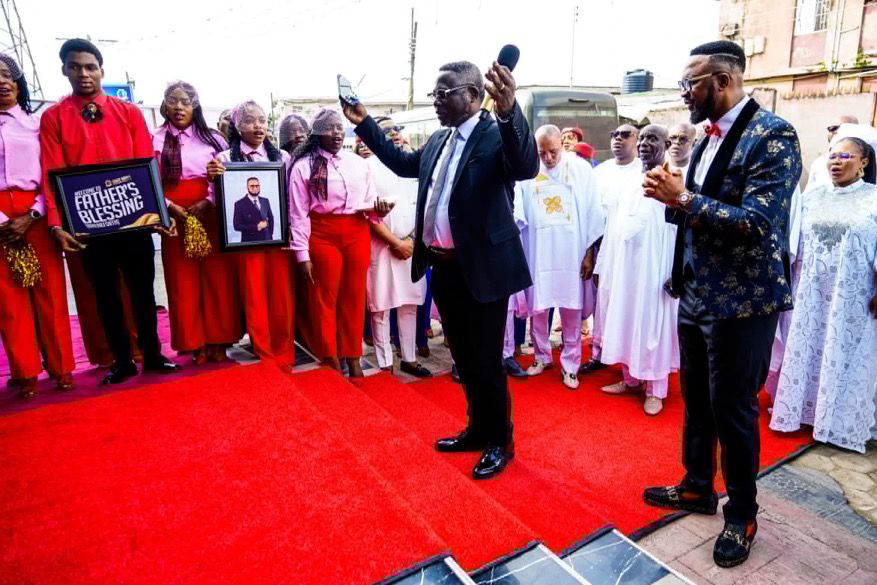
    During the dedication ceremony, Pastor Ashimolowo cut the tape to officially commission the new auditorium. He also anointed the church’s founder and head pastor, Dr. Chris Okafor, who knelt down before the appreciative congregation.

    As he anointed Dr. Okafor, Pastor Ashimolowo prayed for the Grace Nation leader, prophesying that he would dedicate more churches in the future. “This is just one dedication. Many dedications are coming,” he declared.

    Following the anointing, Pastor Ashimolowo preached a powerful message on divine help, drawing inspiration from popular Biblical figures who found help in times of need.

    In response, Dr. Okafor expressed his gratitude to Pastor Ashimolowo and used the opportunity to announce the church’s upcoming flagship programme, “Not My Head, Not My Blood,” scheduled to take place from Wednesday, September 24 to Sunday, September 28, 2025.

    The programme, themed “Father’s Blessings,” will feature Pastor Ashimolowo and Dr. David Abioye as key speakers. A vigil will be held on Friday, September 26, 2025, and a thanksgiving service will conclude the event on Sunday.

    Dr. Okafor described the programme as “power-packed” and encouraged everyone not to miss it.
    The Grace Nation Church’s leader will also be assisted in his ministrations by a retinue of his pastors from different branches, usually referred to as “sons of the prophet,” during the 4-day event.

    A host of highly acclaimed gospel artistes like Eben, Ebuka Songs, Gabriel Peters, etc, will also be on hand to add spice to the programme.

error: Content is protected !!