Author: Dodo Elias Denen

  • Aisha Babangida Celebrates African Rural Women on International Day for Rural Women

    Aisha Babangida Celebrates African Rural Women on International Day for Rural Women

    Therefore, the challenges facing African Rural Women necessitated the celebration of Aisha Babangida’s efforts in giving rural women a voice and access through many of her NGOs. Still, because this piece is about the International Day of Rural Women, I limited the scope of this article to the Better Life Program for the African Rural Woman for what they are doing silently.

    There is no better time to appreciate the humanitarian gestures of Aisha Babangida, a woman who has been silently transforming the lives of people around her than using the occasion of this year’s International Day for the Rural Women; a day set aside by the United Nations to raise awareness on the status of women and to shed more lights on the inequalities women still face as well as advocate for their recognition and participation in decision-making and demanding stronger social protection systems that reduces the digital divide they face in this century.

    Accordingly, the works of Aisha Babangida have become even more pronounced as we mark the 30th anniversary of the famous Beijing Women’s Conference of 1995 this year.

    And in line with this year’s theme, “Rural Women Sustaining Nature for our Collective Future,” Aisha Babangida, through the Better Life Program for African Rural Women, has been shaping the lives of rural women by equipping them with relevant skills through training and empowerment.

    However, the empowerment of the Better Life Program differs from other empowerment programs, which often employ a general template that overlooks the specific needs of each state or zone. In contrast, the Better Life empowerment program is tailored to state-to-state and region-to-region priorities, based on a SWOT analysis.

    Hence, before deciding on the type of training and empowerment to be offered to a particular region, the Better Life Program will first of all get the baseline data and analyse it to ascertain the strengths, weaknesses, opportunities and threats of the zone before coming forth with an empowerment Program that suits the zone while capitalising on the comparative advantage the region already has.

    In other words, their focus is on building on the strengths and opportunities of each state or region. For example, a state with a strong foundation in groundnut production, such as Kano, would be leveraged by training its women and girls in modern groundnut production techniques and empowering them on that basis, so as to add value to themselves and create value chains.

    The reason is that the template that works in Kano State will likely not work in Enugu State, because apart from comparative advantage and market availability, topographical differences are also a factor.

    All these factors are considered by the Better Life Program before rolling out its programs, and this has helped ensure that empowerment reaches the people who need it most.

    Similarly, empowering women is not only a right but also a potent force for alleviating poverty, hunger, diseases and reducing the effects of global warming.

    According to a UN report, “Women are responsible for half of the world’s food production while working as environmental and biodiversity stewards.”

    Even then, there are still challenges facing rural women globally. The UN report further stated that, “Women and girls in rural areas suffer disproportionately from multi-dimensional poverty.”

    “They may be as productive and enterprising as their male counterparts but are less able to access land, credit, agricultural inputs, markets, and high-value agrifood chains and obtain lower prices for their crops.”

    The report added that “Women and girls in rural areas lack equal access to productive resources and assets, public services, such as education and health care, and infrastructure, including water and sanitation, while much of their labour remains invisible and unpaid.”

    In the same vein, the report added that ‘If women had the same access to productive resources as men, farm yields could increase by 20–30 per cent, feeding an additional 100 to 150 million people.”

    Based on the foregoing, empowering our women is no longer a choice but a necessity.
    Therefore, the challenges facing African Rural Women necessitated the celebration of Aisha Babangida’s efforts in giving rural women a voice and access through many of her NGOs. Still, because this piece is about the International Day of Rural Women, I limited the scope of this article to the Better Life Program for the African Rural Woman for what they are doing silently.

    While I encourage Aisha Babangida to continue her good work for humanity, I also appeal to public-spirited individuals to support this good cause for the sake of the common humanity we share.
    Happy International Day for Rural Women!

    Comrade Edwin Uhara is a UN-trained Negotiator and writes from Abuja

  • CISLAC Decries Presidential Clemency for Corruption, Drug, and Capital Crime Convicts

    CISLAC Decries Presidential Clemency for Corruption, Drug, and Capital Crime Convicts

    The Civil Society Legislative Advocacy Centre (CISLAC) has strongly condemned President Bola Ahmed Tinubu’s decision to grant presidential pardons to 175 individuals, including convicted drug traffickers, illegal miners, capital offenders, and public officials found guilty of corruption.

    In a statement signed by the Executive Director of CISLAC and Head of Transparency International Nigeria, Comrade Auwal Ibrahim Musa (Rafsanjani), the mass clemency was described as “legally questionable, morally wrong, and damaging to Nigeria’s image both locally and internationally.”

    Among those reportedly pardoned are controversial names such as former Delta State Governor James Ibori, who was convicted in the United Kingdom, as well as individuals involved in oil theft, kidnapping, illegal mining, and other transnational crimes. CISLAC argued that such individuals should not be beneficiaries of a presidential pardon, especially when some were not even tried under Nigerian jurisdiction.

    “You cannot pardon someone convicted by a foreign court when Nigerian jurisdiction wasn’t involved in the conviction. That is beyond the constitutional powers of the Nigerian president,” the organisation stated.

    CISLAC further warned that the decision could significantly undermine international legal cooperation, particularly in the areas of anti-corruption and narcotics control, where Nigeria relies heavily on foreign intelligence, technical support, and collaboration. The group also noted that the country’s ability to pursue international mutual legal assistance on asset recovery could be negatively affected.

    “Pardoning individuals convicted for drug trafficking, financial crimes, and other serious offences sends the wrong signal to Nigeria’s international partners and undermines the credibility of our justice system,” the statement added.

    The organisation expressed concern over the demoralising effect the decision could have on anti-corruption and law enforcement agencies, pointing out that these institutions invested considerable resources in investigating and prosecuting the now-exonerated individuals.

    “It’s an insult to the justice system and a slap in the face of the anti-corruption agencies who risked their lives to bring some of these people to justice. How do you motivate EFCC, ICPC, NDLEA, CCB or police officers to continue their work when their efforts are undone with a single signature?”

    CISLAC also highlighted the contrast between the swift clemency granted to high-profile individuals and the continued neglect of thousands of poor Nigerians languishing in correctional facilities without trial, some for more than a decade.

    “You have people in prison for petty crimes or no trial at all for 10 to 20 years, but here we are watching the state extend mercy to individuals who have done real damage to the economy and the social fabric of the country,” the statement said.

    According to the government, the presidential pardon was based on reports of good behaviour, acquisition of vocational skills, old age, and remorse. Some of the beneficiaries were said to have enrolled in the National Open University of Nigeria (NOUN). In addition, seven inmates on death row reportedly had their sentences commuted to life imprisonment.

    However, CISLAC insisted that forgiveness should not translate into exoneration, especially for those whose crimes have caused significant harm to the nation and its citizens.

    “Pardon implies that they never committed a crime, that they are no longer ex-convicts. That’s dangerous. These individuals can now sue if they’re labelled as ex-convicts. We are effectively rewriting history and absolving criminals of responsibility.”

    The group further warned that the decision could embolden organised crime networks involved in oil theft, kidnapping, drug trafficking, and illegal mining, thereby worsening insecurity across the country.

    “Some of these individuals may return to the very same criminal networks they were part of. This action will only strengthen the culture of impunity,” CISLAC cautioned.

    It called for a complete review of the presidential pardon process and recommended the development of a more transparent framework. The organisation suggested that priority should be given to inmates awaiting trial and those convicted for non-violent offences.

    “This is a serious lapse in judgment. Those who advised the president have done the country a disservice. National interest should come before political considerations.”

    CISLAC concluded by urging the federal government to reaffirm its commitment to justice, equity, and international cooperation, warning that continued disregard for due process would further erode Nigeria’s image on the global stage.

  • U.S. Army War College Posthumously Inducts Lt. Gen. Ta Lagbaja into International Hall of Fame

    U.S. Army War College Posthumously Inducts Lt. Gen. Ta Lagbaja into International Hall of Fame

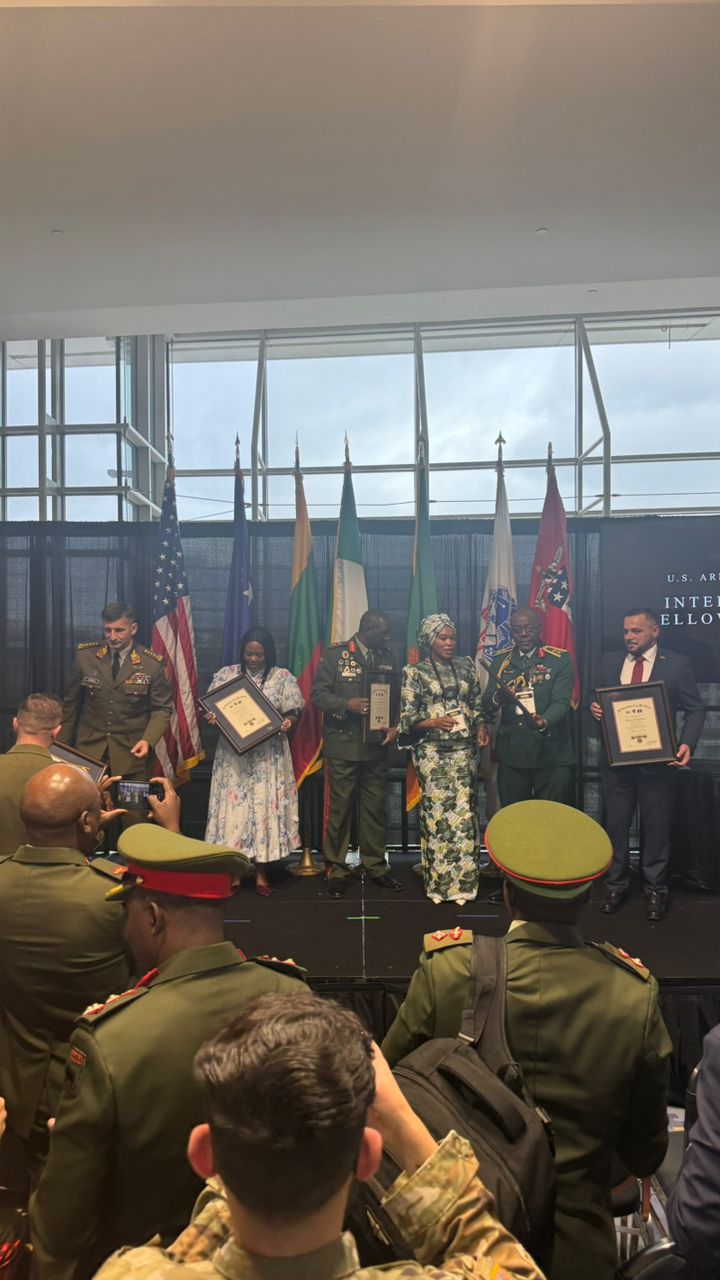
    The United States Army War College (USAWC) has posthumously conferred one of its highest international honours on the late Lieutenant General Taoreed Abiodun Lagbaja, the 23rd Chief of Army Staff (COAS) of the Nigerian Army, with his induction into the prestigious International Hall of Fame (IHOF).

    According to a statement by Lieutenant Colonel Appolonia Anele, Acting Director of Army Public Relations, the distinguished recognition, which took place on Monday, 13 October 2025, was conferred during the opening ceremony of the ongoing Association of the United States Army (AUSA) Annual Convention at the Walter E. Washington Convention Centre, Washington D.C., United States of America.

    In a solemn but yet colourful ceremony, the Commandant of the USAWC, Major General Trevor J. Bredenkamp, presented the posthumous honour in acknowledgment of the late General Lagbaja’s sterling leadership, visionary service and exceptional contributions to the advancement of military professionalism and international peace and security. The recognition underscores his outstanding achievements as an alumnus of the institution who rose meritoriously to the zenith of his military career as Nigeria’s 23rd Chief of Army Staff.

    The late Lieutenant General Lagbaja was one of the six eminent inductees honoured at this year’s event. His induction represents a historic milestone as he became the first ever Nigerian Army officer to be enshrined in the USAWC International Hall of Fame in the institution’s illustrious 124 year history, a testament to his enduring legacy of excellence and service to humanity.

    Representing the Chief of Army Staff, Lieutenant General Olufemi Oluyede, at the ceremony was Major General Adeleke Ayannuga, who received the honour alongside Mrs Maria Abiodun Lagbaja on behalf of the late COAS.

    Among the dignitaries in attendance were the Director General, Nigerian Army Heritage and Future Centre, Major General G.O. Adesina; Director General, Defence Headquarters Joint Doctrine and Warfare Centre, Major General G.T.O. Ajetunmobi, Mrs Deborah Aboderin of the Office of Security Cooperation, U.S. Embassy, Abuja.

    Also present were the Nigerian Defense Attaché to the United States, Army officers undergoing higher professional military education at the National Defense University, Washington D.C, the United States Army War College and the U.S. Army Command and General Staff College, alongside other senior Nigerian Army officers participating in the AUSA 2025 Annual Convention.

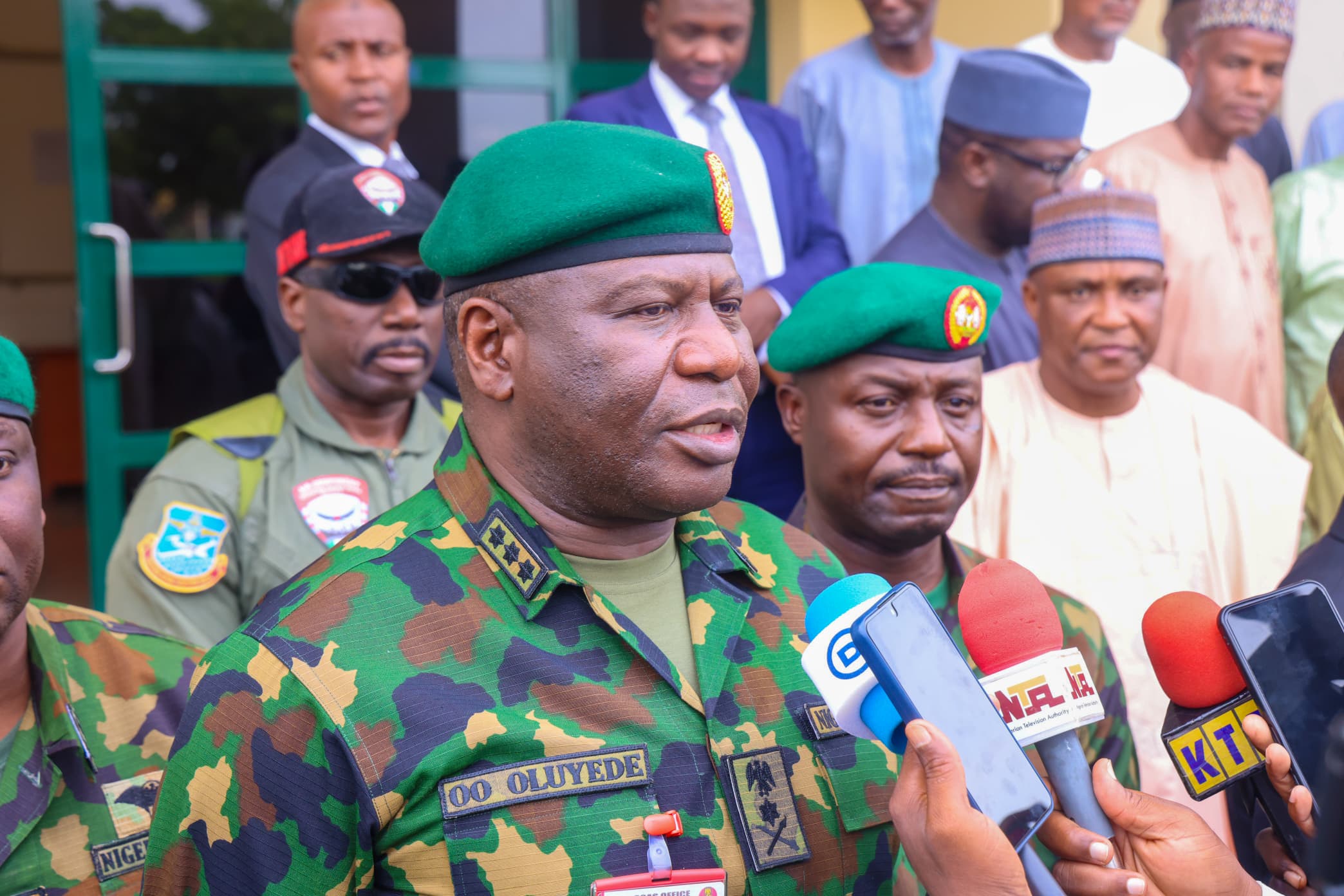
    The Chief of Army Staff, Lieutenant General Olufemi Oluyede, expressed profound pride in this singular honour bestowed upon one of the Nigerian Army’s most illustrious and visionary leaders. He affirmed that the recognition not only immortalizes the late Lieutenant General Lagbaja’s distinguished service but also reinforces the Nigerian Army’s commitment to the universal ideals of professionalism, discipline and dedication to global peace and security.
    crossorigin=”anonymous”>

  • Fidelity Bags awards for Best Export and Trade Support and Innovation

    Fidelity Bags awards for Best Export and Trade Support and Innovation

    Fidelity Bank’s market leadership has been affirmed once again as the tier-one lender bagged double honours at the BusinessDay Bank and Other Financial Institutions’(BAFI) Awards 2025.

    At the awards ceremony, which was held at the Lagos Continental Hotel, Victoria Island, Lagos on Saturday, 11 October 2025, Fidelity Bank was presented with the awards for the “Best Bank for Export & Trade Finance” and “Most Innovative Bank of the Year”.

    Dedicating the Export and Trade Finance Award to its customers, the Managing Director/Chief Executive Officer, Fidelity Bank Plc, Dr Nneka Onyeali-Ikpe,OON, who was represented by the Executive Director/Chief Operations and Information Officer, Stanley Amuchie, said, “This recognition underscores our unwavering commitment to promoting non-oil exports and supporting Nigerian businesses to compete globally through initiatives such as the Fidelity International Trade & Creative Connect (FNITCC) and the Export Management Programme (EMP).

    “I dedicate this award to all our exporters who continue to showcase the best of Nigeria to the world, our loyal customers, and our partners for their steadfast support.”

    The BAFI Awards is the benchmark of distinction for institutions in the Nigerian financial services sector. Now in its 12th year, the awards recognise and celebrate organisations that are excelling in the delivery of financial services in Nigeria. The award acknowledges organisations demonstrating leadership, vision and impact in driving Nigeria’s growth trajectory.

    Fidelity Bank’s recent recognition is attributed to significant accomplishments over the past twelve months. Notable milestones include the inauguration of the first privately constructed onshore oil export terminal in Nigeria in fifty years at the Otakikpo Marginal Field, which was funded by Fidelity Bank and commissioned by President Bola Ahmed Tinubu last week. Additionally, the Bank launched the Fidelity SME Hub, a multipurpose facility designed to support small businesses through innovation, collaboration, and capacity-building initiatives.

    Furthermore, Fidelity Bank organized the third edition of the Fidelity Nigeria International Trade & Creative Connect (FNITCC) in Atlanta, Georgia, USA, in September 2025. This event provided local businesses with opportunities to engage in deal rooms with U.S. buyers, including prominent retailers such as Walmart and Target, fostering potential partnerships.

    “The innovation award is a special one for us as it validates our continued drive to enhance operational efficiency, elevate customer experience, and strengthen business performance. We sincerely appreciate BusinessDay Media for this recognition and reaffirm our commitment to introducing more impactful innovations that empower our customers and advance the Nigerian financial services industry”, commented Amuchie.

  • WenA to Host 5th Annual Conference on Tax Reform and SME Cost Efficiency

    WenA to Host 5th Annual Conference on Tax Reform and SME Cost Efficiency

    …FIRS Chair Aisha Babangida, Shagaya Among Key Attendees

    The Women Enterprise Alliance (WenA) is set to host its 5th Annual Conference, bringing together top policy influencers, business leaders, development partners, and women entrepreneurs from across Nigeria.

    The conference, with the theme “Translating Policy into Practice: Cost-Reduction and Tax Reforms for Sustainable SME Growth,” is scheduled for Thursday, 16th October 2025, at the Diamond Hall, A-Class Event Centre, Wuse II, Abuja.

    This year’s edition underscores WenA’s commitment to empowering Small and Medium Enterprises (SMEs), particularly women-led businesses, by addressing critical barriers such as high operational costs and complex tax regimes.

    The event will feature key policy discussions, expert panels, and collaborative sessions designed to translate government policies into actionable strategies for sustainable business growth.

    At the centre of this initiative is Her Excellency Aisha Babangida, Founder of WenA, whose leadership and advocacy for women’s economic empowerment have positioned her as a reference point in Nigeria’s entrepreneurial space.

    Speaking ahead of the conference, Ms Babangida stated, “At WenA, we believe that empowering SMEs, especially women-led enterprises, means empowering Nigeria’s future.

    “This conference is not just a gathering; it is a call to action for stakeholders across sectors to translate policy into tangible, impactful change.”

    Among the confirmed speakers are Ms Chayla Shagaya, Senior Special Assistant to the President on Entrepreneurship, who will deliver a keynote address on scaling SMEs through cost-reduction reforms, and the Chairman of the Federal Inland Revenue Service (FIRS), who is expected to present critical fiscal reforms aimed at creating a more supportive tax environment for SMEs.

    The conference will also feature a strategic policy roadmap presentation developed by WenA in partnership with UN Women. This document outlines practical recommendations to address the pressing challenges facing SMEs, particularly in taxation and regulatory compliance.

    A high-level panel discussion will include insights from Dr Fausat Aleshinloye, Economist and Policy Analyst; Ifeoma Malo, CEO of Clean Tech Hub; Mrs Nnenna Jacob-Ogogo of SheVentures (FCMB); and representatives from Nigeria’s energy sector. The conversation will be moderated by Dr Dahiru Sani.

    A dedicated session will focus on simplifying Nigeria’s tax regime, with emphasis on harmonisation, ease of compliance, and improved transparency to reduce the burden on small businesses. Participants will also benefit from extensive networking opportunities, with stakeholders from government, finance, energy, and development sectors expected to attend.

    As part of recognising excellence in the SME ecosystem, the conference will celebrate standout entrepreneurs and initiatives. Awards will include the prestigious “Most Scalable Business in North-Central Nigeria” and certificates of excellence for innovation and community impact.

  • Nigeria Advances Maritime Mapping and Blue Economy Partnerships in Casablanca

    Nigeria Advances Maritime Mapping and Blue Economy Partnerships in Casablanca

    Nigeria has emerged at the forefront of efforts to integrate hydrographic development across Africa, leveraging its growing national capacity to drive regional collaboration, data sharing, and blue economy innovation. This was underscored at the African Cooperation Seminar on Hydrography, Oceanography, and Marine Cartography, held in Casablanca, Morocco, from 8 to 10 October 2025.

    Delivering a paper titled “Progress Made in Hydrography and Marine Cartography in Nigeria,” the Hydrographer of the Federation and Chief Executive Officer (HoF/CEO) of the National Hydrographic Agency (NHA), Rear Admiral Ayo Olugbode, outlined Nigeria’s strategic contributions to global and regional hydrographic advancement.

    He revealed that Nigeria had contributed 85,385 square kilometres of bathymetric data to the joint IHO/International Oceanographic Commission (IOC) GEBCO – General Bathymetric Chart of the Oceans Seabed 2030 project, reinforcing its leadership in data-driven ocean governance.

    Rear Admiral Olugbode also disclosed that the International Centre for Electronic Navigational Charts (IC-ENC) had approved the establishment of the West African Regional Office and Training Centre in Nigeria, further positioning the country as a hub for hydrographic excellence and maritime capacity-building in the region.

    “The NHA remains committed to advancing hydrography as a foundation for maritime safety, environmental stewardship, and the blue economy,” he stated, reaffirming Nigeria’s role in championing regional collaboration and innovation.

    He expressed appreciation to the Kingdom of Morocco, the Royal Moroccan Navy, and international partners such as the IHO, SHOM, and PRIMAR for hosting the high-level forum, adding that Nigeria would continue to “drive hydrographic innovation as a catalyst for Africa’s maritime resilience and bright blue economic future.”

    The seminar organised under the auspices of the Royal Moroccan Navy brought together top policymakers, defence officials, and technical experts from across Africa and partner institutions. Among those who addressed the gathering were Morocco’s Minister Delegate for National Defence, Rear Admiral Mohamed Tahin; IHO Technical Director, Dr. John Nyberg; Captain Mostaf Tafrhy, Head of the HOC Division; Mr. Pierre Yves Dupuy, Director of Institutional Missions and International Relations at SHOM; Mr. Abdellatif Loudiyi, Minister Delegate to the Head of Government in charge of National Defence Administration; Mr. Nizar Baraka, Minister of Equipment and Water; Ms. Zakia Driouich Sebbata, Secretary of State in charge of Maritime Fisheries; Mr. Joseph Bukari Nikpe, Minister of Transport of the Republic of Ghana; Mr. Hans Christopher Lauritzen, Director of the Regional Centre for Electronic Navigational Chart Distribution; and Prof. Jamal Machrouh, Senior Fellow at the Policy Centre for the New South.

    Discussions during the three-day event revolved around strengthening African–Atlantic cooperation in hydrography, oceanography, and marine cartography. Nigeria played a leading role by advocating for the adoption of Regional Marine Spatial Data Infrastructures (MSDI) to underpin maritime safety, environmental sustainability, and infrastructure development, including the Nigeria–Morocco Transatlantic Gas Pipeline project.

    Other presentations included contributions from Mr. Mohammed Benzaria, General Director of OMCO subsidiary at the National Office of Hydrocarbons and Mines, on the Africa–Atlantic Gas Pipeline project; Mrs. Sanae El Amrani, Director of the Ports and Maritime Public Domain Department, on the activities of the National Coordination Committee for Hydrography, Oceanography, and Marine Cartography (CNCHOC); Dr. Mohamed B., Director of the Higher Institute of Maritime Studies, on a Category B Hydrography Course certified by the IHO; Mr. Mohamed Najih, Director of the National Fisheries Research Institute, on the CNCHOC’s recent work; and Mr. Anas Chokairi, from the Directorate of Scientific Research and Innovation, on the “All-Atlantic Alliance” training initiative.

    Delegates also visited the Moroccan Navy Hydrographic Ship, BHODar-al-Beida, to observe advanced survey systems and exchange technical expertise.

    At the close of the seminar, participants endorsed key recommendations, including enhanced IHO capacity-building programmes, increased cross-expertise missions among regional states, and greater national contributions to the IHO/IOC GEBCO Seabed 2030 project. Nigeria’s joint training initiatives with Morocco drew widespread commendation, strengthening bilateral ties and reinforcing the goal of establishing a Regional Hydrographic Training Centre of Excellence.

    The discussions further recognised the contributions of Mr. Hicham Moudni, Morocco’s Head of the Maritime Affairs Service within the National Defence Administration, whose coordination exemplified the growing synergy among African states towards collective maritime advancement.

  • High-value Terror Suspect Arrested As Troops Neutralize, Arrest And Recover Arms In Major Operational Successes

    High-value Terror Suspect Arrested As Troops Neutralize, Arrest And Recover Arms In Major Operational Successes

    The Nigerian Army has recorded significant operational gains across multiple theatres of operation within the last few days, leading to the arrest of a high-value target, neutralization of terrorists, recovery of arms and ammunition and the surrender of insurgents.

    In a coordinated operation on 7 October 2025, troops of 2 Brigade in collaboration with Department of State Services operatives from Port Harcourt Command raided a suspected kidnappers’ hideout at Eket Local Government Area of Akwa Ibom State, arresting a high-value target identified as Emmanuel Akpan, a notorious kidnap kingpin operating along the Oron/Ibaka axis. The suspect is currently in DSS custody for further investigation.

    Similarly, on 8 October 2025, troops of 196 Amphibious Battalion at Baga in Kukawa Local Government Area of Borno State arrested an ISWAP/JAS terrorist fighter while attempting to infiltrate the town. Preliminary investigations revealed that the suspect served as a logistics and intelligence courier between terrorist enclaves in Chad and Niger Republic, with the intent to spy on troop movements under the guise of a surrendering fighter. He has since been handed over to 403 Amphibious Brigade for further investigation.

    In another development, troops of 4 Demonstration Battalion on a snap checkpoint along the Lere–Saminaka–Kaduna Road in Sabon Birni Local Government Area of Kaduna State, intercepted two suspects conveying 1,307 rounds of 7.62mm special ammunition, four mobile phones and ₦27,000 cash. Initial investigations indicated the ammunition was being transported from Barakin Ladi, Plateau State, to Zamfara State.

    Meanwhile, three ISWAP/JAS terrorists, including a female, voluntarily surrendered to 68 Battalion troops at Bosso, Niger State, citing intense military pressure and hardship in terrorist enclaves around the Tumbun Marcobina axis. The suspects, originally from Konduga and Jabilam, have been profiled for further debriefing.

    Additionally, troops of 222 Battalion at Bazamri Village, Konduga Local Government Area of Borno State, engaged terrorists in a firefight, forcing them to flee and recovering two RPG bombs and a belt containing 150 rounds of 7.62x54mm ammunition during exploitation operations.

    Across other regions, troops arrested multiple criminal suspects, recovered illegal arms, dismantled illegal refining sites and intercepted stolen crude oil and petroleum products in Rivers, Delta, Imo, Ebonyi and Plateau States. In the course of anti-oil theft operations, troops recovered over 6,650 litres of Premium Motor Spirit, seized several boats and vehicles used for transporting illicit petroleum products and destroyed multiple illegal refining ovens and equipment in line with established directives.

    The Nigerian Army remains committed to safeguarding law-abiding citizens, protect communities and create secure conditions economic growth.

  • Mission Possible – Unity Bank MD Celebrates Resilient Frontline Staff, Reaffirms Commitment to Customer Service Excellence

    Mission Possible – Unity Bank MD Celebrates Resilient Frontline Staff, Reaffirms Commitment to Customer Service Excellence

    The Managing Director/Chief Executive Officer of Unity Bank Plc, Mr. Ebenezer Kolawole, has said that a service culture built on responsiveness and innovation will differentiate the impact that customer service can make in any organisation.

    Making the remarks at the flag off of the Customer Service Week 2025 in Unity Bank, Mr. Kolawole stated that “apart from constantly improving the way in which better customer support can be achieved, the increasing sophistication of our customers have made the Bank to also begin to focus more on customer experience innovation with investment being made in technology, systems, and people which enable us redefine our customer journey altogether”.

    While extolling the Bank for always rising to any occasion, the Managing Director celebrated the resilient frontline staff for their unwavering dedication and reaffirmed the institution’s commitment to delivering exceptional customer service across all touch points, stating that this year’s celebration, themed “Mission: Possible,” underscores the Bank’s unwavering belief that every customer needs can be met through innovation, teamwork, and with service culture.

    “The Bank’s customer service teams are well acclaimed for their passion, professionalism, and resilience in fulfilling the institution’s mission to provide exceptional service to its growing customer base”, the Unity Bank MD further stated.

    In further acknowledgement, Mr. Kolawole stated: “At Unity Bank, our mission is clear — to make banking simple, accessible, and rewarding for every customer. ‘Mission Possible’ captures the spirit with which we approach every challenge and opportunity to serve; whether through our digital platforms, branch interactions, or customer support channels”.

    Additionally, the Bank’s Chief Customer Service Officer, Elfrida Igebu, emphasised the significance of recognising and celebrating staff who consistently go above and beyond to serve customers.

    “This year’s theme reminds us that what may seem challenging is always achievable with the right attitude, teamwork, and customer-first mindset. Our frontline teams embody this every day by demonstrating that at Unity Bank, service excellence is not just a goal, it is our mission,” Igebu said.

    Throughout the week, Unity Bank organised activities across its branches and offices nationwide to reflect the Customer Service Week 2025, from customer appreciation engagements, Award of recognition for Staff, setting up festive ambience and decor, flamboyant service and cultural costumes donned by members to digital media activations.

    In time past, Unity Bank was among the first financial institutions to introduce a multilingual USSD platform, *7799#, and from then onwards, the Bank continues to upgrade features of its mobile banking platform, Unifi app, for optimisation, reinforcing customer experience innovation and convenience.

  • N5bn MSME Credit Facility from Fidelity Bank, Backed by NCGC

    N5bn MSME Credit Facility from Fidelity Bank, Backed by NCGC

    Tier one Lender, Fidelity Bank Plc, has announced its readiness to begin the disbursement of funds under the National Credit Guarantee Company (NCGC) N5 billion Credit Intervention Scheme. The initiative is designed to expand access to finance for Micro, Small and Medium Enterprises (MSMEs), as well as businesses owned by women and youths across Nigeria.

    This was disclosed by the Managing Director/Chief Executive Officer of Fidelity Bank Plc, Dr. Nneka Onyeali-Ikpe, during the signing of a Memorandum of Understanding (MoU) between the bank and NCGC.

    According to Dr. Onyeali-Ikpe, the partnership with NCGC represents a significant step in the bank’s ongoing efforts to enhance financial inclusion and stimulate economic growth through increased access to credit. “This guarantee will enable us to further expand financing opportunities for those who need it most, while strengthening our capacity to support businesses across key sectors of the Nigerian economy,” she said.

    The facility will cover critical sectors including food processing, secondary agriculture (such as fish and poultry processing), fashion, green energy, light manufacturing, the agricultural value chain (feed mills and equipment fabrication), export-oriented businesses, and education.

    Dr. Onyeali-Ikpe highlighted that Fidelity Bank has consistently supported diverse sectors through targeted initiatives such as the Green Energy Financing Programme for renewable energy entrepreneurs, the Fidelity SME Hub for small businesses with a special arm – Creativerse, dedicated to the creative industry and the Fidelity Bank Education Support Scheme which provides affordable financing for educational infrastructure and technology upgrades.

    “With the backing of the NCGC credit guarantee, we can now extend financing to businesses that have traditionally been excluded from formal credit systems—without compromising our risk standards or operational efficiency,” she added. “While we have supported MSMEs with short-term facilities in the past, this partnership allows us to provide long-term credit facilities that empower businesses to expand sustainably.”

    Over the past five years, Fidelity Bank has disbursed over N500 billion in loans to MSMEs, empowering thousands of entrepreneurs and creating sustainable livelihoods.

    Also speaking at the event, Managing Director of NCGC, Mr. Bonaventure Okhaimo, emphasized that the organization was established to bridge the financing gap faced by MSMEs in Nigeria by mitigating lender risks through credit guarantees.

    “Although MSMEs are key contributors to Nigeria’s economic development, many of them struggle to secure funding from financial institutions due to perceived high risks,” he said. “Through the credit guarantee scheme, NCGC shares this risk with banks, making it easier for MSMEs to access much-needed capital.”

    Mr. Okhaimo added that NCGC and Fidelity Bank will also collaborate to provide financial literacy and business management training to MSME beneficiaries, ensuring they have the knowledge and skills to effectively manage their loans and achieve sustainable growth.

    The Fidelity Bank–NCGC partnership reinforces both institutions shared commitment to fostering entrepreneurship, strengthening MSMEs, and driving inclusive economic development across Nigeria.

    Ranked among the best banks in Nigeria, Fidelity Bank Plc is a full-fledged Commercial Deposit Money Bank serving over 9.1 million customers through digital banking channels, its 255 business offices in Nigeria and United Kingdom subsidiary, FidBank UK Limited.

    The Bank is a recipient of multiple local and international Awards, including the 2024 Excellence in Digital Transformation & MSME Banking Award by BusinessDay Banks and Financial Institutions (BAFI) Awards; the 2024 Most Innovative Mobile Banking Application award for its Fidelity Mobile App by Global Business Outlook, and the 2024 Most Innovative Investment Banking Service Provider award by Global Brands Magazine. Additionally, the Bank was recognized as the Best Bank for SMEs in Nigeria by the Euromoney Awards for Excellence and as the Export Financing Bank of the Year by the BusinessDay Banks and Financial Institutions (BAFI) Awards.

  • Nigeria Pledges Stronger Ocean Governance: Rear Admiral Olugbode Highlights Policy-to-Practice Efforts

    Nigeria Pledges Stronger Ocean Governance: Rear Admiral Olugbode Highlights Policy-to-Practice Efforts

    Nigeria has reaffirmed its commitment to advancing sustainable ocean governance and blue economy development at the 12th Advisory Board on the Law of the Sea (ABLOS) Conference, held from 7 to 8 October 2025 in Doha, Qatar.

    The Hydrographer of the Federation and Chief Executive Officer of the National Hydrographic Agency, Rear Admiral Ayo Olugbode, represented Nigeria on a high-level panel themed “Is United Nations Convention on the Law of the Sea (UNCLOS III) Fit for Purpose in Modern Times? Achievements, Challenges and Future Pathways.”

    The two-day conference brought together global experts and policymakers to examine the evolving landscape of ocean governance and explore critical pathways toward achieving a sustainable blue economy.

    Jointly organised by the International Hydrographic Organization (IHO) and the International Association of Geodesy (IAG), the ABLOS business meeting and conference was hosted by the Qatari Standing Committee of the Convention on the Law of the Sea.

    The forum provided Rear Admiral Olugbode with a platform to share Nigeria’s integrated approach to ocean governance, showcasing how strategic coordination, policy alignment, and hydrographic capacity are driving the country’s National Blue Economy Policy (2025–2034).

    “It was a great privilege indeed for me to have attended this important conference, in the course of which I used my panel session to explore how hydrography underpins maritime safety, environmental stewardship and support economic resilience in coastal and national maritime prosperity,” Rear Admiral Ayo Olugbode affirmed.

    He shared the stage with distinguished panellists, including Prof. Andrew Serdy of the University of Southampton, Dr. Elfatih Rasheed Elnour of the Qatari Standing Committee of the Convention on the Law of the Sea, and Ambassador (Dr.) Adnan Al Azri, Chairman of the Commission on the Limits of the Continental Shelf (CLCS). The session was moderated by Fiona Bloor from the Law of the Sea – Maritime Delimitation Team at the UK Hydrographic Office.

    The 12th ABLOS Conference reinforced the importance of coordinated policy frameworks, marine spatial planning, technological innovation, and international collaboration in unlocking the full potential of the blue economy.

    Rear Admiral Olugbode noted that the conference achieved its objectives, commending the high quality of participation and discourse. “The conference achieved its goals, especially because its deliberations were deeply enriched by the quality of participation,” he said.

    He expressed appreciation to the International Hydrographic Organization, the International Association of Geodesy, and ABLOS for providing such a valuable platform for exchanging ideas and strengthening global ocean governance.

    Reaffirming Nigeria’s commitment to ocean sustainability, the Hydrographer of the Federation said the National Hydrographic Agency remains focused on bridging the gap between policy and practice.

    He assured that the agency is dedicated to “advancing hydrography as a foundation for sustainable blue growth and resilient maritime development as well as leaving no one behind.”

    The conference outcomes are expected to further align Nigeria’s maritime policies with international best practices and strengthen the country’s role in global discussions on the future of ocean governance.

error: Content is protected !!