Category: News

  • Borno Security Breakthrough: Nigerian Army Saves 12 Kidnapped Teenage Girls in Askira/Uba

    Borno Security Breakthrough: Nigerian Army Saves 12 Kidnapped Teenage Girls in Askira/Uba

    The Nigerian Army has successfully rescued 12 teenage girls abducted by Boko Haram/ISWAP terrorists in Mussa District of Askira/Uba Local Government Area, Borno State. The victims, aged between 15 and 20, were kidnapped on 23 November while harvesting crops on their family farmlands and were freed on Saturday, 29 November, following a swift, intelligence-led operation by troops of Operation HADIN KAI in the southern Borno axis.

    The rescued girls have been evacuated to a secure military facility where they are receiving comprehensive medical care, psychological support and debriefing. Upon completion of these processes, they will be formally reunited with their families. Their recovery has brought immense relief to the community, which had been gripped by fear following the abduction.

    The rescued victims include Fatima Shaibu (17), Fatima Umaru (15), Hauwa Abubakar (18), Saliha Muhammed (15), Sadiya Umaru (17), Amira Babel (15), Zara Adamu (17), Nana Shaibu (15), Zainab Musa (18), Zainab Muhammed (17), Jamila Saidu (15) and Hauwa Hamidu (17).

    The military high command commended the doggedness of the troops for their swift response and acknowledged the crucial support of security stakeholders and local informants whose timely information enabled the successful rescue. Troops continue to pursue ISWAP remnants across southern Borno to prevent further attacks and safeguard civilians.

    The Nigerian Army calls on communities to continue supporting ongoing operations by providing credible and timely information, emphasizing that collaborative efforts are essential to defeating terrorism and ensuring lasting security.

  • Defence Leadership Boost: Army Council Announces Wide-Ranging Promotions of Senior Army Officers

    Defence Leadership Boost: Army Council Announces Wide-Ranging Promotions of Senior Army Officers

    The Army Council has on Thursday, 27 November 2025 approved the promotion of senior officers of the Nigerian Army to the next ranks of Major General and Brigadier General. A total of 28 Brigadier Generals have been elevated to the rank of Major General, while 77 Colonels have also been promoted to the rank of Brigadier General.

    According to a statement by Lieutenant Colonel Appolonia Anele, Acting Director of Army Public Relations, “Those promoted to the rank of Major General include, Brig Gen O Adegbe of the Defence Intelligence Agency, Brig Gen SM Uba, the Director, Defence Information, Brig Gen RE Hedima, the Acting Chief of Military Intelligence Army and Brig Gen RT Utsaha, the Deputy Director, Defence Operations. Also promoted to the rank of Major General are Brig Gen AM Umar, Commandant, Warrant Officer Academy, Brig Gen S Sulaiman, the Deputy Military Secretary (Army), Brig Gen IO Bassey, Director, Nigerian Army Operations Centre and Brig Gen CA Ekeator of Nigerian Army School of Electrical and Mechanical Engineering.

    Equally benefited from the elevation are the Acting Director Procurement in the Office of the Chief of Army Staff, Brig Gen SY Yakasai, Brig Gen WL Nzidee of Army Headquarters Department of Army Logistics, Brig Gen SA Emmanuel of the Nigerian Army Signals, Brig Gen SS Tilawan, the Acting Commander Sector 3 Joint Task Force North East Operation HADIN KAI, Brig Gen MO Agi, the Desk Officer Tertiary Education Trust Fund at the Nigerian Defence Academy and Brig Gen IM Abbas, the Commander 34 Brigade while Brig Gen ZA Saidu was promoted posthumously.

    Officers promoted from the rank of Colonel to Brigadier General are Colonels Y Ibrahim of the Nigerian Army Resource Centre Abuja, NN Gambo serving at the Army Headquarters Department of Civil Military Affairs and A Saidu of Headquarters Nigerian Army Finance Corps. Others are Colonels A Ali of Army Headquarters Garrison, I Waziri, Office of the Chief of Defence Staff, MM Sani of Armed Forces Command and Staff College Jaji, AA Alkali of the Nigerian Army Dog Centre, AO Ndah of Army Headquarters Department of Army Training, IB Sheriff of Headquarters 9 Brigade, KR Apata of Army Headquarters Provost Group, MK Akpuogwu of Headquarters Joint Task Force Operation Whirl Stroke and PU Nnaji of the Nigerian Army Operations Monitoring Support Team, MT Nagudu of Nigerian Army Armour School, KO Bukoye, the Commander 401 Special Forces Brigade, O Adole of Headquarters Nigerian Army Medical Corps, JA Ikagba of 68 Nigerian Army Reference Hospital, DC Ibeh of the 8 Division Medical Services and Hospital, GS Chohwore of 44 Nigerian Army Reference Hospital, OG Okoye also of the Nigerian Army Reference Hospital and YK Audu serving at the Headquarters Joint Task Force North East Operation HADIN KAI among others.

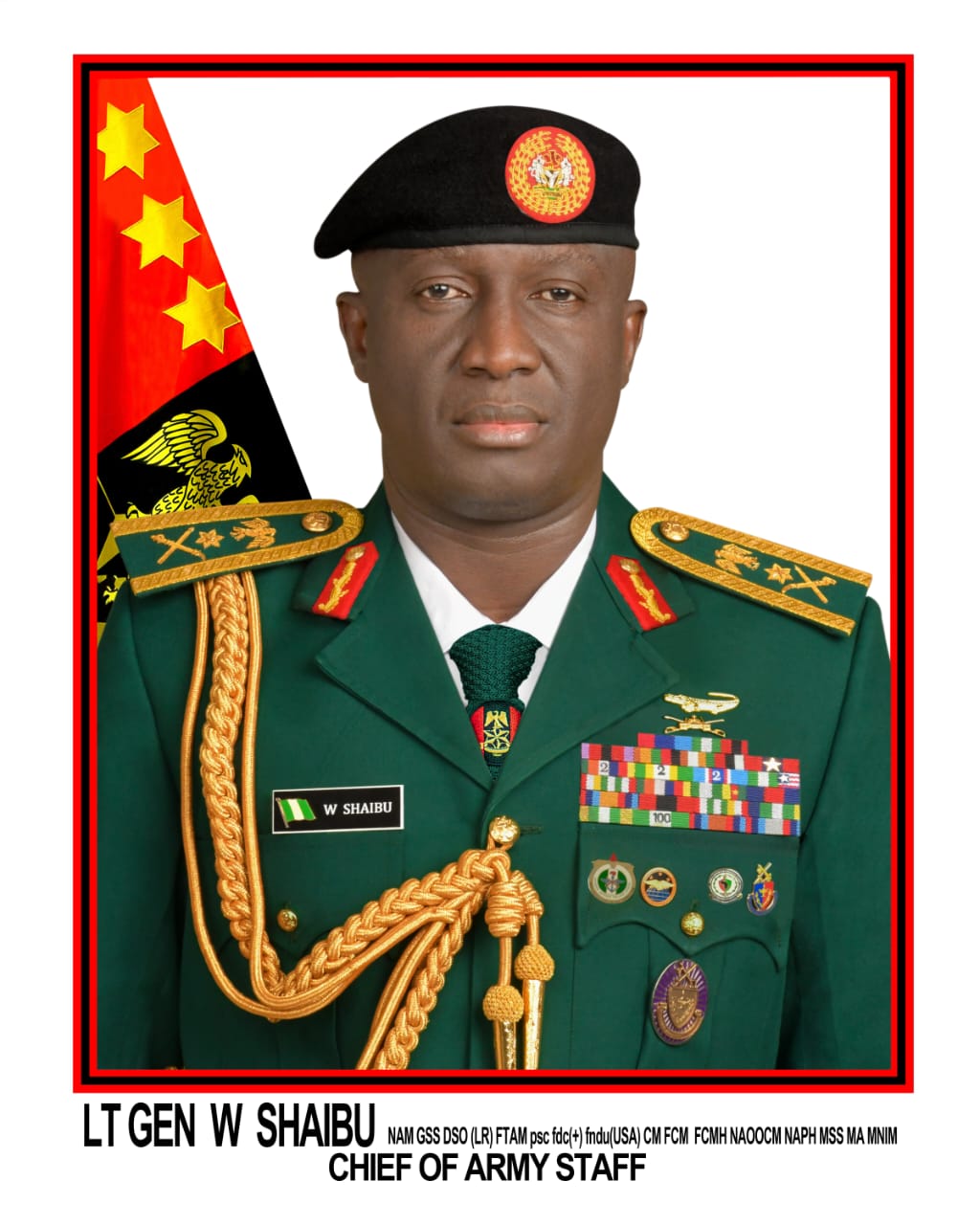
    The Chief of Army Staff (COAS), Lieutenant General Waidi Shaibu Nigerian Army Medal, while felicitating with the newly promoted senior officers and their families, charged all to intensify their professional drive and prove beyond doubt that their elevation is well-deserved. He directed the officers to demonstrate exemplary leadership, inspire their subordinates through personal conduct while cultivating bold, innovative and unconventional solutions capable of delivering swift and decisive responses to the nation’s evolving security threats.

    The COAS further emphasized that the officers must uphold, without compromise, their sacred oath of allegiance to defend the territorial integrity of the Federal Republic of Nigeria. He reiterated that their loyalty to the Constitution must remain absolute, unwavering and beyond reproach.

  • Nigerian Navy Releases List of Newly Promoted Senior Officers

    Nigerian Navy Releases List of Newly Promoted Senior Officers

    The Navy Board on Thursday 27 November 2025 approved the promotion of 127 senior officers to various ranks in the Nigerian Navy. As stated in the press release signed by Commodore A ADAMS-ALIU. Breakdown of the promotions released showed that 15 Commodores were promoted to the rank of Rear Admiral, 31 Captains were elevated to the rank of Commodore while 81 Commanders were promoted to the rank of Captain.

    The newly promoted Rear Admirals are Olumide Olajide Fadahunsi, Patrick Emuebie Meteke, Ponfa Paul Nimmyel, Sulieman Wale Olorundare, Johnson Adekunle Adewoyin, Cajethan Nnabuchi Aniaku, Anthony Victor Kujoh, Abdulrahman Mohammed, Chinonyerem Emmanuel Oji, Adamu Yahaya, Chindo Usman Yahaya, Aminu Abdullahi, Orakwue Dennis Nnatu, Usman Garba Bala and Samuel Anwuli Ogwu.

    While the newly promoted Commodores are Solomon Olushola Ohunenese, Mahmud Abubakar Fana, Taofiq Migdad Gidado, Mahmoud Hamman Hammanyero, Aliyu Gagidiba Abdullahi, Suleiman Gachi Muhammed, Abubakar Umar Sani, Mohammed Ali Kolo, Murtala Tafida Sulieman, Emmanuel Tamunosiki Fingesi, Suleiman Musa Abdullahi, Mustapha Tagoje Abdullahi, Olanrewaju Bejide Animasahun, Owens Ediale Adams Izilien, Olabode Teniola, Chris Chijioke Ali, Kabir Oladele Olanrewaju, Uzezi Egweh, Charles Eyo Iso, Elisha Bawa, Olumide Omololu Faneye, Oscar Chukwunonso Mbanu, Henry Ebute Ejeh, Galadima Mohammed Ciroma, Osuolale Ayotunde Eyitayo, Emmanuel Ajah Onu, Abubakar Ozovehe Aliyu, Ahmadu Shehu Mohammed, Ogbeche Richard Ochagu, Anastasia Nkechi Ossai and Feyisara Medinat Solebo.

    On behalf of officers, ratings and civilian staff of the Nigerian Navy, the Chief of the Naval Staff, Vice Admiral Idi Abbas (Admiralty Medal), congratulates the newly promoted senior officers and their families while charging them to rededicate themselves to their responsibilities and remain loyal to the nation and the Commander-in-Chief of the Armed Forces of the Federal Republic of Nigeria, President Bola Ahmed Tinubu GCFR.

  • Ambassadorial Appointments: Ono Decries Non-Inclusion of South East Region

    Ambassadorial Appointments: Ono Decries Non-Inclusion of South East Region

    The Chairman of the forum of former members of Enugu State House of Assembly and Former Southeast spokesman to President Bola Ahmed Tinubu Denge Josef Onoh, has addressed the recent nomination of three non-career ambassadors by President Bola Ahmed Tinubu, announced for confirmation by the Senate.

    The nominees are Ambassador Ayodele Oke (Oyo State, Yoruba), Retired Colonel Lateef Kayode Are (Ogun State, Yoruba), and Ambassador Aminu Mohammed Dalhatu (Jigawa State, Hausa).

    Onoh while addressing journalists at the Mallam Aminu Kano International Airport, said that the nominated diplomats are undoubtedly accomplished professionals with extensive experience in diplomacy, intelligence, and national security.

    According to him, their expertise could serve Nigeria well in representing our interests in the United States, United Kingdom, and France, pending final postings.

    “However, the composition of this trio-two from the Yoruba ethnic group and one from the Hausa raises profound concerns about equity, inclusivity, and adherence to Nigeria’s constitutional principles.

    “Notably absent is any representation from the Igbo or the Southeast geopolitical zone, a glaring omission that undermines the federal character doctrine enshrined in Section 14(3) of the 1999 Constitution (as amended).

    “The principle of federal character, as operationalized through the Federal Character Commission, mandates that appointments to public offices, including diplomatic postings, reflect the nation’s diversity to promote a sense of belonging and national unity. This initial set of nominations, as the first ambassadorial slate since the recall of envoys in September 2023, sets a troubling precedent by disproportionately favoring two major ethnic groups while sidelining the Southeast entirely.

    “Even if subsequent nominations include deserving Igbo candidates, a step I earnestly hope for, the damage from this opening salvo is already done. It perpetuates a perception of bias in the administration, deepening mistrust among South easterners who already feel marginalized more acutely under this government than during the previous administration.

    “This is not mere optics; it erodes the social contract of ‘one Nigeria,’ fostering division rather than the ‘Renewed Hope’ promised in the 2023 campaign.

    “Regrettably, this exclusion sends a clear, unintended message to the Igbo people: that their zone is not essential to the administration’s vision of victory or governance. It echoes the pre-election warnings of being offered mere “slices of soaked bread” token gestures amid systemic neglect which I actively defended against during my campaigns for you” He continued: “Mr. President in the Southeast, I stumped tirelessly in the region’s most challenging terrains, relying solely on my credibility as a voice for equity and truth. That trust, earned through putting regional and national interests above personal ambition, outweighs any political appointment I might receive.

    “It compels me to speak boldly now: these nominations, as they stand, do not embody the united Nigeria we aspire to. The political ramifications are equally stark. In APC strongholds like Ebonyi, Enugu, and Imo States, where the party has made significant inroads, this decision risks derailing grassroots momentum and mutual progress pacts with Anambra and Abia.

    “Governors and party leaders in the Southeast now face an uphill battle to deliver the President’s mandate and rally voters, as public sentiment sours. Come 2027, APC candidates at all levels could suffer electoral setbacks due to these festering reservations, not from opposition machinations, but from self-inflicted wounds of perceived inequity.

    “Many Southeastern political officeholders and appointees in the cabinet remain silent, prioritizing personal gains over candid counsel, a disservice to the people they serve.

    “To restore balance and reaffirm commitment to inclusivity, I humbly urge Mr. President to swiftly supplement these nominations with qualified representatives from the Southeast and South-South zones. Such an adjustment would not only comply with federal character but also rebuild bridges, mitigate polarization, and demonstrate that this administration values every Nigerian equally.

    “Nigeria’s global standing demands envoys of integrity and diversity; let us ensure our diplomatic corps reflects the rainbow of our federation. In the spirit of constructive dialogue and shared prosperity, I remain optimistic that this feedback will catalyze positive action. God bless the Federal Republic of Nigeria.”

  • Nigeria Customs CGC Awards: Kano/Jigawa Command Clinches Multiple Honors, PR Unit Celebrated for Outstanding Performance

    Nigeria Customs CGC Awards: Kano/Jigawa Command Clinches Multiple Honors, PR Unit Celebrated for Outstanding Performance

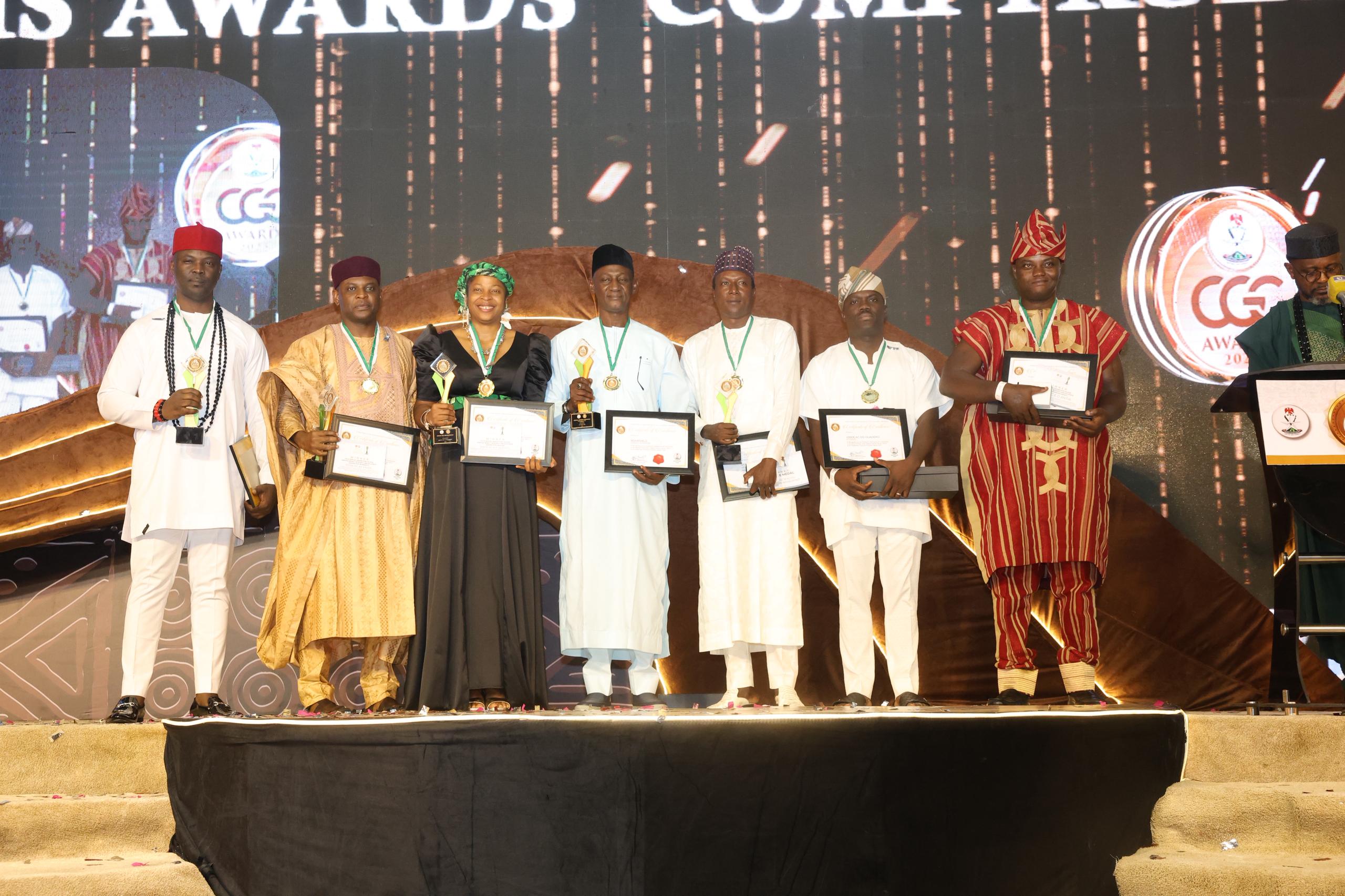
    The Nigeria Customs Service has reaffirmed its commitment to promoting excellence, professionalism and stronger internal collaboration as the 2025 Comptroller-General of Customs Conference drew to a close with an award night and gala dinner on Friday, 21 November 2025. The ceremony provided a platform to celebrate outstanding performances by Commands, Units and individual officers, including a notable recognition for the Public Relations Unit.

    Held after two days of engagements focused on improving synergy, operational efficiency, and institutional reforms, the event brought together Management members, Comptrollers, Senior Officers, and invited guests to honour the contributions that shaped the Service’s achievements throughout the year.

    The Comptroller-General of Customs, Bashir Adewale Adeniyi, commended officers for their dedication, noting that the Service surpassed its 2025 revenue target even before the start of the conference. He described the performance as a reflection of the collective resolve shown across enforcement operations, trade facilitation initiatives and modernisation programmes.

    “Tonight is about celebrating ourselves,” the CGC declared. “We have worked hard, delivered results and strengthened the pillars that define our mandate. It is only right that we pause to acknowledge excellence within the Service.”

    A significant highlight of the evening was the recognition of the Public Relations Unit for its outstanding contributions to strategic communication, media visibility and stakeholder engagement. The Unit was applauded for effectively projecting Customs reforms and achievements, particularly during the C-PACT Summit and the 2025 CGC Conference. Its efforts in countering misinformation, building trust and enhancing public understanding of Customs operations were at the core of the recognition.

    Similarly, the Kano/Jigawa Area Command, led by Comptroller Abubakar Dalhatu, also emerged as one of the top honourees of the night. The Command clinched the award for the Most Improved Command, following its remarkable performance in revenue generation, high-profile currency seizures and strengthened enforcement outcomes. Adding to the Command’s recognition, its Public Relations Officer, CSC Tahir Balarabe, won the Best Public Relations Officer of the Year award, a testament to his exceptional work in visibility management, crisis communication, and proactive stakeholder engagement.

    Several other Commands, Units and officers were honoured for distinguished service in areas such as leadership, innovation, discipline, community relations, anti-smuggling operations and trade facilitation. The recognitions underscored the diverse and critical roles played across formations in advancing the Service’s modernisation drive.

    The ceremony concluded with renewed commitments from officers to deepen professionalism, foster unity and sustain the momentum of reforms as the Nigeria Customs Service prepares for the year ahead.

  • CISLAC Pressures Authorities to Reevaluate Ambassadorial List Over Corruption Claims

    CISLAC Pressures Authorities to Reevaluate Ambassadorial List Over Corruption Claims

    The Civil Society Legislative Advocacy Centre (CISLAC) has called on the National Assembly, the Department of State Services (DSS) and the Federal Government to immediately review and reject the nomination of Ambassador Ayodele Oke from Oyo State as a non-career ambassador.

    President Bola Ahmed Tinubu had requested Senate confirmation of three non-career ambassadorial nominees: Kayode Are of Ogun State, Aminu Dalhatu of Jigawa State and Ayodele Oke of Oyo State. The request follows nearly two years after the recall of all Nigerian ambassadors in September 2023.

    CISLAC expressed deep concern that Ambassador Oke, who was declared wanted by the Economic and Financial Crimes Commission (EFCC) alongside his wife for serious corruption allegations, has been nominated for such a sensitive diplomatic position.

    Ambassador Oke, a former Director General of the National Intelligence Agency (NIA), was declared wanted after failing to appear before the court to answer fraud charges. On February 7, 2019, Justice Chukwujeku Aneke of the Federal High Court in Lagos issued an arrest warrant for him and his wife following an application by EFCC counsel Rotimi Oyedepo.

    The couple is linked to the discovery of 43,449,947 dollars, 27,800 pounds and 23,218,000 naira found in an apartment on Osborne Road, Ikoyi, Lagos, in April 2017.

    Speaking on the development, the Executive Director of CISLAC and Head of Transparency International Nigeria, Comrade Auwal Ibrahim Musa Rafsanjani, described the nomination as troubling, embarrassing and a severe dent on Nigeria’s commitment to transparency, accountability and anti-corruption.

    He stated that the nomination could undermine the work of anti-corruption agencies. According to him, when individuals under investigation are cleared for political appointments, it weakens the efforts of the EFCC, ICPC and other anti-corruption institutions. He stressed that government must not be seen to be undermining its own agencies, which work tirelessly to ensure that persons involved in corruption and unethical conduct are held accountable and are not rewarded with public office.

    Rafsanjani added: “At a time when Nigeria is trying to rebuild its global reputation and strengthen diplomatic ties, appointing someone with an active corruption case and an outstanding arrest warrant is disturbing and totally unacceptable. This nomination sends a wrong signal to the international community that Nigeria rewards impunity rather than upholding the rule of law.”

    He continued: “Ambassadorial appointments are strategic. They represent Nigeria’s image, values and credibility abroad. Appointing an individual declared wanted for alleged money laundering and criminal breach of trust undermines the fight against corruption and embarrasses the nation diplomatically.”

    He called on the National Assembly to rise to the occasion, saying: “We urge the Senate to demonstrate institutional integrity by rejecting this nomination. The DSS and other security agencies must clarify how an individual on a watchlist passed security vetting. Nigeria cannot afford to elevate persons with unresolved criminal allegations to sensitive diplomatic posts.”

    He further emphasized that the National Assembly has a responsibility to protect the sanctity of public office by ensuring that individuals linked to corruption, terrorism or other serious allegations are not considered for appointment and do not pass legislative screening.

    CISLAC reaffirmed its commitment to strengthening transparency and good governance, urging President Tinubu to reconsider the nomination in the interest of Nigeria’s global reputation.

    Rafsanjani concluded: “Nigeria must not send envoys who carry the burden of unresolved corruption allegations. Our foreign missions must reflect the highest standards of integrity.” Signed by Auwal Musa Rafsanjani Executive Civil Society Legislative Advocacy Centre (CISLAC)/ Transparency International Nigeria

  • WNC FOC Flags Off Omi Ailewu 2025 Naval Exercise Aboard NNS KADA to Boost Gulf of Guinea Security

    WNC FOC Flags Off Omi Ailewu 2025 Naval Exercise Aboard NNS KADA to Boost Gulf of Guinea Security

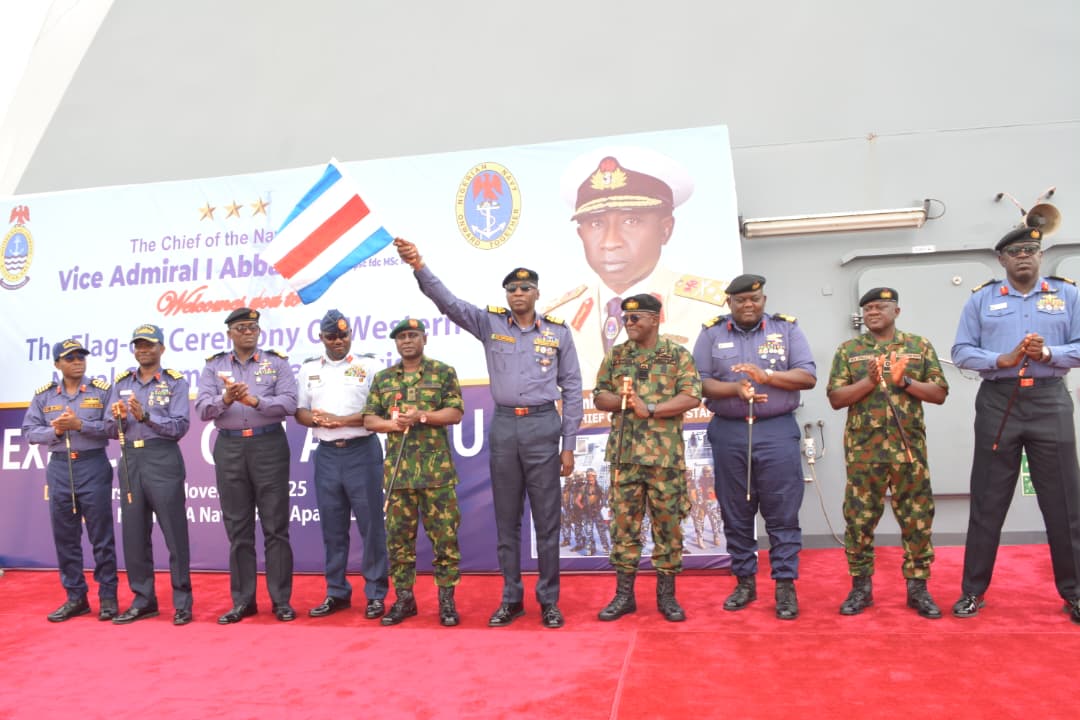
    On 27 November 2025, the Flag Officer Commanding Western Naval Command, Rear Admiral Abdullahi Abubakar Mustapha (GSS), officially flagged off Exercise OMI AILEWU 2025 onboard the Nigerian Navy Ship KADA. The exercise, aimed at combating major maritime security threats, including oil theft, illegal fishing, arms smuggling, human and drug trafficking, and attacks on critical national infrastructure, is within the Western Maritime corridor of Nigeria.

    The Officer in Tactical Command (OTC), Captain LD Deyin, in his exercise overview, highlighted that OMI AILEWU 2025 is not just a routine training drill but a strategic operation which is in line with the mission of the Flag Officer Commanding Western Naval Command, which is to maintain an intelligence- and technology-driven naval presence that can detect, deter, disrupt, and deny criminal activities across the Western Naval Command’s maritime area of responsibility. He also emphasized that the exercise would feature 4 Naval Ships (NNS IKOGOSI, GURARA, OLOIBIRI, and MAMBILA), 2 helicopters, 2 Tactical Drones, and the Nigerian Navy Special Boat Service (NNSBS) element. The exercise would also test fleet manoeuvres, communication procedures, maritime interdiction drills, and overall coordination at sea.

    Rear Admiral AA Mustpha, in these remarks, highlighted the strategic importance of the maritime domain to Nigeria’s economy, security, and the developing Blue Economy while flagging off Exercise OMI AILEWU. He emphasized that training is the best welfare for personnel, aligning with the CNS’s directive that the Navy must train and operate seamlessly to ensure safe waters for commerce and the Blue Economy.

    The FOC urged participants to uphold the highest standards of professionalism, safety, and teamwork, noting that lessons learned during the exercise will prepare them for real-world operations. He appreciated the presence of invited guests and officially flagged off the exercise, wishing all participants a safe and successful operation.

    The ceremony concluded with a group photograph, capturing the Special Guest of Honour, participating officers, and the ship’s crew to signify the formal start of the exercise.

  • Over 80k Fans Storm 4 Locations of The Wema Bank Davido 5ive Tour in Nigeria

    Over 80k Fans Storm 4 Locations of The Wema Bank Davido 5ive Tour in Nigeria

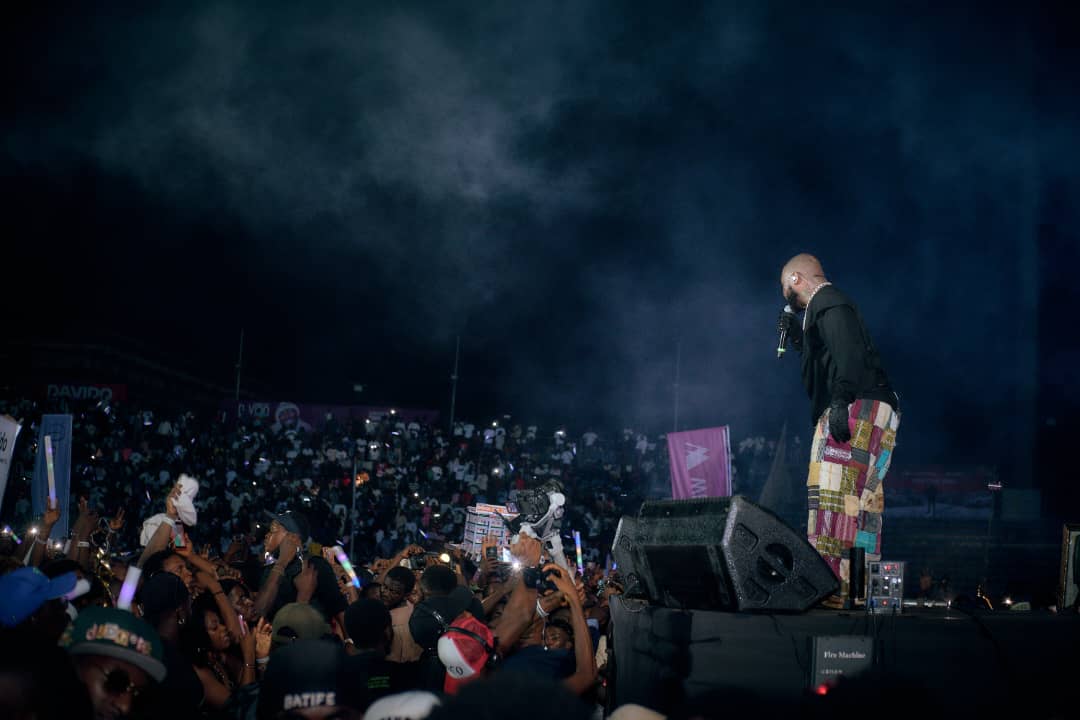
    Wema Bank, Nigeria’s most innovative bank and pioneer of Africa’s first fully digital bank, ALAT, has once again taken centre stage in grand style, collaborating with Africa’s biggest Afrobeats artiste, David Adeleke, popularly known as Davido, on the Nigeria leg of his 5ive Tour. The Tour, which hit its 4th city on November 9, 2025, has recorded over 80,000 attendees so far.

    Davido kicked off the 5ive tour earlier in 2025, commemorating the release of his 5th studio album, 5ive, with a world tour that covered numerous cities across the globe. The 5ive tour, a massive success since its launch, took over global headlines on October 14, 2025, when Davido announced that he would be bringing the tour back home to Nigeria where it all started, collaborating with none other than his longtime financial partner and banking family, Wema Bank.

    Unsurprisingly, Wema Bank rose to the occasion in grand style, dominating the Nigerian leg of the 5ive tour across 4 locations so far: Uyo, Yola, Enugu, and most recently, Ibadan. These 4 locations have covered all 4 regions of the country, demonstrating an intentional sense of diversity and inclusion. The Bank, in its usual standard of raising the bar, brought a new wave of glamour, sophistication and excitement that shook the industry, resulting in what has become the biggest studio tour in Africa, brought to you by Wema Bank.

    From providing its customers with exclusive access to experience the tour as regular or VIP guests to giving out high-quality trendy Davido 5ive tour merch that every Nigerian couldn’t wait to rock with pride, Wema Bank took the nation by storm as major sponsor of the 5ive Tour. With commendation and kudos trooping in from Nigerians across the globe, Wema Bank has undoubtedly won the hearts of millions, cementing its reputation as the innovative youth-centric bank that remains in touch with the needs and lifestyles of its customers.

    A dynamically synergic duo, Wema Bank and Davido have executed what is arguably the biggest finance-entertainment collaboration, totally redefining what it means for banking to seamlessly integrate with lifestyle as needs continue to evolve.

    All anticipation now builds up to December 14, 2025, when Wema Bank will once again take the 5ive tour to Nigerians right here in Nigeria; this time in the capital city of Abuja. Anyone interested in getting a free ticket or getting access to the highly sought after Davido 5ive Tour merch is encouraged to follow @wemabank on Instagram, X and Facebook to stay tuned as the #Wema5iveAliveTour continues to unfold.

  • Inside Nigeria’s Tourism Ecosystem: The Strategic Roles of ATPN and FTAN — By Frank Meke

    Inside Nigeria’s Tourism Ecosystem: The Strategic Roles of ATPN and FTAN — By Frank Meke

    Understanding the power of perception and the delicate balance that leadership demands, I have deliberately refrained for the past ten months from publicly commenting on the internal turmoil within the Association of Tourism Practitioners of Nigeria (ATPN).

    This reflection likely my first and last public commentary on the ongoing struggle between darkness and light is not intended to suggest that all hope is lost, nor is it meant to sensationalize events or imply the existence of any failed transactional dealings. It is simply an honest account.

    The current implosion in ATPN mirrors the failures that, years ago, gave birth to the Federation of Tourism Associations of Nigeria (FTAN). When institutions are built around personalities rather than solid visions, systems, and democratic values, their collapse becomes inevitable like the proverbial Humpty Dumpty.

    ATPN was founded by Alabo Mike Amachree, a generous hotelier whose commitment to tourism development in Nigeria has always been unparalleled. He is convivial, wise, unpretentious, and selflessly dedicated to cultural tourism not merely to ATPN. Though he may not own a five-star hotel, his impact remains profound. It is shocking that neither the Rivers State Government nor the Federal Government has honoured him suitably for his patriotism.

    Yet, in retrospect, his greatest weakness in forming ATPN was building it around himself. Early disciples who benefited from his generosity and financial strength did little to help institutionalize the association. When realities replaced praise-singing, conflict emerged.

    Another key pillar of early ATPN was the late Chief Samuel Oresajo urban, simple, unassuming. Though he ran a modest eatery in Ebute-Metta, he was the intellectual engine behind the founder. When crises erupted, he became the only mediator who truly understood both Amachree and the younger members seeking change.

    That younger group led by Jimi Alade, the late Segun Oyedeji, Deji Adeleye, and others demanded that Amachree step down after over a decade in office. Gani “Tarzan” Balogun sympathized but tactfully danced between both sides.

    In my typical peace-driven manner, I volunteered to lead the reformists to Abuja to meet Alhaji Tukur Mani, then a top federal bureaucrat. Our delegation included Jimi Alade, late Segun Oyedeji, Deji Adeleye, Mrs. Victoria Soluade, Gani Tarzan Balogun, and myself. Our goal was to seek a peaceful resolution and federal guidance since tourism then fell under the Ministry of Commerce.

    Tukur Mani, a brilliant orator, was already aware of the “sit-tight syndrome” troubling ATPN. After listening, he simply advised us to return to Lagos and form a new association free from individual ownership. That advice birthed FTAN.

    It was in Mani’s office that I first met Kabiru Malan, a Kaduna-based travel agent. Though close to Mani, he played no role in FTAN’s formation phase a story for another day.

    Fast-forward to today: the same disease that destroyed the old ATPN has resurfaced an ambitious Board of Trustees (BoT) trying to run the association from the shadows.

    ATPN has over 17 registered trustees, including some who are late. In 2020, six more were added an effort that required significant financial sacrifice from each of us, with Nkereweum Onung bearing a large burden of the costs.

    After the elections, conspiracies set in. A bitter feud erupted between the president and the South-West vice president. Despite repeated efforts by myself and Gani Tarzan Balogun to reconcile them in Abeokuta and Lagos, the gulf persisted. The vice president believed the president sponsored a candidate against him during the elections, and the wound never healed.

    Meanwhile, attempts by the president to rebuild the association were consistently frustrated by a new alliance between the vice president, the BoT chairman and his loyalists. The president was accused of everything from failing to open a bank account to non-performance.

    The transition from the previous executive council did not help matters. The former president brought in his friends, allocated positions, and when ousted, left with all institutional documents.

    As meetings progressed, some trustees began entertaining the idea of staying in office indefinitely. This silent ambition later became a storm, and only a few of us opposed this undemocratic drift.

    The feud between the president and the South-West vice president became the perfect excuse to set up an “investigation panel” a tool to weaken the president even though he had neither mismanaged funds nor been supported structurally to manage his team.

    Sleeper cells exist within the board some active, others snoring only waking when their vote is needed.

    The constitution so frequently brandished by power seekers was drafted by one person, without input from members or the board. Its true purpose is simple: to empower a few trustees to own ATPN permanently.

    My opposition was firm, so much so that I became the unofficial voice of dissent at every BoT meeting. Then, on October 1st, the board secretary illegally removed me from the board’s communication platform, a violation of law and procedure. I refused to contest it; their action merely exposed their ignorance.

    Even FTAN’s intervention panel, which approached me after engaging only the president, proved disappointing. Their report falsely claimed I could not attend the Abuja session because I was sick, a lie from the pit of darkness. None of what I told them made it into the final document.

    Those wishing sickness or death upon me will reap the fruit of their imagination. I stand on the promise of divine protection.

    I will serve out my term and leave the board. Let those who believe ATPN belongs to them wait for divine judgement.

    I have also chosen to distance myself from internal FTAN politics, lest the caterpillars and conspirators consume my peace.

    ATPN today remains heavily factionalised board included.
    Can peace return? Yes if men remember that they are mortals, not gods.

    I wish everyone well.

  • EU–IDEA, Stakeholders Press for Urgent Review of Social Development Act, Seek National Alignment

    EU–IDEA, Stakeholders Press for Urgent Review of Social Development Act, Seek National Alignment

    The European Union- International Institute for Democracy and Electoral Assistance EU-IIDEA, along with relevant stakeholders, has called for an urgent review of Nigeria’s Social Development Act (SDA), stressing the country cannot achieve inclusive growth or protect vulnerable groups under the current fragmented framework.

    The call for reform was made at the National SDA summit, organised by the International Institute for Democracy and Electoral Assistance (IIDEA) and funded by the European Union under its CSOs-Bridge Strengthening Project, in Abuja.

    The SD Act was first conceptualised in the 1970s and enacted in 2004, as the central framework for coordinated and inclusive social development in Nigeria.

    Project Manager of the EU Strengthening Bridge (EU-Bridge) Project, Mr Idem Akpan Udoekong, said the summit was convened to revive national attention to the long-standing but underutilised Social Development Act of 1974 and the Social Development Policy.

    According to Udoekong, both instruments are crucial for improving coordination and strengthening the legal recognition of civil society organisations, particularly those working with women and vulnerable groups.

    He explained that the goal of the engagement was to gather insights that would inform the reform of the Social Development Act and potentially lead to the development of a new national policy or bill. Such reforms, he noted, would place CSOs in a stronger position to contribute more meaningfully to social development, given the country’s pressing challenges.

    Udoekong stressed that “CSOs were already playing an indispensable role in society beyond the common perception of advocacy. He recalled joining a youth club at the age of 14, an experience he credited with shaping his values and leadership skills. From cooperative societies to community-based groups and professional associations, he said CSOs were supporting education, healthcare, civic values, and community development, often stepping in to provide services that were ordinarily expected of the government.

    On expectations from the summit, which coincides with the global 16 Days of Activism campaign, he said updating the SDA will enhance coordination on gender issues, support efforts to address gender-based violence and strengthen responses to other social concerns.

    Delivering the keynote address, the Enugu State Commissioner for Children, Gender, and Social Development, Hon. Valentina Enih, said the existing Act, originally enacted as Decree 12 in 1974 and later reissued in 2004, no longer reflects the country’s realities.

    She said, “The Act is older than many of us. Outdated provisions and emerging social challenges demand urgent reform.”

    She stressed that unity among civil society organisations (CSOs) remained essential for progress, noting that personal interests often overshadowed collective objectives.

    “One stick is easily broken, but a bundle of broomsticks is not. We must speak with one voice,” she said, while also appealing to lawmakers to increase funding for ministries responsible for women’s affairs, poverty eradication and social protection. “Many times, we use our personal resources just to ensure the work is done,” she lamented.

    The Chairman of the House Committee on Civil Society Organisations and Development Partners, Hon. Victor Obuzor, acknowledged the legislative gaps that have hindered effective coordination of social development nationwide.

    He said the National Assembly had made the Act’s review a priority. “Fragmentation, institutional reassignments and multiple regulatory frameworks have weakened the effectiveness of the Social Development Act.

    “Our Committee is reviewing historical gaps, engaging stakeholders and supporting the development of a modernised civil society regulatory bill,” he stated.

    According to him, the revised law would create more precise lines of authority, harmonise federal and state mandates and institutionalise civil society participation.

    For his part, Deputy Director at the Ministry of Humanitarian Affairs and Poverty Reduction, Peter Audu, said the forum aligns with federal reforms targeting gender equality, social protection and national cohesion.

    He noted that the government was committed to building stronger collaboration across ministries, development partners and state institutions.

    “This forum provides an important opportunity to consider proposed amendments and develop a national coalition for sustainable financing and measurable results,” he said.

    The CEO of the Accountability and Transparency Initiative, Dr Fumi Akinyele, called for the revised law to embed gender responsiveness from the design stage.

    She noted that many rural women were excluded from social protection programmes due to requirements such as smartphones, bank verification numbers and digital literacy.

    “Inclusion must go beyond words. We need clear definitions, gender-responsive budgeting and disaggregated data. Committees must be balanced so that different voices are heard,” she said.

    The Chairman of the Anambra Civil Society Network, Prince Chris Azor, shared experiences illustrating the challenges faced by sub-national CSOs, including inconsistent regulations that once led to the closure of community organisations’ bank accounts.

    “We were stranded. Even the registration processes were unclear. When grassroots operators cannot function, you are shrinking the civic space,” he said.

    He urged that the amended Act provide states with a clear legal framework for social protection and participation by civil society. “We want a standing law that expands the civic space and ensures citizens are part of governance.”

    In the same vein, Harry Udo, Team Lead of the Ethics and Good Leadership Awareness Initiative, said that the summit was timely, as it revived national attention to the long-neglected Social Development Act, which he described as critical for strengthening civil society operations at the sub-national level.

    He noted that although the Act empowers state governments to confer legal personality on civil society organisations, many state-registered CSOs currently lack the legal status required to open bank accounts or access financial systems. According to him, this gap has forced many grassroots groups to seek registration with the Corporate Affairs Commission (CAC) merely to obtain the documentation required for basic financial operations, resulting in widespread financial exclusion and operational hardship for organisations delivering essential services within states and local communities.

    Udo explained that harmonising registration and regulatory procedures under the Social Development Act would allow states to grant CSOs the same corporate status enjoyed by CAC-registered entities, thereby expanding the civic space and improving the operating environment for organisations working on social, economic and humanitarian development.

    He expressed hope that the discussions would culminate in a declaration that would guide states toward creating a more coherent, supportive and enabling environment for civil society nationwide.

error: Content is protected !!