Author: Dodo Elias Denen

  • Nigeria Customs Service Automates Excise Register, Starts Pilot Phase

    Nigeria Customs Service Automates Excise Register, Starts Pilot Phase

    The Nigeria Customs Service (NCS) has commenced live operations of its Automated Excise Register System (ERS), marking a significant step in its ongoing trade modernisation agenda aimed at strengthening excise administration and transparency.

    According to the Service, the ERS officially went live after the successful conclusion of a pilot phase carried out between July and August 2025. The system has now been deployed at three strategic excise factories — British American Tobacco Nigeria (BATN) PLC in Oyo State, International Tobacco Company (ITC) Limited in Kwara State, and Leaf Tobacco & Commodities Nigeria Ltd in Kaduna State.

    The facilities were selected as pilot sites due to their prominence in the excise sector and their capacity to provide a strong foundation for nationwide implementation. During the test phase, the system recorded a 75 per cent efficiency score at BATN, integrated production and reporting systems across the factories, and improved collaboration between Customs officers and factory management teams.

    With the system now live, all excise-related transactions at the pilot factories — including the recording of production figures, computation of excise duties, and generation of statutory reports — will be conducted exclusively through the ERS. The NCS stated that the platform is expected to drastically reduce manual documentation, eliminate inconsistencies in data reporting, and enhance transparency within the excise value chain.

    The Customs Service added that insights gained from the pilot will guide the system’s nationwide rollout, with plans to extend its coverage to other excise-regulated industries such as beverages, spirits, and segments of the manufacturing sector.

    The National Public Relations Officer of the Service, Abdullahi Maiwada, said the ERS is a central pillar of the NCS’s broader Trade Modernisation Project. He called on industry operators and stakeholders to embrace the reform and provide constructive feedback to support the system’s nationwide expansion.

    “The Service seeks stakeholders’ support in building a more robust and transparent excise regime that fosters compliance, enhances operational efficiency, and guarantees sustainable revenue growth for the Federal Government,” he stated.

  • Partnership for Equity: FCC Teams Up with CISLAC

    Partnership for Equity: FCC Teams Up with CISLAC

    The Chairman of the Federal Character Commission (FCC) has reaffirmed the Commission’s commitment to equity, transparency, and inclusiveness in governance, calling for stronger collaboration with civil society organizations in promoting awareness and accountability across Nigeria.

    He made this known while welcoming members of the Civil Society Legislative Advocacy Centre (CISLAC) during an advocacy visit to the Commission’s headquarters in Abuja.

    Highlighting the FCC’s constitutional mandate, the Chairman explained that the Commission’s role extends beyond Abuja and federal ministries, stressing that equity in appointments, promotions, and resource distribution must be reflected at all levels of governance.

    “Our jurisdiction goes beyond federal institutions. At the state level, governors must ensure diversity in governance, while at the local government level, recruitment and projects must reflect fairness across wards and communities. Even in the private sector, corporations employing thousands of Nigerians are expected to embrace inclusivity in their workforce and leadership,” he said.

    According to him, the federal character principle is not an administrative exercise but the foundation of national unity in a diverse country of over 250 ethnic groups. “Equity must be systemic. It must flow from the centre to the grassroots, touching every Nigerian where they live and work,” he added.

    On the role of civil society, the FCC Chairman emphasized that NGOs are indispensable partners in bridging the Commission’s limited reach. He noted that groups like CISLAC play a vital role in sensitizing citizens about their rights, monitoring compliance, and raising alarms where exclusion or imbalance occurs.

    “Civil society creates trust between institutions and citizens. When groups like CISLAC stand beside the FCC to advocate fairness, Nigerians are reassured that inclusivity is a shared value,” he said.

    Calling for stronger partnership, the Chairman urged CISLAC to help expand grassroots awareness of the federal character principle and to hold institutions at all levels accountable. He assured that the Commission remains open to collaboration and committed to enforcing equity across public and private sectors.

    The advocacy visit, he noted, underscores the importance of working together to ensure that no Nigerian feels excluded and that opportunities are fairly shared as part of a collective effort to strengthen national unity.

  • Fidelity Bank Leads Charge for Non-Oil Export Growth

    Fidelity Bank Leads Charge for Non-Oil Export Growth

    Nigeria’s diversification drive has gathered momentum in recent years as government initiatives push to reduce dependence on crude oil and strengthen non-oil sectors as engines of growth. From the Central Bank of Nigeria’s RT200 programme to incentives offered by the Nigerian Export Promotion Council (NEPC), the country has implemented policies designed to encourage exporters, boost foreign exchange inflows, and integrate local enterprises into global value chains.

    Complementing these efforts, Fidelity Bank Plc has steadily positioned itself as one of the private-sector leaders advancing the country’s non-oil export agenda. Through its flagship initiative—the Fidelity Nigeria International Trade & Creative Connect (FNITCC), the bank has built a global platform that links Nigerian exporters with international buyers, diaspora markets, and strategic investors.

    For a country where oil revenues remain vulnerable to global shocks, FNITCC is more than a corporate innovation. It is a deliberate tool to help Nigeria unlock new streams of foreign exchange, strengthen small businesses, and showcase the creativity and resilience of its people to the world.

    Beyond Commodities: A Broader Vision

    The design of FNITCC reflects Fidelity’s conviction that Nigeria’s future global competitiveness lies not only in raw commodities but also in value-added goods and services. The expo has created space for agriculture and consumer-packaged goods, but equally for sectors such as fashion, cosmetics, fintech, and the wider creative economy.

    The federal government has also increasingly emphasized the need for value addition rather than the mere export of raw commodities. A recent policy directive on shea butter, for instance, underscores this shift by encouraging local processors to refine and package the product before it leaves Nigeria. The move aligns with broader industrialisation and job-creation objectives, while ensuring that the country captures more value across the production chain—a goal that platforms like FNITCC are now helping to actualize by connecting these upgraded products to international markets.

    FNITCC events are immersive and deliberately multi-sectoral.

    They combine product exhibitions, breakout sessions, diaspora investment panels, curated workshops, art displays, and even theatrical and fashion performances. The aim is clear: to connect the breadth of Nigerian enterprise to global markets, while ensuring that exporters are able to meet international standards and access the finance required to scale.

    In a statement announcing this year’s FNITCC, Fidelity Bank’s Managing Director and Chief Executive Officer, Dr. Nneka Onyeali-Ikpe, said: “Since 2022 when we hosted the maiden edition, FNITCC has evolved beyond a platform for promoting Nigeria’s non-oil exports to become a veritable showcase of the immense value Nigeria has to offer the global market.”

    London to Houston to Atlanta: Showcasing Nigeria on the Global Stage

    The FNITCC journey began in London in November 2022. Hosted at the Novotel London West, the inaugural event drew more than 100 exhibitors and 90 speakers, attracting over 1,000 daily attendees. It unlocked trade and investment deals worth about $250 million, validating the proposition that Nigerian businesses could compete abroad if given the right exposure and institutional support.

    A year later, the platform moved to Houston, Texas a city known for its energy base but also home to one of the largest Nigerian diaspora communities in the United States. FNITCC Houston, held in October 2023, attracted over 160 Nigerian and U.S.-based businesses across fintech, commodities, fashion, agriculture, and creative industries. The highlight was a landmark $40 million pre-export finance facility in favour of JohnVents Industries, one of Nigeria’s fast-rising cocoa exporters. The facility, arranged by Afreximbank with Fidelity Bank as the local administrative agent, demonstrated how trade promotion could be matched with access to finance to deliver real outcomes for exporters.

    This month, September 18-20, 2025, FNITCC is heading to Atlanta, Georgia. The choice is deliberate: Atlanta has become a hub for Black entrepreneurship, cultural exchange, and diaspora investment in the United States. Its large Nigerian and African diaspora population provides a ready market for ethnic and value-added products, while its robust chambers of commerce and international trade networks make it an attractive gateway for exporters. Fidelity is also partnering with Amplify Africa, the organizers of AFRICON, one of the largest African diaspora business and culture summits in the U.S., to amplify the reach of this edition.

    By situating FNITCC in Atlanta, Fidelity Bank is tapping into a dynamic U.S. market and aligning with diaspora-led networks that can act as long-term anchors for trade and investment flows.

    Onyeali-Ikpe added: “As part of our commitment to developing platforms that promote economic growth, creativity, and sustainable trade both within Nigeria and internationally, we are pleased to announce the third edition of FNITCC. Since 2022, when we hosted the inaugural edition, the FNITCC expo has been at the heart of driving global market access for local businesses, and I am delighted that this year we will be in the city of Atlanta, USA.”

    Consolidating Success and Expanding Scope

    Between the London and Houston editions, FNITCC generated a consolidated deal pipeline of over $500 million. For Nigeria, where non-oil exports are still under $5 billion annually, this is a significant achievement. It demonstrates the potential of structured, private-sector-led platforms to complement government diversification policies with measurable outcomes.

    FNITCC Atlanta is expected to attract more than 3,000 participants—including exporters, U.S. buyers, policymakers, investors, multinational corporations, and development finance institutions. Programming highlights include B2B matchmaking sessions, policy dialogues, diaspora investment roundtables, and sector-specific workshops. Strategic sectors in focus will include agriculture, consumer goods, energy transition minerals, fashion, beauty, and creative services.

    By positioning exporters side-by-side with financiers, regulators, and global buyers, FNITCC provides the missing ecosystem Nigerian businesses often lack when venturing into foreign markets.

    Nigeria’s FX Outlook and the Case for Diversification

    The timing of Fidelity’s intervention could not be more strategic. The naira has shown greater stability in recent months, supported by a mix of policy reforms and improving inflows, helping to restore investor confidence in the broader economy. With global attention once again turning to Nigeria’s vast potential, this is an opportune moment to deepen non-oil export growth.

    The long-term case remains clear: as the world transitions away from fossil fuels, Nigeria cannot afford to depend solely on crude oil revenues. Building new, resilient export pillars is essential to sustaining growth, creating jobs, and securing foreign exchange inflows that are less vulnerable to commodity price swings.

    FNITCC sits at the heart of this shift. By showcasing value-added goods, creating structured access to global markets, and linking exporters to international buyers, the platform helps convert Nigeria’s comparative advantages into tangible competitiveness. In doing so, it strengthens the broader diversification drive while reinforcing the growing sense of economic optimism.

    A Shared Path to Diversification

    Ultimately, what makes FNITCC unique is its ability to bring together policy, finance, and culture under a single umbrella. It complements government-led initiatives and continental frameworks like AfCFTA by giving exporters practical exposure to international markets. It also addresses the financing gap through partnerships with institutions such as Afreximbank, ensuring that deals struck at the expos are not just ceremonial but backed by capital. And by spotlighting Nigeria’s creative and service industries, fashion, fintech, music, and art, FNITCC underscores the country’s growing soft power as a source of foreign exchange in its own right.

    In this way, FNITCC is more than an exhibition; it is a platform for national transformation. It embodies the collaboration between government policy and private initiative, while providing exporters the tools to compete on a global stage. From London to Houston and now Atlanta, it has grown into an institution that is helping Nigeria move closer to the long-held dream of economic diversification, reinforcing optimism that the non-oil sector can become the bedrock of a more resilient, export-led economy.

  • Armed Forces Resettlement Centre Boosts Economic Readiness With 32 New Graduates

    Armed Forces Resettlement Centre Boosts Economic Readiness With 32 New Graduates

    The Nigerian Armed Forces Resettlement Centre (NAFRC), Oshodi, has celebrated the graduation of 32 officers from the Mid and Senior Level Entrepreneurship and Management Course (15/2025), marking a significant milestone in the ongoing capacity-building efforts for service personnel transitioning to civilian life.

    Speaking at the colourful ceremony, the Commandant of NAFRC, Air Vice Marshal BR Mamman (GSS), praised the dedication and discipline of the graduating officers, describing them as “engines of growth, creators of wealth, and drivers of innovation.” The Commandant commended the officers for successfully completing the rigorous 4- to 5-week training programme, designed to equip them with critical entrepreneurial, leadership, and management skills for life during and after service.

    “You have been empowered to shape the future, turn visions into realities, and contribute meaningfully to national development,” AVM Mamman stated. “This course has not only prepared you for entrepreneurial success but also improved your leadership capacity and productivity in service.”

    The course, which is conducted quarterly with the approval of the Chief of Defence Staff, brought together 30 senior officers from the Nigerian Army, Navy, Air Force, and Defence Intelligence Agency (DIA). They were joined by 3 staff members from NAFRC, bringing the total to 33 participants. One officer was recalled due to service exigencies, leaving 32 officers who completed the programme successfully.

    Delivering the course overview, Brigadier General IO Olatunji, Director of Training at NAFRC, outlined the objectives and structure of the programme, which featured five core modules: Agriculture, Emotional Intelligence, Business Management & Legal Advisory, Health & Lifestyle, and Entrepreneurship Technical Training.

    The training was conducted in partnership with Empretec Nigeria Foundation, an internationally recognised entrepreneurship development organisation. Participants engaged in practical workshops, business planning exercises, and a highly acclaimed Entrepreneurship Training Workshop (ETW). Group presentations of viable business models were a highlight, with teams creating and pitching innovative business ideas under tight timelines.

    Study Tours and International Exposure

    To complement classroom learning, participants embarked on both local and international study tours. These included:

    Spectra Industries, Agege – for hands-on learning in food processing and packaging.

    National Conservation Centre, Lekki – marking the first-ever visit by an Empretec group to this eco-tourism site, which featured the longest canopy walk in Africa.

    Commint BUKA, Surulere – offering insight into managing a fast-food business in Nigeria.

    Songhai Farms, Port Novo (Benin Republic) – exposing officers to integrated farming, smart agriculture, zero-waste practices, and renewable energy in an international setting.

    These tours were carefully curated to provide practical exposure to various business environments and models, aligning with the Centre’s goal of preparing officers for sustainable post-service ventures.

    Strategic Reentry and National Impact

    The training forms part of NAFRC’s broader effort to prepare military personnel for life beyond the uniform, with a focus on strategic reintegration, economic empowerment, and nation-building. The Commandant emphasized that the revised curriculum and new partnerships such as the Memorandum of Understanding with the Corporate Affairs Commission (CAC) for streamlined business registration further reinforce the Centre’s commitment to excellence.

    In his closing remarks, AVM Mamman extended gratitude to the Chief of Defence Staff, General Christopher Musa (OFR), for his unwavering support, as well as to Empretec Nigeria Foundation, the course facilitators, and the Service Chiefs for making the training possible. He also expressed deep appreciation to President Bola Ahmed Tinubu (GCFR) for his steadfast leadership and support to the Armed Forces.

    Graduation and Certification

    Following the formal presentations, the 32 participants were officially conferred as graduates of the Senior and Mid-Level Entrepreneurship and Management Course 15/2025. Each received a joint certificate issued by NAFRC and Empretec Nigeria Foundation, in recognition of their successful participation and performance.

  • Military Recovers 158 Cattle, Records Terrorist Surrender in Nationwide Operations

    Military Recovers 158 Cattle, Records Terrorist Surrender in Nationwide Operations

    The Nigerian Army has intensified its operational gains across the country, recovering a total of 158 cattle, compelling a terrorist family member to surrender, and foiling multiple criminal activities in a series of coordinated operations.

    On 2 September 2025, troops of 192 Battalion (Main) in Gwoza, Borno State, received the surrender of an adult female family member of ISWAP/JAS terrorists. Preliminary investigation revealed she surrendered from Chikide Village with a token sum of ₦4,500. She was subsequently handed over to 26 Task Force Brigade Military Intelligence for profiling.

    In Zamfara State, troops of 1 Brigade at Forward Operating Base (FOB) Danmarke responded to intelligence on terrorist movement after rustling livestock at Kyairu Village. The swift action forced the criminals to abandon the animals, which were later recovered and handed over to local authorities.
    [[[[
    Similarly, in Kebbi State, troops of 1 Battalion (Rear) in Augie, working with a Joint team, pursued armed terrorists who attacked Gulma Village in Argungu LGA. The operation resulted in the recovery of 30 cattle, which were handed over to traditional leaders for onward return to their rightful owners.

    In Sokoto State, troops conducted clearance operations in Sauna/Goboro Forest, Tangaza LGA, after receiving intelligence on terrorist movement with rustled livestock. The criminals withdrew following troops’ contact, leading to the recovery of 68 cattle. These were handed over to community leaders for safe custody pending return to owners.

    Troops of Sector 6 Operation ENDURING PEACE (OPEP) also intervened in Plateau State following reports of farm destruction. In Jos South LGA, they found 21 cattle grazing unattended, while in Riyom LGA, 39 cattle were also discovered grazing unsupervised on farmlands. The livestock were secured for further action.

    The Nigerian Army reaffirmed its determination to deny terrorists and criminal groups freedom of action, safeguard communities, and consolidate peace and security across the nation.

  • NIGERIA CUSTOMS SERVICE BOARD APPROVES APPOINTMENT OF 4 DCGs, 12 ACGs, PROMOTES 3,312 SENIOR OFFICERS, REVIEWS KEY OPERATIONAL UPDATES

    NIGERIA CUSTOMS SERVICE BOARD APPROVES APPOINTMENT OF 4 DCGs, 12 ACGs, PROMOTES 3,312 SENIOR OFFICERS, REVIEWS KEY OPERATIONAL UPDATES

    The Nigeria Customs Service Board (NCSB), at its 63rd regular meeting held on Tuesday, 2nd September 2025, chaired by the Honourable Minister of Finance and Coordinating Minister of the Economy, Mr. Wale Edun, approved the appointment of four (4) Deputy Comptroller-Generals (DCGs) and twelve (12) Assistant Comptroller-Generals (ACGs).

    According to a statement signed by the Customs National Public Relations Officer, AC Abdullahi Maiwada PhD, mnipr, mniia, these appointments were made to fill vacancies created by the recent retirement of some management members, while also strengthening equitable representation within the Service’s leadership structure. The appointments were also in line with the availability of positions across the six geopolitical zones and in strict compliance with the Federal Character Policy of the Government, as provided in Section 14(4) of the Nigeria Customs Service Act, 2023.

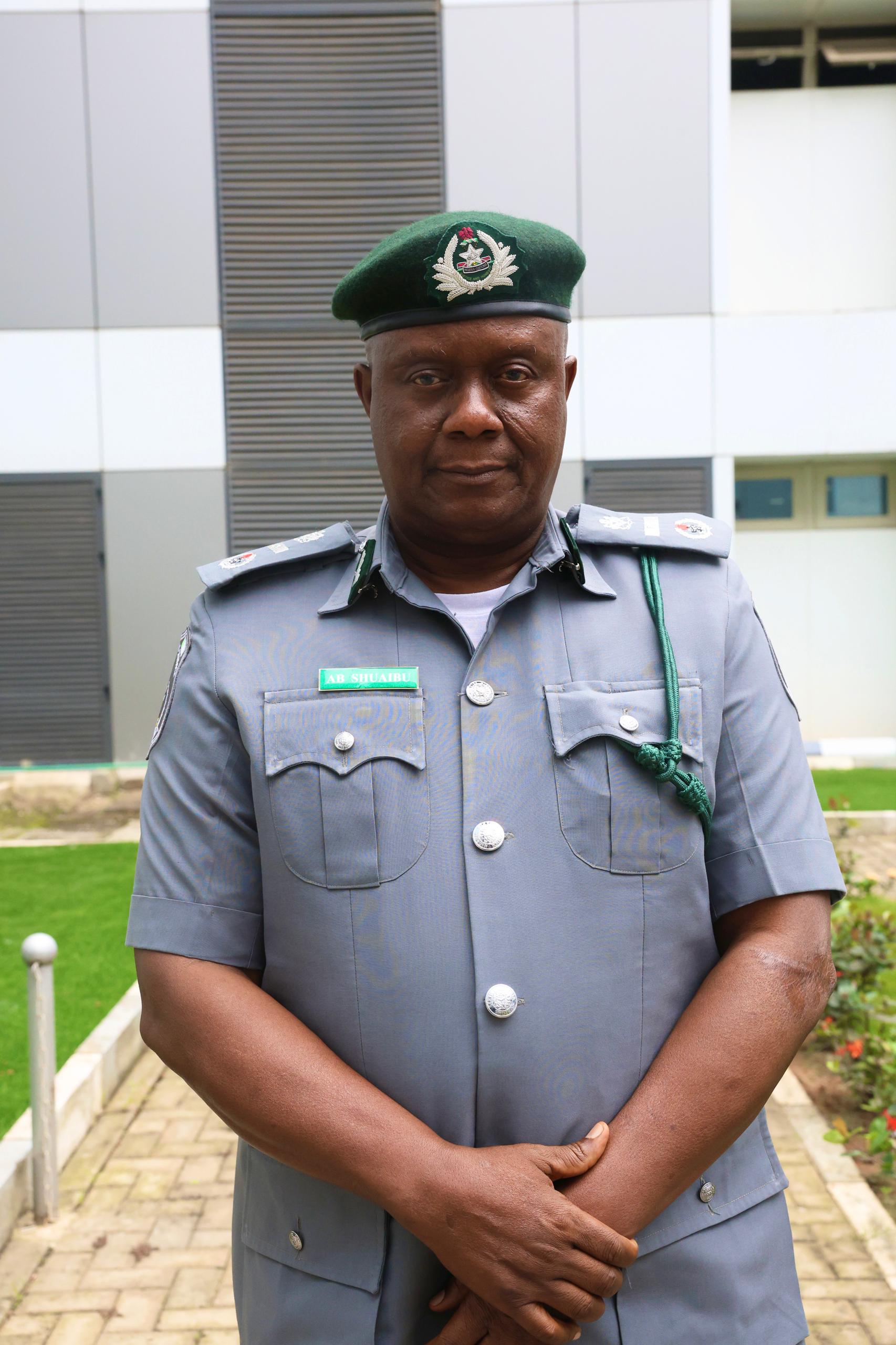
    The newly appointed DCGs are: AB Mohammed (North-West), GO Omale (North-Central), OC Orbih (South-South), D Nnadi (South-East). While the new ACGs include: MP Binga (North-East), CA Awo (South-East), AB Shuaibu (North-Central), AT Abe (North-West), K Mohammed (North-West), B Mohammed (North-West), TM Daniyan (North-Central), B Oramalugo (South-East), OP Olaniyan (South-West), B Olomu (South-West), IK Oladeji (South-West), and CC Dim (South-East).

    In the same vein, the Board approved the promotion of 3,312 senior officers across various ranks from Comptroller of Customs (CC) to Assistant Superintendent of Customs II (ASC 11).
    Additionally, the NCS Management during its 6th Management Meeting held on Friday, 29 August 2025, approved the promotion of 202 junior officers from Assistant Inspector (AIC) to Customs Assistant I (CA1). These promotions underscore the Service’s commitment to merit-based career progression and recognition of outstanding performance.

    Similarly, during the regular meeting and in line with the Presidential directive on the National Single Window (NSW), the Board acknowledged the sustained involvement of the Nigeria Customs Service in the project. The Service has seconded its World Customs Organisation (WCO)-accredited officers, supported the drafting of business process requirements, actively participated in vendor selection, and continues to provide ICT and risk management expertise. The Board noted that with integration support from Trade Modernisation Project Limited, the NCS is supporting the initiative toward early completion, reaffirming its commitment to trade facilitation, efficiency, and global best practices.

    Furthermore, the Board also undertook a comprehensive review of the Service’s revenue performance for the first half of the year. Between 1st January and 30th June 2025, the Service recorded a total revenue collection of N3,682,496,530,576.48, representing a remarkable performance above expectations. This figure surpassed the projected revenue for the period by N390,197,847,119.32, equivalent of 11.85%, reflecting the Service’s strengthened capacity in revenue mobilisation. In practical terms, this signifies that within six months, the NCS has already achieved 55.93% of its annual revenue target. The Board noted that this impressive outcome underscores the effectiveness of ongoing reforms, improved compliance by stakeholders, and enhanced deployment of technology in Customs operations.

    Updates on the Service’s Trade Modernisation Project were also presented, with notable achievements recorded in the second quarter of 2025 and into July. Key milestones include wider deployment of the Unified Customs Management System (UCMS) codenamed B’Odogwu, arrival of six scanners including an FS6000 model to boost non-intrusive inspection, procurement of Electronic Cargo Tracking System (ECTS) equipment, setup of the Centralised Image Analysis System (CIAS) at Customs Headquarters, reinforcement of cybersecurity architecture, operationalisation of a multi-channel helpdesk, onboarding of additional stakeholders, and delivery of targeted capacity-building programmes. The Board acknowledged that these developments further align Nigeria’s clearance processes with international best practices.

    In disciplinary matters, the Board considered cases presented during the session and approved the demotion of two officers to the next lower rank for various levels of misconduct, while also granting reinstatement to two officers after reviewing their cases. This action reflects the Board’s commitment to upholding accountability and fairness, in line with the Service’s core values.

    The Comptroller-General of Customs, Bashir Adewale Adeniyi MFR, on behalf of the NCSB, congratulates all newly appointed and promoted officers while charging them to justify the confidence reposed in them.

    He also reaffirmed the Service’s commitment to innovation, inclusivity, transparency, and excellence in service delivery, while appreciating the Honourable Minister of Finance for his continued support and guidance.

  • Customs Confiscate ₦377m in Illegal Arms, Ammo, and Drones

    Customs Confiscate ₦377m in Illegal Arms, Ammo, and Drones

    The Nigeria Customs Service (NCS) has intercepted firearms, ammunition, and industrial drones valued at over ₦377 million during intensified anti-smuggling operations across Ogun and Ondo States.

    Confirming the development, the Service said the seizures, which included 15 rifles, 4,841 rounds of live ammunition, and two industrial drones, were the outcome of sustained surveillance and intelligence-led patrols in border communities notorious for smuggling activities.

    The seizures were made by the combined efforts of the Federal Operations Unit (FOU) Zone A and the Joint Border Patrol Team, both operating within the Southwest. According to Customs, the items were concealed in vehicles and packages designed to evade detection.

    The Comptroller in charge of the operation disclosed that the firearms and ammunition had been handed over to the National Centre for the Control of Small Arms and Light Weapons (NCCSALW), under the Office of the National Security Adviser, for further investigation and appropriate action.

    “The duty of the Service goes beyond revenue collection; it extends to safeguarding national security,” he said. “These seizures reinforce our commitment to curbing the influx of arms and ammunition that could pose grave threats to peace and stability.”

    He further stated that the recovered items would have endangered lives if they had slipped through security checks, stressing that the collaboration between Customs and other security agencies was yielding results in the fight against smuggling and illegal arms proliferation.

    The Service urged members of the public, especially residents of border communities, to cooperate by providing credible intelligence on smuggling activities, adding that the government remained determined to protect the nation’s borders.

  • Apapa Customs Collects ₦215billion on B’Odogwu in August As Comptroller Olomu Reassures Efficiency

    Apapa Customs Collects ₦215billion on B’Odogwu in August As Comptroller Olomu Reassures Efficiency

    Despite reported network glitches, the Apapa Command of Nigeria Customs Service has collected ₦215b in the month of August 2025 using the Unified Customs Management System (UCMS) also known as B’Odogwu

    Customs Area Controller of the Command, Babatunde Olomu who described the collection as a product of increased confidence and continuous improvement of the B’Odogwu system thanked stakeholders and officers for their unrelenting support so far.

    The CAC also stated that the August 2025 collection on the system is a testament to the resilience of officers whose patriotism has kept the system growing amidst challenges

    Comptroller Olomu thanked the stakeholders for their belief in the system’s capacity to meet the expectations of the trading community, especially those who do their import and export business through the nation’s premier port of Apapa.

    Taking a cue from several confidence building stakeholders’ engagement personally attended by the CGC Bashir Adewale Adeniyi, MFR, the Controller reassured all importers, exporters, licensed customs agents and freight forwarders that B’Odogwu is at the verge of breaking through for greater success.

    He described their patience and support as invaluable contributions to the national economy and commendable efforts to support a homegrown ICT platform gravitating towards revolutionising trade in Nigeria through customs operations.

    Comptroller Olomu also disclosed that the CGC has directed invigorated service from the ICT/Modernisation Department of the NCS Headquarters to ensure steady and sustained improvement in B’Odogwu service delivery by prompt address of all hitches, listening to any user complaint and providing necessary support for efficiency.

    He expressed optimism that the UCMS is fully out to surpass user expectations and gain more confidence in days to come.

    The Controller said “Our collection of ₦215b using the B’Odogwu platform confirms progress in our ongoing journey to build a dependable platform for trade by Nigerians and for all those doing import, export and excise business in Nigeria”.

    “This is a collective victory for all of us, and we shall continue in the March forward for greater successes in days, weeks, and months ahead. We are braving all odds, and the sky is our limit,” he concluded

  • Meet The Next DCGs & ACGs: Customs Board Meets To Approve Management Team

    Meet The Next DCGs & ACGs: Customs Board Meets To Approve Management Team

    A significant reshuffling within the Nigeria Customs Service (NCS) is set to take place on Tuesday, September 2nd, following a crucial meeting of the Customs Board chaired by the Minister of Finance, Wale Edun.

    At the meeting, the Board is expected to approve the appointment of new members into the management cadre of the Service, with several fresh faces stepping in and a few others being reassigned. This development follows the federal government’s decision to discard covert lobbying efforts aimed at extending the tenure of some senior officers whose terms officially expire on August 31st, 2025.

    Government sources revealed that although extensions had previously been granted to address systemic stagnation—where some officers remained on the same rank for up to nine years—this time, the federal government opted for a clean break, allowing new leadership to emerge.

    According to impeccable sources, Assistant Comptroller General (ACG) Timi Bomodi will be elevated to Deputy Comptroller General (DCG) in charge of Enforcement, Investigation & Inspection (E, I&I), replacing the retiring DCG OA Alajogun, fsi.

    Comptroller AB Shuaibu, a seasoned anti-smuggling expert, will be appointed ACG in charge of E, I&I, while Charles Orbih, currently the Coordinator of Zone A, is expected to assume the role of DCG in charge of Finance, Administration & Technical Services (FATS), replacing the recently retired DCG Jibo.

    Other Comptrollers recommended for elevation to ACG include:

    Compt. Babatunde Olomu, fsi, PhD, of Apapa Area Command

    Compt. Architect Daniyan, of the PTML Command

    Compt. Olaniyan, currently overseeing the Scanning Unit

    Compt. Babandede, of Onne Area Command

    Compt. Alkali, of the Federal Operations Unit (FOU), Zone B, is set to replace Compt. Babandede at Onne.

    In another key redeployment, Compt. Osoba, head of the Customs Intelligence Unit (CIU), is expected to take over as the new Area Controller at Apapa Command. Meanwhile, Comptroller IK Oladeji will become the new National Coordinator of Operation Whirlwind.

    This strategic management shake-up is seen as a move to restore credibility and reinforce professionalism within the Service, especially in the face of public criticism and allegations that some officers were exploiting internal systems to prolong their stay in office.
    Source: thispagenewspaper

  • FOC NAVTRAC Eulogizes NNIT During Groundbreaking Visit

    FOC NAVTRAC Eulogizes NNIT During Groundbreaking Visit

    On 28 August 2025, The Flag Officer Commanding, Naval Training Command (FOC NAVTRAC), Rear Admiral Robert Obeya visited Nigerian Naval Institute of Technology (NNIT) Sapele. The visit was part of his maiden familiarization tour of professional schools, Colleges and units under command.

    The FOC was warmly received by the Commandant (Comdt) NNIT, Rear Admiral SJ Oyegade, Deputy Comdt, Heads of Departments, Commander Naval Medical Centre Sapele and Commanding Officers of schools in the institute. The FOC was briefed on the activities of the Institution and thereafter accompanied on a guided tour of its facilities.

    In his remarks, Admiral Obeya commended the commandant and the management for maintaining the professional standard of the institute, noting that although most of the equipment are old, yet they are properly maintained and still operational. He stated that his top priority was to ensure that NN professional schools imbibe technologically advanced training approaches and emphasized on the need for the upgrade of training aids and equipment in the institutions to conform with global best standards.This underscores the Nigerian Navy (NN) training policy which is to prioritize the professional development of its personnel to ensure effective performance of constitutional mandates, focusing on continuous learning, specialized skill acquisition, and international standards.

    He also urged the School to prioritize swimming efficiency for personnel as well as training of ratings in ICT and public speaking so as to enhance their communication skills, build their confidence and
    foster leadership qualities.

    In his response, the Comdt appreciated the FOC for the visit as it availed him with first hand knowledge of the state of the institution’s facilities, which would help in decision making when requests are brought forward. He assured the FOC that despite their challenges, NNIT will continue to be steadfast in delivering its mandate in line with the Chief of the Naval Staff mission and vision.

    During the guided tour of the facilities, the FOC inspected some schools including, the Nuclear Biological Chemical Defence Warfare and Damage Control Including Fire Fighting (NBCF) School, where he addressed STC officers and encouraged them to be serious with their academics for personal growth and career advancement. Others were Marine Engineering School, Weapon Engineering School, Basic Engineering School, Nigerian Navy Garment Factory and NN Driving school among others.

error: Content is protected !!