Author: Dodo Elias Denen

  • In Line with National Reforms, Apapa Customs Launches Electronic Cargo Tracking for Enhanced Border Control

    In Line with National Reforms, Apapa Customs Launches Electronic Cargo Tracking for Enhanced Border Control

    The Apapa Area Command of the Nigeria Customs Service has launched the Electronic Cargo Tracking System (ECTS), a digital innovation aimed at enhancing national security, boosting revenue generation, and facilitating seamless trade across Nigeria’s ports.

    Superintendent of Customs John Tunde Ayagbalo, Public Relations Officer of the Apapa Area Command, announced in a press statement that the pilot phase of the new tracking system took place on November 5, 2025. The test, conducted with a container designated for the Kano/Jigawa Area Command, represents the first real-time deployment of the technology for cargo monitoring in Nigeria.

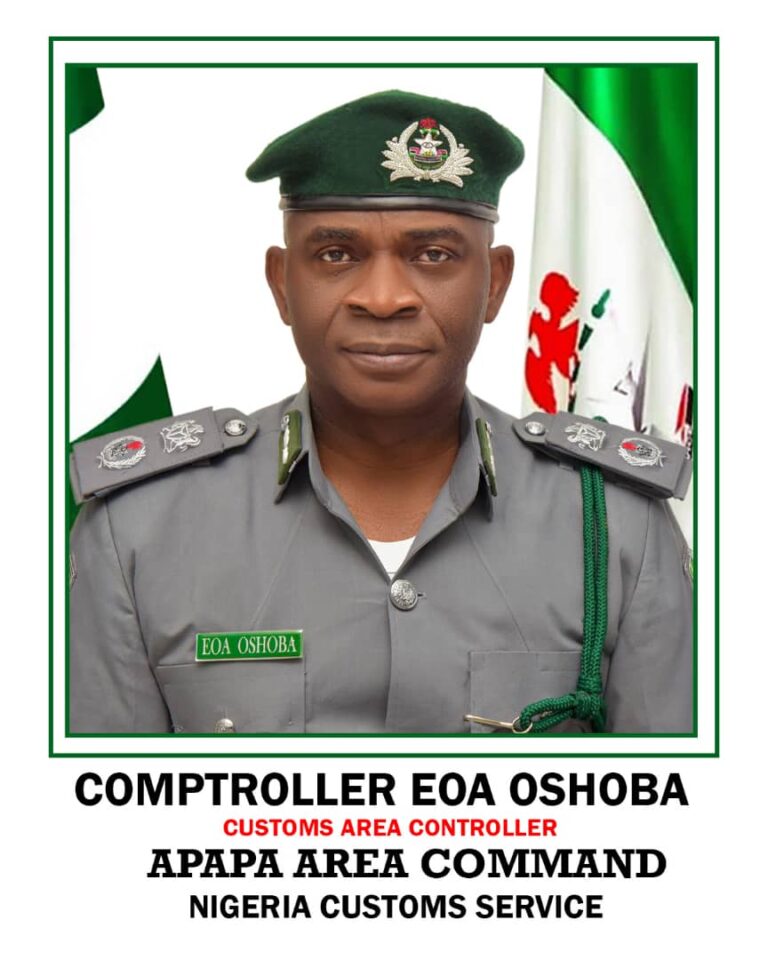
    The Customs Area Controller of Apapa Command, Comptroller Emmanuel Oshoba, who spoke during the launch at the Apapa Port described the ECTS as a strategic innovation that enables real time monitoring of cargo movement from the point of departure to the final destination. He explained that the system uses electronic seals and handheld devices to track containers, ensuring transparency, preventing tampering, and eliminating diversion of goods in transit.

    Comptroller Oshoba noted that Apapa Command, is serving as the pilot stage for the nationwide rollout of the initiative and the technology would drastically reduce the need for physical escorts, as customs officers can now monitor cargo movement electronically.

    The CAC also commended the vision of the Comptroller General of Customs, Bashir Adewale Adeniyi, describing him as a reform-driven administrator who has consistently championed automation and innovation. He highlighted that the ECTS has already been implemented in several countries and as the current Chairperson of the World Customs Organization (WCO), the CGC has ensured that Nigeria adopts similar modern tools to improve its trade environment.

    The Head of B’Odogwu Implementation at Apapa Command , Deputy Comptroller Aondona Christopher Fanyam, also explained that before the container reaches Kano Command, it remains sealed and cannot be opened until proper authorisation is confirmed at the destination. He said the ECTS provides three secure methods for unlocking a container: remotely through the central control system, locally via an authorised handheld device such as a mobile phone used by trained officers, or by using a physical unlocking card designed specifically for use at the destination.

    He added that these layered access options are part of the system’s built in safeguards to prevent unauthorised tampering or diversion during transit. The combination of remote control, handheld verification, and a physical card ensures that only properly authorised personnel can release cargo, reinforcing cargo integrity and strengthening overall security and revenue protection.

    The Team Leader of the training unit , Chief Superintendent of Customs , Rosemary Ebele Wenceslas said the service has trained a total of 12 officers participating in the pilot phase of the Electronic Cargo Tracking System (ECTS). The team comprises personnel drawn from the Rapid Response Unit of the Federal Operations Unit Zone A Ikeja (FOU) and the Enforcement Team of Apapa Area Command.

    According to her ,the officers have undergone intensive training to ensure they are fully prepared to manage and operate the new tracking technology efficiently. All Standard Operating Procedures (SOPs) related to the ECTS have been clearly communicated to them, enabling smooth implementation of the initiative.

    CSC Wenceslas noted that with the knowledge and technical capacity they have acquired, the officers are well equipped and ready to deploy the devices effectively, ensuring that the pilot stage achieves its objectives of enhanced cargo monitoring, security, and trade facilitation

  • Command Transition at the Western Naval Command: Rear Admiral Mustapha Assumes Leadership from Rear Admiral Oamen

    Command Transition at the Western Naval Command: Rear Admiral Mustapha Assumes Leadership from Rear Admiral Oamen

    The Western Naval Command of the Nigerian Navy has held a colourful farewell parade in honour of its outgoing Flag Officer Commanding (FOC), Rear Admiral Michael Gregory Oamen, who formally handed over the mantle of leadership to Rear Admiral Abubakar Abdullahi Mustapha.

    The ceremony, held on Wednesday, 5 November 2025, at the NNS BEECROFT Parade Ground, Apapa, Lagos, the event was graced by senior officers from the Nigerian Army, Navy, Air Force, Customs, Immigration, and Police, alongside naval ratings, civilian personnel, and other distinguished guests, who gathered to celebrate Admiral Oamen’s exemplary leadership and dedicated service to the nation.

    The event featured a ceremonial parade mounted by officers and ratings of the Command, alongside glowing tributes recognizing Rear Admiral Oamen’s significant contributions to operational effectiveness, maritime security, and personnel welfare throughout his tenure.

    In his emotional farewell address, Rear Admiral Oamen expressed profound gratitude to Almighty God for the grace to successfully conclude his tenure, describing the occasion as “a day of pride and reflection.”

    “When I assumed command on 22 October 2024, I was filled with a deep sense of responsibility and a clear vision to sustain operational excellence, strengthen unity among personnel, and ensure that our Command continued to play its critical role in safeguarding our maritime domain,” he stated.

    He commended officers, ratings, and civilian staff for their loyalty, professionalism, and teamwork, noting that their dedication formed the backbone of the Command’s achievements.

    “Together, we faced challenges, operational, logistical, and even personal but we confronted each one with determination and unity. Whether at sea or ashore, in operations or administration, you all stood firm, upholding the finest traditions of the Nigerian Navy: loyalty, discipline, and service before self,” he said.

    Rear Admiral Oamen also paid tribute to the immediate past Chief of the Naval Staff, Vice Admiral Emmanuel Ikechukwu Ogalla (AM), for his trust and guidance, and expressed deep appreciation to his family for their unwavering support, especially during periods of absence.

    As he handed over to his successor, Rear Admiral Oamen described Rear Admiral Mustapha as “a brother and friend”, expressing full confidence in his ability to lead the Western Naval Command to greater heights.

    “Rear Admiral Mustapha is an outstanding officer intelligent, principled, and experienced. I have no doubt that under his command, the Western Naval Command will continue to thrive and achieve even greater feats,” he said.

    He concluded with a message of reflection and encouragement: “Leadership is temporary, but legacy is lasting. The true measure of our service lies not in titles or ranks, but in the lives we touch, the examples we set, and the standards we leave behind.”

    Rear Admiral Oamen also expressed gratitude to the President and Commander-in-Chief of the Armed Forces, President Bola Ahmed Tinubu, GCFR, for the privilege of serving the nation at the highest levels of command.

    In his maiden address as the new Flag Officer Commanding, Rear Admiral Abubakar Abdullahi Mustapha expressed humility and gratitude to Almighty God and to the Chief of the Naval Staff, Vice Admiral A.I. Abbas (AM), for the confidence reposed in him.

    He praised his predecessor, Rear Admiral Oamen, for his outstanding service and achievements, pledging to sustain and build upon the Command’s successes.

    “The Western Naval Command is the custodian and gateway of our nation’s maritime frontier and is central to achieving Nigeria’s Blue Economy aspirations. Our duty is clear, to remain professionally poised and in a constant state of operational readiness,” he declared.

    Rear Admiral Mustapha outlined his command philosophy anchored on five strategic pillars: Professional Excellence, Operational Efficiency, Unwavering Discipline, Personnel Welfare, and Teamwork.

    He emphasized the need for innovation, intelligence-led operations, and synergy with sister services and maritime stakeholders to strengthen Nigeria’s maritime security architecture.

    “My intent is to establish a robust, technology-driven naval presence across the Command’s Area of Responsibility, one that can detect, deter, disrupt, and deny any form of criminal activity. I expect all sub-unit commanders to demonstrate initiative, creativity, and commitment in seizing and maintaining operational advantage,” he said.

    Reaffirming his confidence in the officers and men of the Command, Rear Admiral Mustapha concluded: “I am proud to be your Flag Officer Commanding. Let us sail together toward new horizons of excellence. The eyes of the nation are on us and I have absolute faith that we will not only meet but exceed every expectation.”

    The ceremony marked a seamless transition of leadership within the Western Naval Command, reflecting the Nigerian Navy’s enduring traditions of discipline, professionalism, and continuity of command.

    As Rear Admiral Oamen bows out after a distinguished career marked by operational brilliance and transformational leadership, the Command now embarks on a new chapter under Rear Admiral Mustapha’s stewardship anchored on innovation, readiness, and unwavering commitment to national maritime security.

  • NANTA Honoured in London as Africa’s Leading Travel Association

    NANTA Honoured in London as Africa’s Leading Travel Association

    The National Association of Nigeria Travel Agencies (NANTA), West Africa’s largest body of travel trade professionals, has been honoured with the Best African Travel Association Award at the prestigious African Tourism Awards held in London, United Kingdom.

    According to the organisers, NANTA emerged as the first recipient of the award in recognition of its resilience, strategic initiatives, and unwavering commitment to promoting sustainable intra-African travel and tourism trade The association was also commended for its consistent presence and outstanding representation of Nigeria’s cultural tourism offerings at the World Travel Market (WTM) London over the past three years.

    The award ceremony, which took place on Sunday, November 2, at the Hilton Hotel, Canary Wharf, served as a prelude to the official opening of the 2025 World Travel Market London the following day. The event set the stage for renewed engagement and collaboration in global cultural tourism promotion.

    NANTA President, Mr. Yinka Folami, who was unavoidably absent at the ceremony, was represented by the association’s immediate past president, Mrs. Susan Akporiaye, the National Publicity Secretary, Mrs. Lola Adewole and National internal Auditor, Mr. Johnson Ugochukwu.

    In his reaction, Mr. Folami described the recognition as a significant motivation for NANTA to further advance tourism and travel trade growth in Nigeria and across the continent.

    “I was on my way to London for WTM and felt truly elated that our efforts at NANTA are being appreciated by the organisers, and indeed by many Nigerians in the diaspora who always identify with us whenever we showcase Nigeria’s tourism potential at WTM,” he said.

    “Although we could not officially participate this year—hoping that the government would take over the coordination of Nigeria’s presence—it’s heartwarming that NANTA members are still strongly represented in London. I sincerely appreciate Mrs. Akporiaye, Mrs. Adewole and Mr. Johnson Ugochukwu for standing in the gap,” he added.

    Speaking on the vision behind the award, Mr. Efetobo Awhana, Executive Producer of the African Tourism Awards, emphasized that the continent offers some of the richest and most diverse cultural tourism experiences in the world.

    “Through this initiative, we seek to highlight Africa’s best hotels, most reliable operators, and exceptional destinations,” Mr. Awhana explained.

    “The African Tourism Award was conceived to reshape the continent’s tourism narrative and encourage travel to Africa, by Africans, and for Africans—particularly those in the diaspora,” he concluded.

  • FOB Badagry Hands Over Seized Contraband To Relevant Agencies In Ongoing Anti-Smuggling Efforts

    FOB Badagry Hands Over Seized Contraband To Relevant Agencies In Ongoing Anti-Smuggling Efforts

    In a renewed push to strengthen enforcement against smuggling and other illicit activities within Nigeria’s maritime and border corridors, the Nigerian Navy Forward Operating Base (FOB) Badagry has handed over a fresh cache of seized contraband items to sister security agencies.

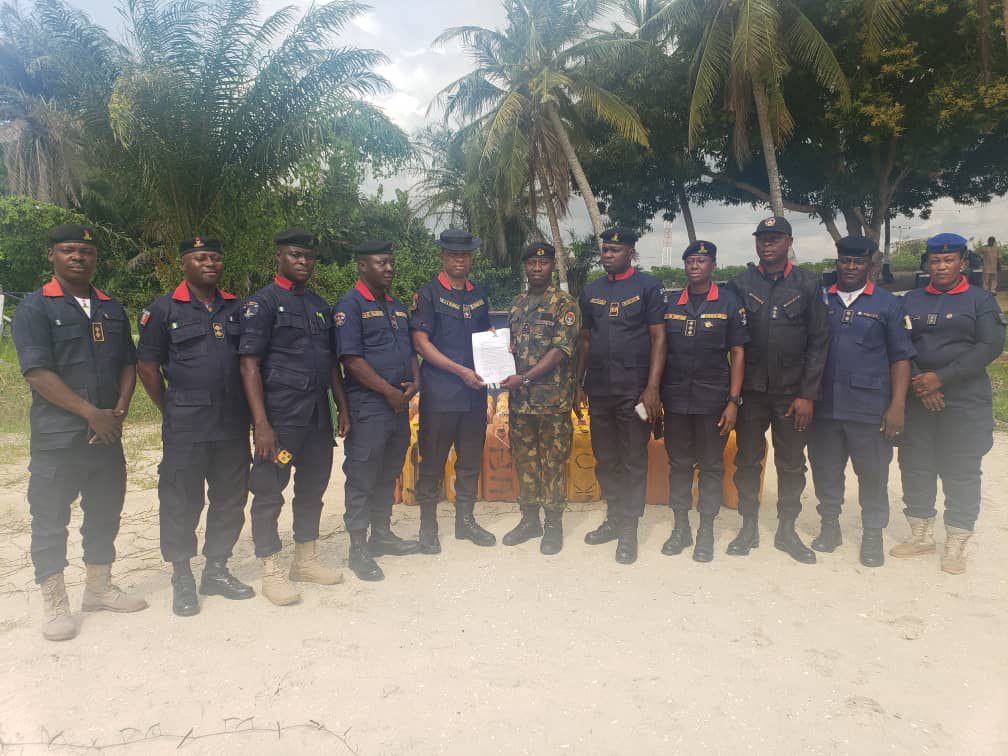
    The handover, which took place earlier today, included 420 bags of foreign parboiled rice transferred to the Nigeria Customs Service (NCS) Seme Area Command, 55 bags to the NCS Western Marine Command, and 75 jerry cans of 30 litres each of Premium Motor Spirit (PMS) to the Nigeria Security and Civil Defence Corps (NSCDC), Badagry Division.

    According to the Base, the items were intercepted during a series of intelligence-led operations conducted over the past weeks as part of the Navy’s ongoing efforts to curb smuggling, protect national revenue, and enforce the Federal Government’s directives on economic security.

    Speaking during the handover ceremony, the Commanding Officer, Captain (NN) B.O. Omotayo, represented by the Base Executive Officer, reaffirmed the Navy’s unwavering commitment to maintaining a safe and lawful maritime environment. He noted that all operations and handover procedures were executed in strict adherence to the Harmonized Standard Operating Procedures (HSOP) for Arrest and Handover, as well as existing frameworks for inter-agency collaboration.

    “FOB Badagry remains resolute in its mission to sustain robust surveillance, patrols, and intelligence-driven operations aimed at deterring smugglers and other economic saboteurs,” Captain Omotayo stated.

    He further emphasized that the Base’s operations are aligned with the strategic directives and vision of the Chief of the Naval Staff, Vice Admiral I. Abbas, who has consistently championed synergy among security agencies to secure the nation’s maritime and border spaces.

    The Nigerian Navy, through FOB Badagry, continues to demonstrate professionalism, operational excellence, and inter-agency cooperation in safeguarding Nigeria’s territorial waters and adjoining border environments from threats of smuggling and other illegal maritime activities.

  • Flying Smarter, Fighting Stronger: Inside Air Marshal Aneke’s Drive for a Future-Ready Air Force

    Flying Smarter, Fighting Stronger: Inside Air Marshal Aneke’s Drive for a Future-Ready Air Force

    When Air Marshal Sunday Kelvin Aneke assumed office as the 23rd Chief of the Air Staff (CAS) on October 30, 2025, his message to Nigerians was clear and compelling: the Nigerian Air Force (NAF) will be swift in action, precise in strike, and intelligent in execution. It will be a force built not merely to showcase power, but for purpose, protection, and progress.

    That declaration was more than an inaugural statement; it was a philosophy, one that captures the mindset of a leader who sees modern air power more about nuance, less about brute force and more about disciplined precision. In an era where national threats are complex, adaptive, and asymmetric, Air Marshal Aneke’s leadership represents a shift towards purposeful Lethality, the ability to achieve decisive outcomes with intelligence, restraint, and responsibility.

    His appointment by President Bola Ahmed Tinubu marks more than a routine succession. It signifies continuity in the transformation of one of Africa’s most dynamic and professional air forces.

    Known as a strategist and consummate professional, Air Marshal Aneke combines deep technical expertise with operational brilliance, honed over three decades of service. A graduate of the United States Air War College in Montgomery, Alabama, he also holds advanced degrees in Strategic Studies, International Affairs, and Political Economy and Development Studies.

    With over 4,300 flight hours across multiple aircraft types, he brings to the table a blend of experience, composure, and intellect, hallmarks of a true airman-scholar.

    At his inauguration, he described his new role as “a tremendous privilege and a solemn duty,” pledging to lead with humility, integrity, and an unyielding commitment to national security.

    He expressed gratitude to President Tinubu and reaffirmed the NAF’s readiness to defend Nigeria’s airspace while contributing meaningfully to peace, stability, and national transformation.

    Under his leadership, he vowed, the NAF will remain “willing, able, and ready” strengthening inter-service cooperation and upholding a tradition of discipline, resilience, and professionalism.

    His track record speaks volumes. As Air Officer Commanding Mobility Command, Air Marshal Aneke revitalised the Service’s strategic airlift capabilities, enabling rapid deployment of troops and logistics to key theatres of operation.

    He also advanced joint operations and improved intelligence, surveillance, and reconnaissance (ISR) missions, which proved instrumental in counter-insurgency operations in the North-East and anti-banditry campaigns in the North-West. Colleagues describe him as “a leader who speaks sparingly but acts decisively” one who values outcomes over rhetoric.

    At his Senate confirmation, he articulated his vision succinctly: “I use the word lethal in a professional sense, because a man running from you will not have the time to sit down and plan. The Nigerian Air Force will respond swiftly, strike precisely, and act intelligently across the full spectrum of military operations.”

    This philosophy of intelligent lethality underpins his vision for the modern NAF a force that integrates technology, training, and accountability. For him, every mission must reflect precision, purpose, and protection. His agenda emphasises unmanned aerial systems, data-driven operations, and interoperability among the military services, supported by artificial intelligence and real-time situational awareness.

    Yet, Air Marshal Aneke’s vision extends beyond combat. He is repositioning the NAF as a guardian of communities, not just a destroyer of threats. His approach prioritises Civil-Military Relations (CMR) and Quick Impact Projects (QIPs), expanding the Service’s humanitarian footprint through rescue operations, health outreaches, and infrastructure support. These efforts are not mere goodwill gestures; they are strategic tools for strengthening trust between the military and the people it protects.

    His confirmation by the National Assembly reaffirmed both the principle of civilian oversight and the strategic continuity of ongoing defence reforms. It also signals confidence that his leadership will consolidate gains in fleet modernisation, local maintenance capacity, and indigenous research and development.

    In recent years, the NAF has entered a renaissance phase inducting modern aircraft such as the T-129 ATAK helicopters, A-29 Super Tucanos, and AW-109 Trekker helicopters, while reactivating older fleets through local innovation.

    Air Marshal Aneke’s task is to sustain that momentum while deepening a culture of innovation across commands. His leadership ethos is grounded in teamwork and empowerment, with a firm belief that “no service fights alone.”

    Calm yet decisive, Air Marshal Aneke embodies quiet confidence, the kind born of competence and clarity of vision. He believes that airpower must not only defend sovereignty but also mirror national aspirations: resilient, adaptive, and humane. His blueprint for a smarter, stronger Air Force rests on four pillars, training, technology, safety, and strategic innovation, the foundations of what he calls a thinking Air Force.

    He insists that safety will remain non-negotiable. “No mission is truly successful if lives are lost unnecessarily,” he often says a testament to his commitment to professionalism, maintenance culture, and personnel welfare.

    For him, the NAF’s greatest asset is not its aircraft, but its people. His leadership will therefore continue to prioritise morale, mentorship, and the well-being of every airman and woman.

    Internationally, Air Marshal Aneke is expected to strengthen Nigeria’s leadership in regional airpower cooperation. Under his watch, partnerships with the United States, France, and African allies will deepen, with a focus on joint training, intelligence sharing, and operational synergy.

    At home, his focus remains unwavering: sustain fleet modernisation, enhance readiness, and foster unity within the Force. His blend of empathy and firmness will undoubtedly inspire a new generation of NAF personnel, while reassuring Nigerians that their skies are in capable hands.

    As he takes command, Air Marshal Sunday Kelvin Aneke stands as both a symbol of continuity and renewal, a leader rooted in the Air Force’s proud tradition of excellence yet bold enough to redefine its future. His vision of a swift, precise, and intelligent NAF charts a new course for Nigeria’s defence architecture: one that fights smarter, protects better, and serves with distinction.

    Indeed, a new dawn has arrived for Nigeria’s sky guardians, a future where every mission counts, every strike matters, and every action reflects the enduring promise of airpower in the service of peace, progress, and national pride.

    *Air Commodore Ejodame is the Director of Public Relations (DOPRI), Nigerian Air Force.

  • At AICIF 2025, Leaders Push Islamic Finance as Catalyst for Inclusive, Sustainable Growth Across Africa

    At AICIF 2025, Leaders Push Islamic Finance as Catalyst for Inclusive, Sustainable Growth Across Africa

    Vice President Kashim Shettima and other economic Stakeholders have called on African nations to deepen the adoption of Islamic finance as a tool for inclusive and sustainable economic transformation across the continent.

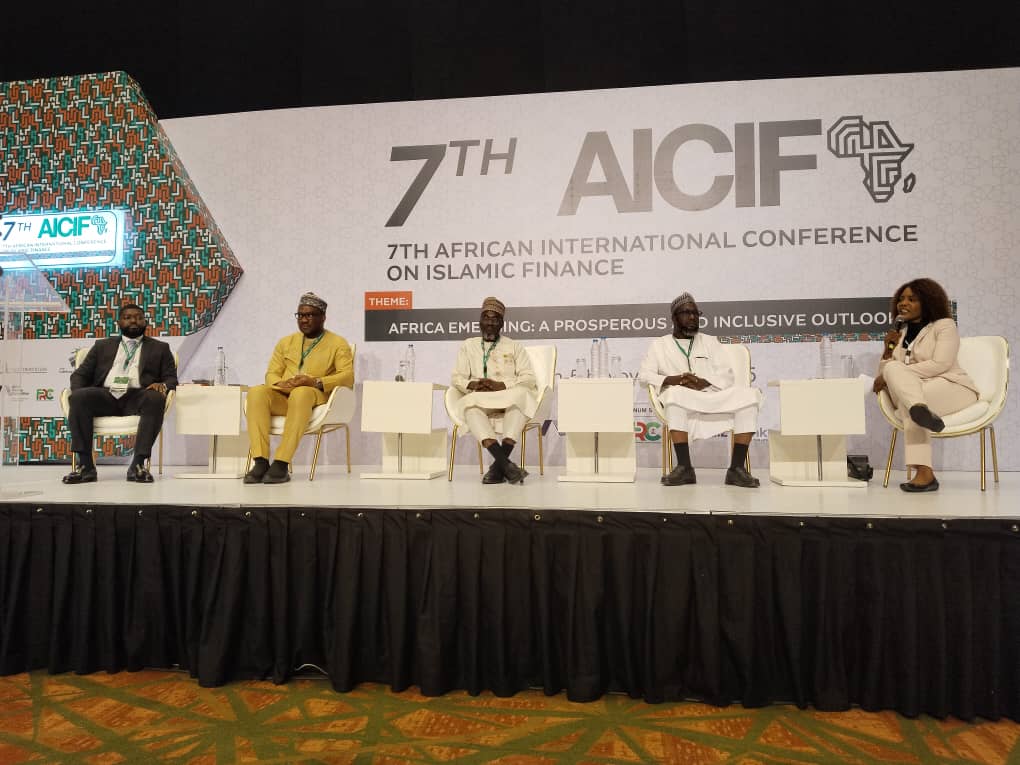
    Represented by Dr Tope Fasua, Special Adviser to the President on Economic Matters, Shettima made the call while addressing delegates at the 7th African International Conference on Islamic Finance (AICIF) held in Lagos on Tuesday. The Conference was organised by the Metropolitan Law and Metropolitan Skills Ltd in collaboration with the Securities and Exchange Commission of Nigeria (SEC).

    Speaking on the theme “Africa Emerging: A Prosperous and Inclusive Outlook,” the Vice President said Africa’s demographic advantage must translate into equitable prosperity, stressing that the continent’s progress will be measured not only by growth but by inclusion. He highlighted Nigeria’s recent economic reforms under President Bola Tinubu’s Renewed Hope Agenda as key drivers of stability and investor confidence.

    According to Shettima, Nigeria has unified its exchange rate, rationalised subsidies, modernised tax and customs systems, and opened new gateways for trade and investment reforms, which have lifted reserves above $40 billion and earned favourable ratings from Fitch and Moody’s.

    “These outcomes reaffirm Nigeria’s position as an anchor of the AfCFTA’s $3.4 3.4trn market and a driver of Africa’s growth,” he said.

    The Vice President emphasised that Islamic finance provides a credible framework for promoting shared prosperity, rooted in ethics, fairness, and social responsibility.

    He said Nigeria’s experience demonstrates the transformative potential of Islamic finance instruments such as sukuk, takaful, murabaha, and waqf, which have financed critical infrastructure and expanded access to inclusive financial services.

    “Our sukuk issuances, now in their seventh cycle, have funded more than 120 major road projects covering nearly 6,000 kilometres,” Shettima noted. “Each bond represents a covenant between government and citizens, proof that finance can build rather than burden.”

    Shettima added that takaful insurance is extending protection to millions of previously excluded households, while waqf endowments are being explored to support schools, hospitals, and small businesses.

    “Islamic finance aligns with our conviction that enterprise must serve humanity and wealth must circulate to uplift communities,” he said.

    Across Africa, Shettima observed, countries like Egypt, Senegal, Kenya, and South Africa are developing regulatory frameworks for Islamic banking, green sukuk, and socially responsible investments.

    By 2030, the share of Islamic finance in Africa’s capital markets is projected to expand significantly, he said, urging policymakers to sustain reforms that strengthen transparency, governance, and investor protection.

    He also underscored the need to mobilise Africa’s vast domestic capital, including pension funds, sovereign wealth funds, and insurance pools, through innovative instruments such as green sukuk and diaspora bonds.

    “Africa’s future must be financed from within, guided by principles of justice, inclusion, and sustainability,” Shettima asserted.

    Shettima concluded by urging participants to “build an Africa where enterprise and empathy coexist, where finance is not a privilege for the few but a promise to the many, and where every child, from Lagos to Lusaka, finds a stake in the continent’s future.”

    Earlier, Conference Chairperson Ms Ummahani Ahmad Amin said that AICIF was conceived as a platform for collaboration and knowledge sharing to advance Islamic finance as a viable alternative source of funding for Africa’s socio-economic needs.

    She noted that while Islamic finance assets globally reached $3.88 trillion in 2024, Africa still lags behind in harnessing its full potential to close the continent’s annual infrastructure financing gap of up to $170 billion.

    She emphasised that challenges such as limited liquidity, weak market infrastructure, and inadequate investor education must be addressed for Islamic finance to reach its potential.

    “Artificial intelligence is also reshaping finance across the continent, from automating compliance to personalising ethical investment, and we must ensure ethical guardrails guide its use,” she said.

    The conference, co-hosted by the Securities and Exchange Commission (SEC), brought together regulators, scholars, development partners, and investors from across the African continent.

    In his opening remarks, SEC Chairman Mr Mairiga Katuka said Nigeria’s non-interest capital market had grown rapidly under the Capital Market Masterplan (2015–2025), with sovereign sukuk raising over ₦ 1.4 trillion and funding 124 critical road projects nationwide.

    Katuka noted that Nigeria now has 19 registered halal mutual funds managing over ₦112 bn in assets, up from one fund in 2008, and pledged the SEC’s commitment to evolving regulatory frameworks for innovations such as innovative sukuk, tokenisation, and blockchain-enabled
    transparency.

    The two-day conference also featured a startup pitch competition supporting innovations in technology and social impact, as well as an awards ceremony honouring individuals and institutions contributing to the growth of Islamic finance across Africa.

    In his remarks, the Emir of Kano, a former Governor of the Central Bank of Nigeria (CBN), Alhaji Sanusi Lamido Sanusi, urged Islamic finance institutions across Africa to focus more on supporting small and medium-sized enterprises (SMEs) in underserved communities as a pathway to achieving shared prosperity and sustainable development.

    Sanusi emphasised that Islamic finance can only make a meaningful impact when it directly addresses the financial exclusion faced by small businesses and vulnerable groups.

    “I would be happier to see Islamic banks that are big, but more importantly, ambitious enough to grow a market that delivers real value to people and helps reduce poverty,” Sanusi stated. “We need to begin now to see how we can use finance to create opportunities for the small people.”

    The Emir emphasised the need for Islamic financial institutions to move beyond conventional models by extending their services to the grassroots, where the majority of Africa’s unbanked population resides. He called for bold strategies that bridge cultural and social barriers that have historically hindered access to finance, particularly for women.

    “Go to the grassroots, dare to build and connect with the cultural conceptions and attitudes that have denied women. The empowerment of women is what will contribute to prosperity in Africa,” he added.

    Sanusi reiterated that inclusive finance remains central to Africa’s economic transformation, urging Islamic finance stakeholders to leverage their principles of equity, risk-sharing, and social responsibility to foster a more just and prosperous continent.

  • Eastern Naval Command Enters New Phase Under Rear Admiral Okehie’s Leadership

    Eastern Naval Command Enters New Phase Under Rear Admiral Okehie’s Leadership

    The Eastern Naval Command has formally received a new Flag Officer Commanding, following a recent change of leadership by the Commander-in-Chief of the Armed Forces.

    On Tuesday, 4 November 2025, the outgoing FOC, Rear Admiral Kennedy Chukwuemeka Ezete, handed over command to Rear Admiral Chiedozie Donald Okehie, who becomes the 43rd Flag Officer Commanding Eastern Naval Command.

    In his valedictory remarks, Rear Admiral KC Ezete expressed profound gratitude to God for a successful and fulfilling tenure. He appreciated officers and men of the Command for their support and dedication, and wished his successor a productive and impactful tenure.

    In his address, the new FOC, Rear Admiral CD Okehie, commended the outgoing Flag Officer Commanding for his distinguished service to the Nigerian Navy and the Eastern Naval Command. He emphasized the strategic importance of the Eastern Naval Command as a critical maritime formation central to national security, stability, and economic prosperity.

    Rear Admiral Okehie further affirmed that his leadership will be anchored on four key pillars:

    1. Professionalism

    2. Operational Readiness

    3. Welfare of Personnel

    4. Synergy and Collaboration

    The ceremony featured the official signing of the handover notes and the symbolic exchange of the Command Flag, signifying a seamless transition of authority.

    The event was attended by senior officers and officers of the Command, and concluded with a group photograph to commemorate the occasion.

  • Delivering Beyond Expectations: Oshoba’s Trail of Transformative Leadership

    Delivering Beyond Expectations: Oshoba’s Trail of Transformative Leadership

    In an era where performance defines leadership, Comptroller Emmanuel Oluwadare Oshoba has quickly emerged as a transformative force in Nigeria’s maritime and customs sector. Since assuming office as the Customs Area Controller of Apapa Command, Oshoba has not only met expectations but exceeded them demonstrating a rare mix of operational excellence, technological foresight, and strategic discipline.

    When Oshoba succeeded Assistant Comptroller General Babatunde Olomu, fsi, expectations were already sky-high. But barely 48 hours into his tenure, the Apapa Command recorded a ₦20 billion daily revenue haul, a figure that immediately signaled a new era of ambition and efficiency.

    That early success proved prophetic. In October 2025, Apapa Command achieved an unprecedented ₦304 billion monthly revenue, setting a new all-time record in the Nigeria Customs Service (NCS). The milestone surpassed the ₦264 billion collected in October 2024 and propelled the Command’s cumulative annual revenue to ₦2.4 trillion, two months ahead of projections.

    Oshoba described the feat as “the beginning of greater revenue exploits.” His leadership has since earned commendations from Comptroller General Bashir Adewale Adeniyi and stakeholders across the maritime sector, who have praised his “results-driven and reform-minded” approach.

    At the heart of Oshoba’s leadership is a three-pronged agenda: revenue optimization, enforcement precision, and stakeholder collaboration.

    Under his supervision, Apapa Command has operationalized high-throughput cargo scanners capable of processing up to 200 containers per hour. The technology, strategically positioned at the quayside, has drastically reduced inspection times, enhanced cargo clearance efficiency, and exposed concealments with near-perfect accuracy.

    Oshoba has also strengthened the One-Stop-Shop (OSS) initiative, streamlining customs procedures to eliminate delays and revenue leakages. His firm stance on compliance, accurate classification, and proper valuation has reinforced transparency and accountability in trade facilitation.

    Beyond administrative excellence, Oshoba’s leadership is hands-on. He conducts unscheduled inspections of port corridors, personally engaging with truckers, freight forwarders, and NPA officials to improve cargo evacuation and port traffic flow.

    He has also prioritized capacity building, organizing specialized training sessions for newly promoted officers particularly Deputy and Assistant Comptrollers to enhance institutional knowledge and leadership succession within the Service.

    From his early days at Idiroko Border Command to his strategic postings at Customs Headquarters, Oshoba has built a reputation for integrity, innovation, and impact. Now at Apapa, he is proving that leadership is measured not by rhetoric but by measurable results.

    As the Command continues to break records and implement reforms, industry observers see Oshoba’s tenure as a benchmark for modern customs administration in Nigeria.

    “This is not our final destination. We are ready to do better,” Oshoba said recently a statement that encapsulates his unrelenting pursuit of excellence.

    With his blend of vision, discipline, and people-focused leadership, Comptroller Oshoba is not only fulfilling expectations he’s redefining what effective public service looks like in Nigeria’s maritime economy.

  • Customs Reimagined: Onyeka’s Doctrine Strengthens Nigeria’s Trade and Security Framework

    Customs Reimagined: Onyeka’s Doctrine Strengthens Nigeria’s Trade and Security Framework

    At Nigeria’s bustling Tin-Can Island Port, one of the nation’s busiest maritime gateways, a quiet revolution is taking shape. Comptroller Frank Onyeka, Area Controller of the Nigeria Customs Service (NCS), is orchestrating a strategic transformation that fuses revenue generation, trade facilitation, and national security into a single operational philosophy.

    Through bold enforcement, technological innovation, and a culture of stakeholder engagement, Onyeka is reshaping how the Customs Service operates, building an institution that is both people-centered and results-driven.

    When officers of the Tin-Can Island Command recently intercepted narcotics worth over ₦5.3 billion concealed in containers from Canada, it was not just another seizure, it was a statement of intent. The haul, which included Colorado Indica, Hashish Oil, Cannabis Indica, and Crystal Methamphetamine, reaffirmed the Command’s unwavering commitment to national security.

    The swift handover of the drugs to the National Drug Law Enforcement Agency (NDLEA), under the supervision of Commander Daniel Onyishi, exemplified the Command’s effective inter-agency cooperation. For Onyeka, the message has been clear since his first day in office: Tin Can Island will not be a safe haven for criminal syndicates or illicit trade networks.

    Under Onyeka’s stewardship, Tin-Can Island Command has recorded consistent revenue growth across consecutive quarters. This steady rise is not accidental, it stems from enhanced internal controls, tightened enforcement systems, and the closure of leakages that once undermined revenue performance.

    His approach blends fiscal discipline with operational innovation. Every reform whether administrative or procedural feeds into a broader vision of creating a customs ecosystem where compliance equals efficiency.

    At the heart of Onyeka’s modernization effort is the B’Odogwu Clearance System, a locally developed digital platform designed to automate customs processes and eliminate human bias. Since its pre-launch phase, Onyeka has championed its rollout, urging stakeholders to embrace transparency and honest declarations.

    The system’s algorithmic impartiality has drastically reduced the infamous “multiple alerts” that previously frustrated importers and freight forwarders. With a one-stop-shop clearance model, cargo processing is now faster, more predictable, and more transparent—boosting trade efficiency while minimizing rent-seeking.

    Comptroller Onyeka’s leadership ethos is built on consultation and collaboration. Regular engagements with freight forwarders, terminal operators, and bonded warehouse owners have fostered a culture of shared responsibility and civic commitment.

    Through dialogue and education, he continues to preach the virtues of compliance, integrity, and partnership, emphasizing that efficient port operations depend on mutual trust and adherence to laid-down procedures.

    This open-door approach has reduced friction among operators, strengthened cooperation with government agencies, and aligned the Command’s activities with evolving national trade policies.

    Following the enactment of the Nigeria Customs Service Act 2023, Onyeka has been proactive in ensuring seamless implementation at the operational level. Officers under his command have undergone sensitization on new penalty frameworks, valuation procedures, and legal provisions to guarantee consistency and fairness in enforcement.

    The result is a port environment where clarity replaces confusion, and predictability replaces discretion, creating a level playing field for all stakeholders in the trade value chain.

    Historically tagged for congestion and procedural delays, Tin-Can Island Port is now experiencing a turnaround. Under Onyeka, the Command has streamlined cargo clearance through faster document processing, risk-based inspections, and the promotion of bonded terminal operations to reduce dwell time.

    Enhanced coordination with sister agencies and the deployment of non-intrusive inspection technologies have further strengthened efficiency. These measures not only increase revenue inflow but also position Nigeria more competitively in global trade performance indices.

    For Onyeka, innovation transcends technology, it’s about transforming mindsets. He has introduced data analytics for cargo profiling, promoted digital literacy among officers, and fostered a culture of continuous learning within the Command.

    His alignment with the policy direction of the Comptroller-General of Customs, Bashir Adewale Adeniyi, anchored on Consultation, Consolidation, and Innovation, underscores a leadership style that blends vision with discipline.

    In less than a year, Comptroller Frank Onyeka’s stewardship at Tin-Can Island Command has redefined what effective customs administration looks like. His leadership demonstrates that reform, revenue, and resolve are not competing priorities but complementary pillars of national growth.

    As Nigeria continues its modernization drive, Onyeka’s model of strategic convergence offers a powerful lesson in what is possible when professionalism meets purpose and when leadership turns policy into progress.

  • Customs, AfCFTA Forge Stronger Ties to Advance Africa’s Regional Trade Agenda — Adeniyi

    Customs, AfCFTA Forge Stronger Ties to Advance Africa’s Regional Trade Agenda — Adeniyi

    The Comptroller-General of Customs, Adewale Adeniyi, has reiterated the Nigeria Customs Service’s commitment to collaborating closely with the African Continental Free Trade Area (AfCFTA) Secretariat to enhance continental trade integration, improve data accuracy, and address structural barriers hindering intra-African trade.

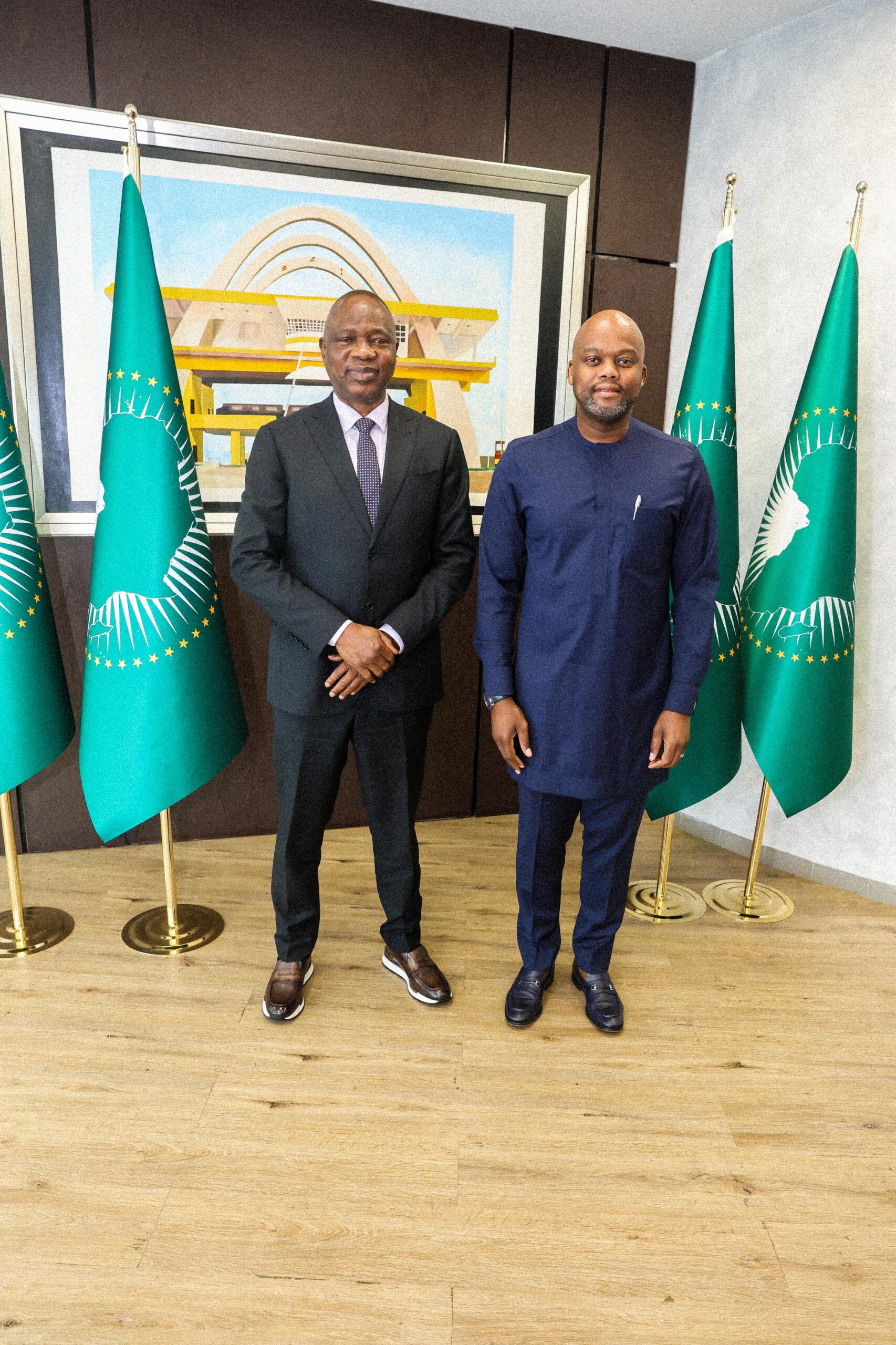
    The Customs Chief made this known on Monday, 3 November 2025, during a courtesy visit to the AfCFTA Secretariat in Accra, Ghana, where he met with senior officials to discuss collaborative strategies for enhancing Customs efficiency and promoting the success of the AfCFTA Agreement.

    During the meeting, CGC Adeniyi commended the Secretariat for its continuous role in mobilising key stakeholders, including Customs administrations, development partners, and economic operators, towards realising Africa’s trade potential. He stated that the ongoing partnership with the Secretariat had provided a clear pathway for the upcoming Customs-Partnership for African Cooperation in Trade (C-PACT) conference, scheduled to take place in Abuja from November 17 to 19, 2025.

    “The AfCFTA Secretariat has been beneficial in mobilising African Customs and economic operators. We have received a concept note from the Secretariat and have engaged in a series of meetings. We now have a clear direction in which we want to go during the meeting in Abuja on November 17,” he stated.

    CGC Adeniyi highlighted that one of the key outcomes of these engagements was the consensus that Customs administrations must take a lead role in addressing the long-standing issue of deficiencies in trade data across the continent.

    “Most importantly, we have heard discussions centring around the fact that Customs needs to take the front role in addressing the issue of deficiencies in our trade data across the continent. This is a challenge that I have accepted to play, working with my colleagues,” he affirmed.

    He further noted that the current structure established by the AfCFTA Secretariat, which unites all heads of Customs administrations under one framework, must be strengthened to ensure long-term institutional coordination and policy consistency.

    “The existing structure that brings together all heads of Customs under the AfCFTA must be reinforced. Once the Customs Pact is institutionalised, it should be able to operate effectively within the Secretariat’s framework to drive sustainable trade facilitation,” he added.

    The Comptroller-General emphasised that addressing challenges such as poor data integration, policy fragmentation, and weak inter-agency cooperation remained critical to unlocking Africa’s full trade potential. He expressed optimism that the C-PACT Conference would set a new benchmark for Customs collaboration and data-driven governance across the continent.

    Reacting to the Comptroller-General’s remarks, the Secretary-General of the African Continental Free Trade Area (AfCFTA), Wamkele Mene, welcomed the Nigerian delegation to the Secretariat and commended the Nigeria Customs Service for its leadership in driving continental customs cooperation.

    He acknowledged the persistent challenges against trade growth in Africa, including weak logistics infrastructure, high transportation costs, and limited inter-agency coordination. Mene explained that the Secretariat has continued to engage key stakeholders, particularly the private sector, Customs administrations, and ministries of trade, to foster stronger inter-ministerial collaboration and sustainable trade facilitation.

    He expressed optimism that the upcoming Customs-Partnership for African Cooperation in Trade (C-PACT) conference in Abuja would provide a valuable platform for addressing these barriers and exploring actionable solutions.

    The Secretary-General further disclosed that the AfCFTA Secretariat is considering institutionalising the C-PACT conference as an annual event to sustain regional dialogue on Customs cooperation and data integration. Recalling an existing Memorandum of Understanding with the World Customs Organisation (WCO), Mene said the partnership seeks to enhance private sector inclusion and support the issuance of e-certificates of origin across the continent. He also highlighted ongoing discussions regarding the development of a Single Bond Guarantee Scheme to strengthen the AfCFTA’s Annexe on Transit and enhance cross-border efficiency.

    Emphasising the central role of Customs in the AfCFTA implementation process, Mene urged active participation of Customs administrations in shaping the continent’s trade data systems, Authorised Economic Operator (AEO) mutual recognition frameworks, and overall trade statistics management.

error: Content is protected !!